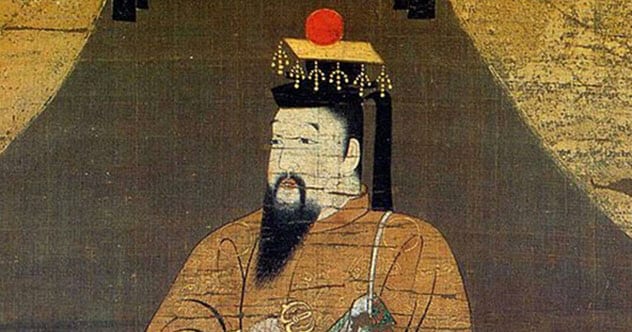

If you think emperors are all stiff robes, solemn ceremonies, and portraits where nobody looks like they have heard a joke since 742, Japanese history is here to surprise you. The imperial line of Japan is often described as the oldest hereditary monarchy in the world, but that simple fact barely hints at how strange, dramatic, and downright fascinating some of its rulers have been. In one era, an emperor could be more myth than man. In another, he might retire and then keep running the show anyway. One built giant Buddhist monuments. One lost a kingdom-sized gamble to the warrior class. One was a child swept into a naval disaster. One became the face of dizzying modernization. And one, in the modern age, changed the monarchy simply by making it feel more human.
That is what makes the story of Japanese emperors so compelling. The throne survived mythmaking, court intrigue, military takeovers, civil war, religious rivalry, modernization, defeat, and constitutional reinvention. Real power shifted constantly between emperors, regents, monks, shoguns, and politicians, yet the imperial institution endured like a long-running series that kept changing writers, tone, and wardrobe while somehow staying on the air.
Below are 10 unusual and fascinating Japanese emperors whose lives show just how weird, flexible, and historically important the Chrysanthemum Throne has been.
Why Japanese emperors stand out in world history
Japanese emperors are unusual because the office has often mattered even when the individual ruler did not command armies or tax systems directly. Sometimes the emperor was a sacred symbol. Sometimes he was a political force. Sometimes he was a ceremonial figure while somebody else did the governing. And sometimes, in classic human fashion, he found a clever loophole and ruled from “retirement.” That strange mix of mythology, ritual, legitimacy, and occasional political muscle makes the institution different from a standard king list. You are not just looking at rulers. You are looking at a throne that kept reinventing its job description for centuries.
1. Emperor Jimmu: the ruler who begins as legend
You cannot make a list of fascinating Japanese emperors without starting with the one who is half history, half origin story, and fully unforgettable. Emperor Jimmu is the legendary first emperor of Japan, traditionally said to have founded the imperial line in 660 BCE. According to classical tradition, he descended from the sun goddess Amaterasu, which gives the imperial institution an origin that is not merely royal but cosmic. That is a pretty strong opening statement for a dynasty.
Modern historians do not treat Jimmu’s traditional dates as literal fact, and that is part of what makes him so interesting. Jimmu matters not because we can build a neat little verified biography around him, but because his story reveals how early Japan understood power, legitimacy, and sacred ancestry. He is less a documented monarch and more a foundational narrative with a crown on top. In other words, Jimmu is fascinating because he sits right at the crossroads of myth, politics, and identity. He is the emperor who reminds us that in Japan, history and sacred storytelling were often roommates.
2. Emperor Temmu: the warrior who helped script imperial legitimacy
Emperor Temmu did not just inherit the throne politely and nod through ceremonies. He fought for it. After a succession struggle known as the Jinshin War, he emerged victorious and ruled from 673 to 686. That alone would make him notable. But Temmu’s real importance lies in what he did after the dust settled.
He worked to strengthen imperial authority, elevate major Shinto institutions, and support the compilation of traditions that later fed into Japan’s earliest official chronicles. In plain English, Temmu was not just ruling the state. He was helping shape the story the state told about itself. He understood something many powerful people eventually learn: if you can influence the official narrative, you can influence the future. That makes him unusual even among monarchs. Temmu was a battlefield winner, a political organizer, and a myth-management specialist all rolled into one. That is not exactly a modest résumé.
3. Emperor Shōmu: the monarch who answered crisis with a giant Buddha
Some rulers build walls. Some build fleets. Emperor Shōmu built religious grandeur on a spectacular scale. Reigning from 724 to 749, he poured immense resources into Buddhist temples, state-sponsored faith, and monumental artistic projects. During and after a devastating smallpox epidemic, he promoted Buddhism as a force for protection, stability, and national unity. His most famous legacy is tied to Tōdaiji in Nara and the colossal bronze Great Buddha, one of the most iconic achievements in Japanese history.
Shōmu is fascinating because he treated religion not as background decoration but as national infrastructure. He also helped create a cultural environment that produced extraordinary artistic and literary treasures, including those later associated with the Shōsōin repository. The unusual part is the scale of the ambition. Faced with fear and instability, he did not go small. He went monumental. There is something almost cinematic about the idea of an emperor looking at crisis and essentially saying, “You know what this situation needs? A giant sacred bronze statement piece.”
4. Emperor Kanmu: the emperor who moved the capital and changed Japanese history
Emperor Kanmu, who ruled from 781 to 806, made one of the biggest real-estate decisions in Japanese history. In 794, he moved the capital to Heian-kyō, the city that would become Kyoto, and that move shaped Japanese political and cultural life for centuries. Capitals are not usually relocated on a whim, and Kanmu’s decision had serious motives behind it, including the desire to reduce the political influence of powerful Buddhist institutions that had grown strong around the earlier capital.
Kanmu stands out because his reign feels like a hinge point. He was a strong ruler, a reformer, and a strategic thinker who understood that geography can be politics in disguise. By establishing the capital at Heian-kyō, he laid the groundwork for the Heian period, one of the most influential eras in Japanese cultural history. Court literature, aesthetics, and aristocratic culture would flourish there. So yes, Kanmu is fascinating because he moved the capital. But he is even more fascinating because that move helped create the setting for a thousand years of cultural memory. Not bad for what sounds, at first glance, like an administrative relocation.
5. Emperor Shirakawa: the man who retired and then absolutely did not retire
Few emperors have ever weaponized retirement as effectively as Shirakawa. He ruled from 1072 to 1086, abdicated, and then continued exercising real influence through what became known as cloistered rule, or insei. In other words, he stepped away from the throne and then stayed near the control panel. It was one of the great political pivots in Japanese history.
Shirakawa’s importance lies in how he challenged the domination of the Fujiwara regents. By ruling as a retired emperor, he could avoid some of the ceremonial burdens of active sovereignty while still maneuvering politically. That is both clever and a little mischievous, which is probably why historians keep coming back to him. His model had a long afterlife, proving that in Japan the emperor’s power did not always end when he stopped officially being emperor. Shirakawa is unusual because he exposed a basic truth of politics: sometimes the person who leaves center stage still controls the lighting.
6. Emperor Go-Shirakawa: the schemer, survivor, and lover of popular songs
If Shirakawa was inventive, Go-Shirakawa was downright slippery in the most historically interesting way. He reigned briefly from 1155 to 1158, then became a retired emperor and remained a major political presence through years of upheaval. He lived through coups, elite feuds, and the rise of the warrior class. More than once, he was pushed aside, constrained, or outmaneuvered. More than once, he found his way back into relevance. That alone would make him fascinating.
But Go-Shirakawa also had an unexpectedly vivid cultural side. He became famous for his devotion to imayō, a style of popular song, and is closely associated with the preservation of the collection known as Ryōjin Hishō. That means one of the most politically embattled emperors of the late Heian age was also a patron of music with a taste that reached beyond stiff court formalities. He was not just surviving history. He was curating its soundtrack. Go-Shirakawa feels unusual because he combined court strategy, personal resilience, and pop-cultural enthusiasm in one imperial package. He may be the closest this list gets to an emperor with both a palace and a playlist.
7. Emperor Antoku: the child emperor swallowed by civil war
Some imperial stories are dramatic. Antoku’s is tragic. He was placed on the throne in 1180 as a very young child during the struggle between the Taira and Minamoto clans. That meant he was emperor in name while adults around him used the throne as part of a brutal power contest. He did not shape events so much as he was carried inside them, which gives his story an almost unbearable sadness.
Antoku died in 1185 during the Battle of Dan-no-ura, one of the decisive conflicts of the Genpei War. He was only a child. His death became one of the most haunting episodes in Japanese historical memory, and the battle is also associated with the loss of one of the Three Imperial Regalia, the sword that symbolized imperial authority. Antoku is fascinating not because he ruled effectively, but because his life reveals how powerful the imperial image remained even when the throne itself was being swept up by military conflict. His story is the reminder that monarchy can be symbolic, sacred, and heartbreakingly vulnerable all at once.
8. Emperor Go-Daigo: the emperor who tried to take power back
If Antoku’s story shows an emperor caught in the machinery of war, Go-Daigo’s story shows an emperor trying to seize the controls. Reigning from 1318 to 1339, he attempted something audacious: restoring genuine political authority to the throne by overthrowing the Kamakura shogunate. For a brief, electric moment, it worked. His supporters brought down the old regime in 1333, and the Kenmu Restoration seemed to promise a revived imperial government.
Then reality, being rude as usual, arrived. Go-Daigo struggled to govern effectively, alienated important military allies, and was eventually driven from Kyoto by Ashikaga Takauji. The result was not a stable imperial comeback but a split between rival courts, one in the north and one in the south. That makes Go-Daigo one of the most unusual emperors in Japanese history: bold, energetic, politically serious, and ultimately defeated by the very forces he tried to master. He is fascinating because he was not content being a symbol. He wanted the full job back.
9. Emperor Meiji: the teenage monarch at the center of a national reboot
Emperor Meiji is often treated as the face of modern Japan, and for good reason. He came to the throne as a teenager in the turbulent late 1860s, right as the Tokugawa order was collapsing and Japan was being pulled into a new age of reform, centralization, and global competition. Under his reign, the country underwent immense political, social, military, and industrial change. The Meiji Restoration turned Japan from a feudal polity into a modern state with startling speed.
What makes Meiji unusual is the scale of the transformation associated with his reign. This was not a minor policy refresh. It was a civilization-level renovation. Even small symbolic moments matter here: newly enthroned, Meiji made journeys that reflected the new age, and the emperor became part of a public national image in ways earlier rulers had not. He stands out because his reign fused monarchy with modernization rather than letting modernity erase the throne. Meiji is the emperor who proves that tradition and radical change can, under pressure, ride in the same carriage.
10. Emperor Akihito: the modern emperor who made the throne feel human
Akihito may be the most quietly revolutionary figure on this list. Long before he became emperor, he broke a 1,500-year tradition by marrying a commoner, Michiko Shōda. As emperor from 1989 to 2019, he helped reshape the tone of the modern monarchy into something more approachable, reflective, and visibly public-facing. He and Empress Michiko came to symbolize a more emotionally legible imperial family, one that seemed less remote and more connected to ordinary people.
Akihito also became notable for his attention to historical memory and for his role in a monarchy defined by symbolism rather than direct political power. Then came the extraordinary finale: in 2019, he abdicated, the first Japanese emperor to do so in roughly two centuries. That decision was unusual not only because it broke precedent, but because it acknowledged age, duty, and the human limits of office in a deeply traditional institution. Akihito is fascinating because he did not modernize the monarchy by smashing it. He did it by softening it. In the grand parade of imperial history, that may be one of the most radical acts of all.
What these unusual Japanese emperors reveal
Put these 10 figures side by side and a clear pattern emerges: Japanese emperors were never just one thing. They could be mythical founders, warrior-kings, temple builders, reformers, cultural patrons, political tacticians, tragic children, would-be restorers, symbols of modernization, or guardians of a constitutional institution trying to stay relevant in modern life. Their stories are unusual because the throne itself kept shifting meaning while still claiming continuity with the deep past.
That is why the history of Japanese emperors remains so compelling. It is not a simple sequence of men inheriting power. It is a long experiment in how authority survives change. Sometimes the emperor led. Sometimes he adapted. Sometimes he endured. And sometimes, as with Shirakawa, he technically stepped down and then kept the engine running from the back room like the slyest retiree in world history.
Experiencing the world of Japan’s emperors today
Why these stories feel even bigger when you imagine the places behind them
One of the best ways to appreciate the strange appeal of these Japanese emperors is to imagine the spaces tied to their stories. Read about Jimmu and you are immediately in the realm of sacred origins, where mountains, shrines, and imperial ancestry blur into one another. Move forward to Nara and the world changes. With Shōmu, you can almost feel the scale of a court that responded to disease and uncertainty with monumental religion, grand temples, and immense visual statements about order. His age was not subtle. It was bronze, timber, incense, and ambition.
Then comes Kyoto, where the imperial story becomes less mythic and more deliciously political. Kanmu’s decision to establish Heian-kyō was not just a map change. It created the stage on which later emperors, courtiers, monks, and military families would perform centuries of elegant maneuvering. When you think about Shirakawa and Go-Shirakawa in that setting, the city starts to feel like one long lesson in beautiful surfaces hiding sharp elbows. Silk robes in the front. Strategy meeting behind the screen.
Antoku’s story pulls the imagination in the opposite direction. Suddenly the imperial world is not a palace but open water, confusion, flight, and disaster. His reign makes the institution feel fragile, almost painfully so. Go-Daigo, meanwhile, turns the story into political drama again: exile, restoration, collapse, rival courts, and the stubborn insistence that the throne should mean more than ceremony. By the time you reach Meiji, the emotional landscape changes once more. You are no longer in a world of cloistered rule or aristocratic seclusion. You are in an age of trains, uniforms, factories, and state rebuilding, where the emperor becomes part of a national project that is modern, ambitious, and unsettlingly fast.
And then there is Akihito, whose story feels closest to the present. His era invites a different kind of experience, less about ancient grandeur and more about reflection. What does an emperor mean after war, after constitutions, after democracy, after television, after disaster coverage, after public emotion becomes part of national life? Akihito’s answer was not thunder. It was restraint, duty, and visible humanity.
That is the real experience of studying these emperors. You do not just learn names and dates. You move through entirely different versions of Japan. Mythic Japan. Buddhist state Japan. Courtly Japan. Warring Japan. Modernizing Japan. Postwar Japan. The emperors become guideposts through those changing worlds. And that may be the most fascinating thing of all: the throne stayed in place while the meaning of the country around it kept changing. Few historical institutions can offer that kind of long view. Fewer still can do it while carrying legends, sea battles, songs, giant Buddhas, political comebacks, and constitutional humility all in the same imperial scrapbook.
Conclusion
The most fascinating Japanese emperors are not always the ones with the longest reigns or the biggest armies. They are the ones whose lives reveal a turning point, a contradiction, or a surprising human detail. Jimmu shows the power of myth. Temmu shows how rulers shape official memory. Shōmu and Kanmu reveal how religion and capital cities can redefine a nation. Shirakawa and Go-Shirakawa prove that abdication does not always mean surrender. Antoku embodies tragedy. Go-Daigo embodies ambition. Meiji embodies transformation. Akihito embodies adaptation with grace.
Taken together, they show why Japanese imperial history remains so captivating. It is a story of continuity, yes, but never monotony. The Chrysanthemum Throne survived because it changed, and these emperors are among the best proof of that remarkable fact.