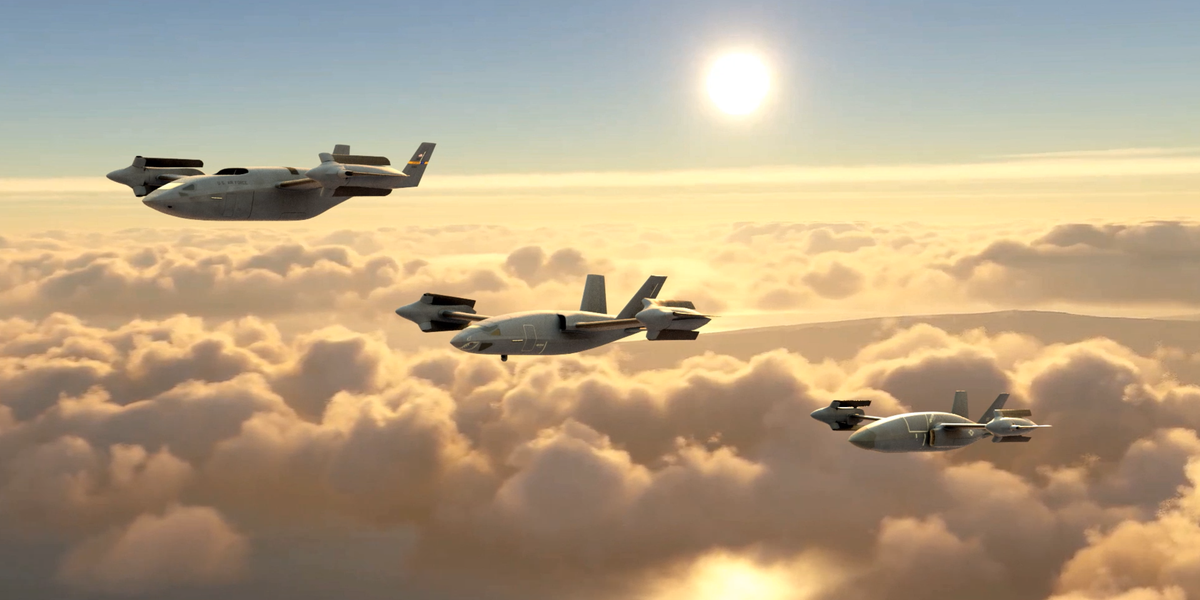

If you came here expecting a clean, shiny answer like, “Yes, the V-22 Osprey will be replaced by Aircraft X on Date Y,” I regret to inform you that military aviation does not believe in tidy endings. The phrase V-22 Osprey replacement sounds simple, but the real story is more like a three-lane highway full of detours, upgrades, budget debates, and one giant flashing sign that says it’s complicated.
That is because the V-22 is not just one aircraft doing one job. The Marine Corps uses the MV-22 for assault support. The Navy uses the CMV-22 for carrier onboard delivery. The Air Force uses the CV-22 for special operations. Each version has different mission demands, different operating environments, and different levels of urgency when people start asking the obvious question: what replaces it?
So here is the short version before we dive into the rotor wash. There is no single direct, all-service replacement for the V-22 Osprey in service today. Instead, the replacement conversation is splitting into several paths: modernization of today’s V-22 fleet, the Army’s new MV-75 tiltrotor under the Future Long-Range Assault Aircraft program, and the Marine Corps’ longer-term interest in a future Next Generation Assault Support capability. In other words, the Osprey is not being tossed in the retirement bin tomorrow. It is being upgraded, scrutinized, and slowly surrounded by its possible successors.
Why the V-22 Replacement Question Suddenly Feels Urgent
The replacement debate is not happening in a vacuum. It is happening because the V-22 has had a rough stretch. Safety concerns, restrictions on operations, readiness problems, and a heavy spotlight from investigators have all pushed the aircraft back into the headlines. That matters because replacement conversations almost always speed up when a platform becomes harder to maintain, harder to trust, or harder to field at scale.
Recent reviews have sharpened that pressure. Official findings and outside oversight have pointed to unresolved safety risks, aging components, and readiness shortfalls across the fleet. That does not mean the Pentagon has decided to abandon the aircraft. It does mean the services are being forced to think harder about what comes next, what gets modernized, and how long the current platform can realistically carry such a heavy operational load.
In plain English, the V-22 is still valuable, but it is no longer coasting on novelty. The aircraft has moved from “revolutionary capability” to “critical capability that now needs expensive adult supervision.” That tends to be the moment when replacement talk goes from conference-room theory to serious planning.
The Biggest Misunderstanding: The MV-75 Is Not a One-for-One Osprey Replacement
One reason people get confused is that the Army’s new MV-75 looks like the obvious heir to the V-22’s tiltrotor throne. It is fast. It is long-range. It comes from Bell’s V-280 Valor line. It is being sold as a transformational aircraft. So naturally, plenty of people hear “new tiltrotor” and assume “new Osprey.”
Not so fast, rotor fan.
The MV-75 FLRAA is being developed for the Army and U.S. Special Operations Command as the next-generation assault and utility aircraft for missions now handled largely by the UH-60 Black Hawk family. The Army has been explicit that this platform is meant to augment and replace part of the Black Hawk fleet, not serve as a direct Pentagon-wide swap for the V-22. It is a major tiltrotor milestone, but it is solving a different problem.
That said, the MV-75 absolutely matters to the V-22 replacement conversation. Why? Because it proves something important: the Pentagon is still betting on tiltrotor technology, not walking away from it. If the Osprey’s issues had killed confidence in the whole concept, the Army would not be leaning into a new high-speed vertical lift aircraft. Instead, the Army is moving ahead and even using MV-22 familiarization training to help shape doctrine and preparation for the MV-75 era.
That is a huge signal. The lesson the Pentagon seems to be drawing is not “tiltrotors were a mistake.” The lesson is more like “tiltrotors are too useful to quit, so the next generation had better be smarter, easier to sustain, and built with a lot more institutional learning.”
The Marine Corps Path: Modernize Now, Replace Later
If any service has the deepest emotional, tactical, and logistical relationship with the Osprey, it is the Marine Corps. The MV-22 became the backbone of Marine medium-lift assault support, and it dramatically changed how Marines think about distance, ship-to-shore movement, crisis response, and distributed operations. For the Marine Corps, replacing the Osprey is not like trading in a pickup truck. It is closer to redesigning part of the service’s operating identity.
That is why the Marine Corps has not announced a quick, clean break from the MV-22. Instead, it is pursuing a layered strategy. The current fleet is being modernized through programs aimed at safety, avionics refresh, obsolescence mitigation, nacelle improvements, and broader platform relevance. In service planning documents, the Corps has been clear that modernization is intended to keep the aircraft useful until the eventual development and fielding of NGAS, or Next Generation Assault Support.
That is the real long-term replacement lane for the Marine Corps. Not a dramatic overnight switch, but a bridge from today’s MV-22 to tomorrow’s NGAS. And here is the important part: NGAS is still more destination than airplane. The Marine Corps clearly sees it as the future answer, but the public picture is still fuzzy enough that nobody can honestly point to a finished production aircraft and say, “There it is. Osprey solved.”
So the Marine Corps is doing what large military organizations often do when the future platform is not ready yet: keep the current system flying, improve the worst pain points, and buy time for the next generation to mature. It is not glamorous, but it is very real.
The Navy Path: The Osprey Is the Replacement, Not the Retiree
The Navy’s story is even more ironic. In Navy service, the CMV-22 is not really the old thing waiting to be replaced. It is the replacement. Specifically, it took over the carrier onboard delivery mission from the C-2A Greyhound. That means the Navy is still in the business of integrating, sustaining, and improving its Osprey variant rather than planning a near-term exit.
The CMV-22 gives the Navy something carrier logistics desperately needs: vertical landing flexibility, expeditionary basing options, and the ability to move personnel, mail, parts, and priority cargo without depending on the same runway logic as older aircraft. In a maritime environment, that flexibility is not a luxury. It is a scheduling miracle wearing rotor blades.
Because of that, the Navy’s near-term focus is not “what replaces the CMV-22 next year?” It is “how do we improve availability, reduce maintenance cycle time, and make the aircraft more reliable?” That is a very different question. It also means the Navy is likely to remain invested in the Osprey family for years, even while the broader replacement debate continues elsewhere.
What a True V-22 Osprey Replacement Would Actually Need to Do
This is where the conversation gets serious. Replacing the V-22 is not just about building something newer. It is about building something that can beat the Osprey at the exact weird combination of things the Osprey does well. And that is harder than it sounds.
1. It would need helicopter-like access without helicopter-like limitations
The Osprey’s magic trick has always been that it can take off and land vertically but travel much faster and farther than a conventional helicopter. Any replacement has to preserve that operational flexibility or the services will feel like they traded a Swiss Army knife for a butter knife.
2. It would need serious range and speed
The modern battlefield keeps getting larger, especially in the Indo-Pacific. Services are not looking for a replacement that merely hovers politely. They want range, endurance, and the ability to move people or cargo across difficult distances without building a gas station every 100 miles.
3. It would need better reliability and easier sustainment
This may be the most important requirement of all. The Osprey replacement will not win just by flying faster. It will win by spending less time being stared at by frustrated maintainers in a hangar. Readiness, supply chains, safety improvements, and maintainability are no longer side notes. They are central plot points.
4. It would need to work from ships, austere sites, and distributed locations
The replacement cannot be a runway diva. Marines and sailors need something that can operate from amphibious ships, expeditionary bases, and rough locations where convenience packed a bag and left years ago.
5. It would need room to grow digitally
Open architecture, software upgrades, mission system integration, predictive maintenance, and survivability enhancements are now table stakes. The next aircraft cannot be locked in amber like a museum bug with a flight schedule.
So What Could Replace the V-22?
MV-75 as a technology successor
The MV-75 is the closest thing to a public, visible next-generation tiltrotor in the U.S. military pipeline. It shows where Pentagon thinking is going: more speed, more range, more digital flexibility, and a design informed by decades of Osprey lessons. But it is not a direct replacement for all V-22 missions. Think of it as a technological descendant, not a legal heir with the full family estate.
NGAS as the Marine Corps’ likely long-term replacement path
For Marine assault support, NGAS looks like the most likely future replacement concept. It is the label attached to the service’s next chapter after the MV-22. The catch is that a label is not a fleet. Until NGAS becomes a clearer program with defined cost, schedule, and hardware, the Marine Corps will keep one foot in the future and one foot firmly planted on upgraded Ospreys.
A mixed family of systems
The smartest answer may not be one aircraft at all. It may be a crewed platform supported by unmanned escorts, distributed sensors, autonomous resupply systems, and mission-specific aircraft that split the Osprey’s old workload into more manageable pieces. That approach would fit modern military thinking, where survivability and flexibility increasingly come from networks and teaming, not just from a single heroic airframe.
In other words, the true replacement for the V-22 may turn out to be less like “the new Osprey” and more like “an ecosystem that does the Osprey’s job with fewer headaches.” That is less catchy for a poster, but far more believable.
What “Replacement” Really Means Right Now
At this moment, V-22 Osprey replacement does not mean mass retirement. It means transition planning. It means modernization programs like cockpit refreshes, nacelle improvements, fleet configuration efforts, and broader mid-life upgrades. It means the Marine Corps is openly tying the Osprey’s service life to NGAS development. It means the Navy is still relying on the CMV-22 as a vital logistics connector. It means the Army is using the Osprey as a living classroom while preparing for the MV-75.
It also means the services are trying to squeeze maximum operational value from an aircraft family that remains uniquely capable even while it remains uniquely demanding. That tension explains almost everything. The Osprey is hard to replace because it does things others do not. It is also hard to keep because those same capabilities come with heavy technical, safety, and sustainment burdens.
So when people ask whether the V-22 is being replaced, the honest answer is this: yes, eventually; no, not cleanly; and definitely not with one simple swap.
My Take: The V-22’s Replacement Will Be a Strategy Before It Is a Tail Number
The most realistic forecast is that the Osprey’s replacement arrives in phases. First comes continued safety work, restrictions management, and modernization. Then comes deeper service-specific divergence: the Army fields MV-75, the Marine Corps refines NGAS, the Navy keeps sustaining CMV-22 operations, and the Air Force evaluates its own long-range path. Only after that do you get a clearer picture of what “replacement” really means across the joint force.
That may disappoint anyone hoping for a dramatic aviation soap opera finale. But from an acquisition perspective, it makes sense. The Pentagon does not replace a unique aircraft family by snapping its fingers and unveiling a shiny cousin at halftime. It does it painfully, bureaucratically, and over many budget cycles while maintainers drink bad coffee and program managers discover new acronyms at alarming speed.
Still, one thing is already clear. The future is not retreating to slower, shorter-range vertical lift. The Army’s commitment to the MV-75 makes that obvious. The Marine Corps’ NGAS language reinforces it. The real question is not whether the services still want high-speed vertical lift. They do. The question is whether the next generation can deliver that capability with better reliability, clearer safety management, and less drama per flight hour.
Real-World Experiences Around the V-22 Osprey Replacement Debate
The most revealing part of the V-22 Osprey replacement discussion is that it feels completely different depending on where you stand. For a Marine infantry planner, “replacement” is not an abstract procurement slide. It is a question of how fast a unit can get from ship to shore, how far it can move without constant refueling stops, and how much flexibility remains after the first landing zone becomes unusable. That planner does not romanticize the Osprey, but also does not casually give up its speed and reach. To that person, a replacement only counts if it preserves the tempo that made the MV-22 so useful in the first place.
For maintainers, the conversation sounds different. Their version of replacement is less about glossy concept art and more about parts availability, inspection burden, troubleshooting time, and whether the aircraft spends more hours flying than waiting for attention. In that world, reliability is not a buzzword; it is morale. An aircraft with amazing performance but constant maintenance friction can wear down a unit faster than any marketing brochure admits. So when maintainers hear about future platforms, what they often want is not science fiction. They want fewer chronic pain points wearing a very expensive airframe costume.
On the Navy side, the CMV-22 experience adds another layer. Carrier logistics crews care about whether the aircraft can deliver what the strike group needs, when it needs it, without turning every supply run into a scheduling puzzle from the underworld. The Osprey’s ability to move cargo and people without the old fixed-wing limitations is a genuine operational advantage. That is why the Navy’s attitude often feels less like “please replace this immediately” and more like “please make this platform more available, more reliable, and less maintenance-hungry.”
Then there is the Army perspective, which is almost like watching a younger relative study the family history before buying a house next door. Army aviators gaining familiarity with the MV-22 to prepare for the MV-75 tells you a lot. They are not just admiring tiltrotor technology from afar. They are learning the ecosystem: training, maintenance, handling, doctrine, and all the unglamorous details that determine whether a promising aircraft becomes a real warfighting capability. That experience matters because it suggests the Army wants the speed and range benefits of tiltrotor flight without blindly inheriting every Osprey-era lesson the hard way.
And for acquisition officials, the replacement debate is probably the least cinematic of all. It is about timelines, industrial base realities, modernization sequencing, risk acceptance, and how to keep a fleet operational while its successor still lives in charts, prototypes, and future budget requests. Nobody in that lane gets to wave a magic wrench and declare victory. They have to bridge the messy middle, where the current platform still matters and the future one is not ready yet.
Put all of those perspectives together, and the central experience becomes obvious: the V-22 replacement discussion is really a balancing act between capability and confidence. Everyone still values what the aircraft can do. The tension comes from how hard it has been to sustain that capability at the standard the services want. That is why the next replacement will be judged not just by performance, but by whether operators, maintainers, planners, and commanders all trust it enough to build their missions around it.
Conclusion
The V-22 Osprey is not heading for an immediate one-size-fits-all replacement. Instead, the U.S. military is building a future in layers. The Army is charging ahead with the MV-75 as a next-generation tiltrotor for Black Hawk missions. The Marine Corps is modernizing the MV-22 while treating NGAS as the long-term destination. The Navy is still depending on the CMV-22 as a critical logistics connector. Across all of that, safety reviews and readiness concerns are accelerating pressure for something better, even as the current aircraft remains too useful to walk away from.
That is the real answer to the V-22 Osprey replacement question. The replacement is coming, but it is arriving as a transition, not a dramatic reveal. And in classic Pentagon fashion, the future may show up first as a doctrine update, a modernization package, and a budget line before it finally shows up as a new aircraft on the ramp.