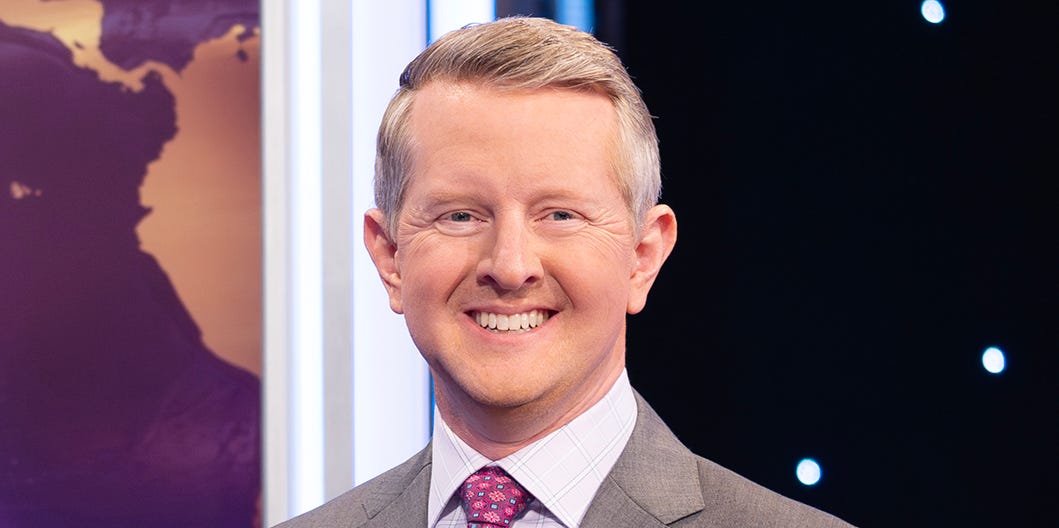

Ken Jennings has spent years making America feel both brilliant and suspiciously underprepared. One minute you are confidently answering a trivia question from your couch, and the next minute Ken casually reminds you that your brain still has the storage capacity of a half-full stapler. So when the Jeopardy! host shared an update on his new book, trivia fans reacted exactly the way you would expect: with delight, curiosity, and the sudden urge to prove they still know all 50 state capitals.
The update is a good one. Jennings’ new book, The Complete Kennections: 5,000 Questions in 1,000 Puzzles, moved from announcement mode to real-world, on-the-shelf existence, giving readers a hefty new excuse to test their knowledge, embarrass their siblings, and turn coffee tables into informal quiz arenas. For fans of Jeopardy!, puzzles, wordplay, and the very specific joy of saying “Wait, I almost had it,” this project feels like an unusually natural next step for Jennings.
And honestly, that may be why the news landed so well. This is not a random celebrity book with a vaguely inspirational title and a jacket photo that looks like it was taken during a very intense yogurt commercial. It is a Ken Jennings book in the most Ken Jennings sense possible: smart, playful, deeply steeped in trivia culture, and built around a format he has been shaping for years.
What Ken Jennings’ Update Actually Means
The headline-worthy update is simple: Jennings’ long-teased trivia book is officially out in the world, and he has been promoting it with the kind of self-aware humor fans have come to expect. Rather than treating the release like a solemn literary event attended only by tweed jackets and whispered opinions, Jennings has leaned into the book’s oversized, all-in nature. The tone around the release has been enthusiastic, funny, and refreshingly unpretentious.
That matters because it tells readers exactly what kind of book this is. The Complete Kennections is not trying to be a dusty monument to obscure facts. It is meant to be played with. Flipped through. Shared out loud. Argued over. Left on a table, reopened at random, and used to settle everything from family road-trip boredom to the eternal household debate over who is “actually good at trivia.”
In other words, the update is not just that there is a new Ken Jennings book. It is that the book has arrived with its personality intact.
What Is The Complete Kennections?
At its core, the book collects the logic-and-trivia hybrid puzzle format Jennings has been associated with for years. The structure is deliciously simple. Readers get five trivia questions. They solve them. Then comes the twist: the five answers share a secret link, or “Kennection.” That final leap is what gives the format its bite.
If that sounds easy, congratulations on your confidence. Please preserve it while you still can.
The magic of the format is that it rewards more than raw recall. Yes, broad knowledge helps. But pattern recognition, lateral thinking, and the ability to notice weird little overlaps matter just as much. A player might know all five individual answers and still miss the final connection. Another person might be shaky on one clue but suddenly spot the category link and crack the whole puzzle wide open. It is trivia with a grin and a trapdoor.
Why the Format Works So Well
The best puzzle concepts always make you feel smart one second and lightly humbled the next. Kennections thrives on that tension. It invites readers from multiple entry points: pop culture fans, history nerds, geography lovers, casual puzzlers, and people who somehow know everything about presidents, rivers, or Batman villains. The variety keeps the book lively, while the hidden-theme mechanic gives it a clean identity.
It also fits the current puzzle moment beautifully. Readers have embraced games that combine deduction with language, structure, and pattern spotting. Jennings’ project lands right in that cultural sweet spot, but with a more expansive trivia DNA. It scratches the same itch while staying unmistakably his.
Why It Feels So On-Brand for Ken Jennings
Some books feel reverse-engineered from fame. This one feels grown from actual habit. Jennings has long built his public identity around curiosity, retention, and a slightly mischievous appreciation for oddball knowledge. He is not only a Jeopardy! legend and host; he is also a longtime writer, quizmaker, and public ambassador for the idea that learning weird facts can be both delightful and socially dangerous if you refuse to stop sharing them at dinner.
That background gives the book credibility. Readers are not buying into a gimmick. They are buying into a format Jennings has already lived with, refined, and clearly enjoys. The book works because it comes from a real lane he has occupied for years.
Why This New Book Matters Beyond the Announcement
The release says something bigger about Jennings’ role in modern trivia culture. For many viewers, he is no longer just the guy who won a staggering number of Jeopardy! games. He is now part of the architecture of the show itself, part of the ongoing public conversation around knowledge, memory, and what makes information fun rather than boring.
That is one reason this book feels timely. Trivia has changed. It used to live in board games, bar nights, and game shows. Now it also lives in daily puzzle habits, group chats, podcast tangents, and social media debates over whether a clue was fair or whether everyone has simply agreed to forget basic geography. Jennings sits neatly at the center of that ecosystem.
There is also something pleasantly analog about a big puzzle book arriving in a digital-first era. Jennings has spoken elsewhere about facts, AI, and the value of knowledge in a time when information often feels fast, slippery, and oddly disposable. A giant physical trivia book is almost rebellious in that environment. It says: here are thousands of questions, no autoplay, no doomscrolling, no pop-up asking whether you accept cookies. Just your brain, a page, and the brutal possibility that your cousin will solve the connection before you do.
Ken Jennings’ Humor Is Part of the Appeal
Another reason fans responded warmly to the update is that Jennings did not present the book with stiff, overpolished seriousness. He has a knack for sounding like the smartest person in the room without making the room feel unwelcome. That balance is rare. Some public intellectual types can make trivia seem like an elite sport for people who alphabetize their spice rack by era. Jennings, by contrast, tends to make knowledge feel communal and funny.
That tone carries the project. A 480-page trivia book could easily feel intimidating. Under Jennings’ voice, it feels inviting. Challenging, yes. But inviting in the way a great game night is inviting: you know you may lose, but at least you will lose while yelling interesting nouns.
His rollout around the book has reinforced that charm. Coverage surrounding the release has highlighted not just the publication itself, but the sheer playfulness of the enterprise, from audiobook work to promotional appearances and fan-facing events. That broader context helps explain why the update resonated. Jennings was not merely dropping product news. He was extending a conversation he has already been having with trivia fans for years.
How the Book Strengthens the Ken Jennings Brand
By now, Jennings has pulled off a tricky career transition. Many quiz-show champions are remembered for one dazzling stretch of television and then gradually drift into nostalgic legend. Jennings managed something harder: he turned elite contestant fame into a long-running media identity. He became an author, commentator, host, and puzzle personality without losing the slightly bewildered everyman charm that made people root for him in the first place.
The Complete Kennections strengthens that identity. It bridges several parts of his public persona at once. It connects the Jeopardy! champion to the Jeopardy! host. It links the published author to the weekly quiz creator. It ties old-school newspaper puzzle culture to the newer wave of viral puzzle fandom. Most importantly, it reminds audiences that Jennings is not just someone who knows facts; he knows how to package knowledge into entertainment.
That is a huge distinction. Plenty of people are smart. Far fewer know how to make smartness enjoyable.
What Fans Can Expect From the Reading Experience
Readers picking up the book should expect scale. This is not a tiny novelty item you finish between coffee refills. It is a substantial collection meant to be dipped into repeatedly. That makes it useful in several ways. You can play solo, using the book as a daily brain workout. You can use it socially, reading clues aloud and turning dinner into an unofficial championship round. You can gift it to the person in your life who treats every casual conversation like a hidden audition for quiz television.
The format also gives the book strong replay value. Even when you solve a set, you remember the surprise of the connection. And if you do not solve it, the missed puzzle tends to linger in your brain like an unfinished song lyric. That “I should have seen it” quality is frustrating in the best possible way. It makes you want another round.
For Jeopardy! fans, there is added appeal in hearing Jennings’ sensibility outside the structure of televised clues. On the show, he facilitates the game. In the book, his puzzle-maker instincts come to the front. You get more of the architecture of his thinking, not just the on-camera version of his professionalism.
Why the Update Sparked Genuine Excitement
Part of the enthusiasm comes from trust. Audiences know what Jennings represents: intelligence without snobbery, difficulty without meanness, and humor without trying too hard. In a media culture full of “big announcements” that amount to little more than a shrug in hardcover form, this update felt refreshingly concrete.
It also helps that the subject itself is fun. A new Ken Jennings puzzle book is almost impossible to make cynical. It does not demand outrage, factional loyalty, or a seven-part explainer about the collapse of civilization. It asks you to enjoy thinking. In 2026, that is practically wellness content.
There is also a sentimental dimension for longtime fans. Jennings is one of those pop-culture figures whose growth has happened publicly but gradually. People watched him win. Then watched him return. Then watched him inherit a more central role in the Jeopardy! universe. A book like this makes that trajectory feel coherent. He is still doing what he has always done best: turning knowledge into a shared experience.
Experience Section: What a Book Like This Feels Like in Real Life
One of the most interesting things about Jennings’ new book is that it is not just something you read; it is something you do. That distinction changes the experience completely. A traditional nonfiction release may ask for your attention. A puzzle book like this asks for your participation. It wants your guesses, your wrong turns, your strange little moments of triumph, and your occasional need to dramatically accuse the author of being “ridiculous” before admitting he got you fair and square.
Imagine opening the book on a lazy Saturday afternoon, solving one puzzle just to “try it out,” and then discovering an hour has disappeared. That is the sort of experience these books create. They sneak up on you. The short format of each set makes you think you are only committing to a few minutes, but the hidden-theme payoff keeps luring you into one more round. It has the same energy as snacks that come in resealable bags and somehow still vanish immediately.
Then there is the shared experience. This kind of book thrives in kitchens, living rooms, road trips, waiting rooms, and family gatherings where someone inevitably decides to read clues aloud. Suddenly the quiet cousin becomes a geography assassin. Your dad misses a pop-culture clue from 1998 and takes it personally. Somebody insists they “knew it all along,” which is trivia’s version of replay review. Even people who claim not to like puzzles often get pulled in once they realize the format is as much about pattern recognition as encyclopedic knowledge.
It also creates a very particular kind of satisfaction for readers who love learning sideways. You may open a puzzle trying to remember a movie title and close it having accidentally reinforced your knowledge of literature, science, sports, and wordplay all at once. That is part of Jennings’ charm as a quizmaker. He understands that trivia is not just about hoarding facts like a dragon with a library card. It is about seeing how information connects. The book turns knowledge into a network rather than a filing cabinet.
There is a solo pleasure, too. For some readers, this book will become a nightly ritual: a few puzzles before bed, a small brain workout after work, or a break from endless screens. In that sense, the experience is almost cozy. It gives structure without pressure. You can spend three minutes on a puzzle or stubbornly wrestle with it until your tea goes cold and your pet starts judging you. Either way, the book meets you where you are.
And for longtime Jeopardy! viewers, there is an extra layer of familiarity. Jennings has spent years representing a certain kind of joyful intelligence on television. Using the book can feel like stepping into an extension of that world, but with more room to pause, collaborate, and fail in private. No studio lights. No buzzer timing. No national audience watching you forget a perfectly reasonable answer. Just the puzzle, the guess, the reveal, and the oddly addictive little thrill of realizing that five unrelated clues were secretly in conversation the whole time.
That, more than anything, explains why this new-book update feels bigger than a routine release notice. It points toward an experience people can actually imagine themselves having. Not just buying a book, but living with it. Playing with it. Passing it around. Leaving it open on the table. Returning to it on holidays, weekends, and random Tuesday nights when everyone needs a reminder that learning can still be playful.
Ken Jennings has built a career out of proving that facts can entertain. This book update suggests he still knows exactly how to do it.