
If the kitchen is the heart of the home, the countertop is the overworked best friend holding everything together. It catches hot pans, coffee rings, homework, grocery bags, and the occasional “I’ll just put this here for one second” pile that somehow lives there for three days. So when countertop trends shift, they do not whisper. They announce themselves right in the middle of your kitchen.
Heading into 2026, the message is clear: homeowners want countertops that feel warmer, look more natural, work harder, and show a little personality. The super-polished, overly perfect, showroom-only look is starting to lose ground to surfaces with movement, texture, character, and practical staying power. In other words, kitchens are getting a little less sterile and a lot more human.
That does not mean every kitchen is about to become a rustic farmhouse fantasy or a moody European movie set. It means people are choosing materials and finishes that feel lived-in, layered, and smarter for real life. Think creamy quartzite instead of icy white slabs. Think darker stones with drama. Think mixed materials that give islands their own identity. Think waterfall edges that still matter, but with better styling. And think performance materials that are evolving fast, especially as more buyers pay attention to maintenance, safety, sustainability, and long-term value.
Below are the five countertop trends expected to take over kitchens in 2026, plus what makes each one appealing, where it works best, and how to use it without accidentally creating a kitchen that feels trendy for about eleven minutes.
1. Warm, Softly Veined Stone Is Replacing Icy Perfection
The biggest countertop mood for 2026 is warmth. Not orange, not “Tuscan villa circa 2004,” but warm in a refined, grounded, grown-up way. Homeowners are gravitating toward countertops in cream, beige, taupe, mushroom, sand, soft brown, and muted gold. The look is elegant, but it is also easier on the eyes than the bright white and cool gray palette that dominated kitchens for years.
This is where quartzite, marble, and stone-look engineered surfaces are winning attention. Taj Mahal quartzite, in particular, keeps showing up in design conversations because it delivers soft golden veining, subtle movement, and a natural warmth that pairs beautifully with oak, walnut, painted cabinetry, and mixed metals. It feels upscale without shouting, which is probably why designers keep bringing it up and homeowners keep falling for it.
The keyword here is movement. In 2026, people want slabs that look like they came from the earth, not like they were generated by a printer that had one really good day. Soft veining, layered tones, and natural variation are in. Harsh, repetitive, fake-looking patterns are out. A countertop should feel like it has some soul, not like it is trying to pass a stone impersonation exam under fluorescent lighting.
Why this trend works
Warm stone instantly makes a kitchen feel more welcoming. It softens modern cabinetry, adds depth to transitional spaces, and helps large kitchens feel less cold. It also plays nicely with the broader 2026 shift toward wood cabinetry, earthy color palettes, and organic textures.
Best way to use it
Pair a creamy veined slab with medium-tone wood cabinets or painted cabinets in soft olive, taupe, or off-white. Add a matching slab backsplash if you want a more seamless look, or stop the stone partway up the wall with a small ledge for a slightly more styled, layered effect.
Watch out for this
Do not confuse “warm” with “yellowed.” The best versions of this trend still feel clean and refined. Look for subtle warmth, not a countertop that resembles old vanilla pudding.
2. Dark and Color-Drenched Countertops Are Becoming the Kitchen’s Main Character
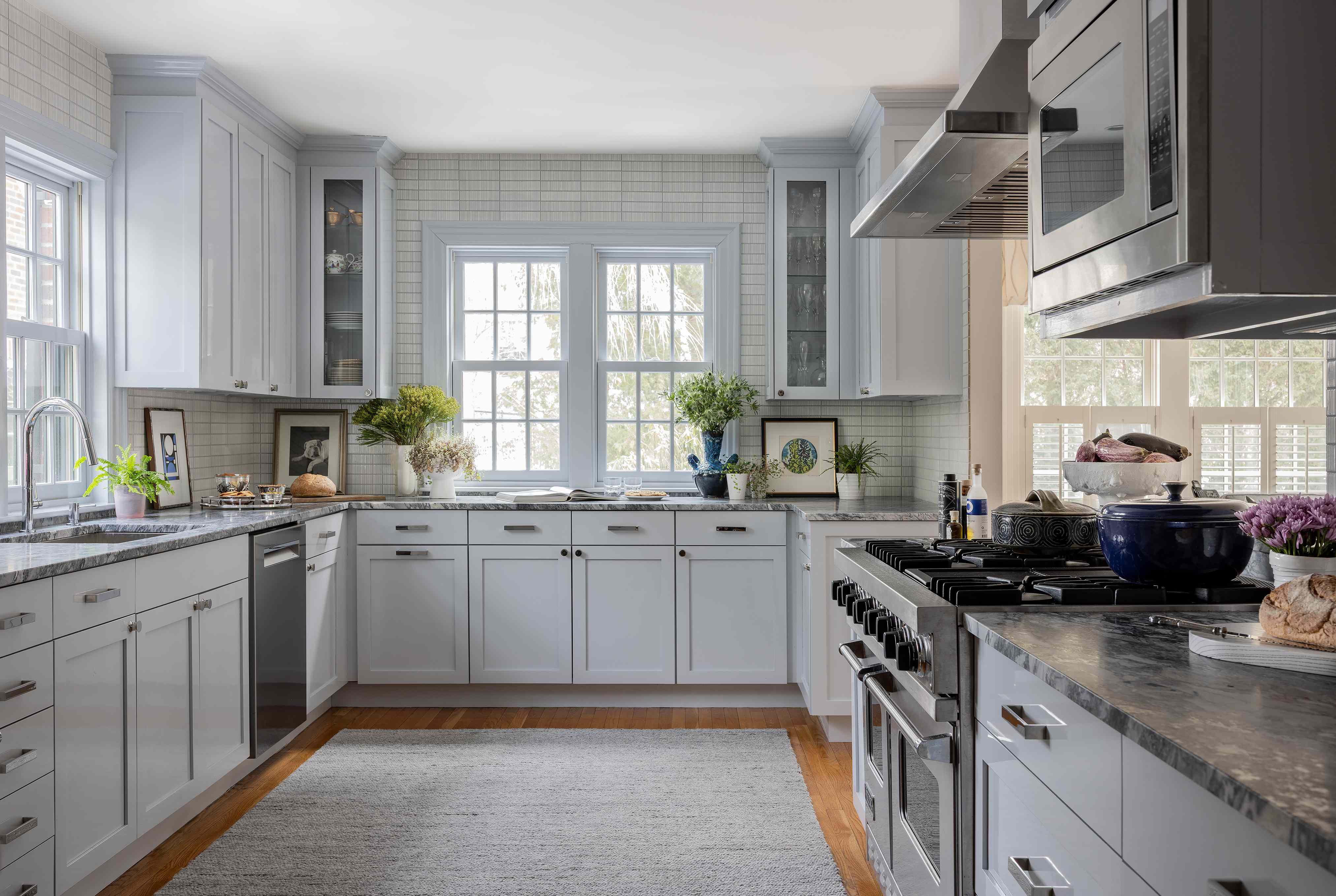
For years, many kitchens played it safe with white or off-white countertops. In 2026, darker and more colorful slabs are stepping into the spotlight. Black stone, charcoal surfaces, deep gray, burgundy tones, earthy brown, and even blue-toned slabs are gaining traction, especially on islands and statement areas.
This trend works because kitchens are becoming more expressive. Homeowners still want timeless design, but they are also more open to drama, contrast, and focal points. A dark countertop can anchor a room, create depth, and make surrounding finishes look more intentional. It is the visual equivalent of adding a blazer to an outfit that was one accessory away from looking unfinished.
Dark countertops are especially effective when paired with warm wood cabinets, creamy walls, brass hardware, or lighter perimeter surfaces. The result feels layered and high-end rather than gloomy. Burgundy and brown-toned stones are also gaining attention because they bring color without looking loud. They feel rich, earthy, and a little unexpected in the best way.
Blue surfaces are an interesting offshoot of this trend. They are not taking over every kitchen, but they are showing up in new surface launches and designer conversations as an accent option for people who want something distinctive but still sophisticated.
Why this trend works
Darker slabs create contrast and visual weight, which can make a kitchen feel more curated. They also hide some forms of daily chaos better than stark white surfaces. That is good news for coffee drinkers, red sauce enthusiasts, and anyone who has ever looked at a white countertop and thought, “That fingerprint was not here five seconds ago.”
Best way to use it
Use a dark countertop on the island while keeping perimeter counters lighter, or go all-in with a richly veined dark stone if your kitchen gets plenty of natural light. Matte or honed finishes help the look feel current and grounded.
Watch out for this
Very dark polished surfaces can show dust, smudges, and water spots more easily. If you love the look but not the maintenance drama, consider honed or textured finishes.
3. Mixed-Material Countertops Are Turning Islands Into Functional Showpieces
One of the smartest countertop trends for 2026 is also one of the most practical: not every surface in the kitchen has to be the same. Matching every countertop used to feel like the safe, polished move. Now, designers and homeowners are treating islands more like furniture, giving them a different material, color, or finish from the main counters.
And wood is making a serious play here. Butcher block and wood slab surfaces are especially popular for contrasting island tops because they add warmth, texture, and a more collected feel. This works beautifully when the perimeter countertops are stone or quartz and the island is meant to function more as a prep station, serving area, or casual dining hub.
Mixed materials also make sense from a lifestyle standpoint. The perimeter might need a low-maintenance, stain-resistant workhorse surface, while the island can be more expressive or tactile. Instead of forcing one material to do every job, homeowners are choosing surfaces based on how each zone is used. That is not just stylish. That is kitchen intelligence.
You can also mix within the same visual family. A warm quartzite perimeter with a walnut butcher-block island feels cohesive because the undertones relate. A black stone island with creamy perimeter counters creates more contrast and drama. Either way, the goal is intentional layering, not countertop chaos.
Why this trend works
Mixed materials break up visual monotony and make kitchens feel more customized. They also let you balance beauty, budget, and function in a way that a one-material kitchen cannot always do.
Best way to use it
Choose one dominant surface for the heavy-lifting zones and one accent surface for the island. Keep the undertones aligned so the kitchen still feels connected. Think warm with warm, cool with cool, and bold with some form of restraint.
Watch out for this
Too many materials can make the room feel busy. Two is usually enough. Three is risky. Four is how you end up explaining your kitchen choices to confused guests.
4. Waterfalls, Ledges, and Styled Edges Are Getting More Sculptural
Minimalism is not disappearing, but it is definitely loosening its tie. In 2026, countertop design is becoming more architectural. Waterfall islands are still going strong, but they are evolving. Styled edges are also back in the conversation, and designers are embracing thicker-looking slabs, varied slab depth, ledges, and more decorative edge profiles to give kitchens extra dimension.
For a while, the default countertop edge was simple, straight, and square. Clean? Yes. Exciting? Not exactly. Now, there is renewed interest in eased edges, demibullnose shapes, ogee-inspired details, and other profiles that add subtle craftsmanship. It is not about making the countertop fussy. It is about making it feel considered.
Another detail gaining attention is the partial-height stone backsplash with a narrow ledge. Instead of running the slab all the way up the wall, some designers are stopping it midway and creating a small shelf-like moment for art, vessels, or everyday objects. It is a small move, but it adds warmth and personality without sacrificing the clean look people still love.
Sculptural design also shows up in slab thickness. Designers are playing with the proportions between island tops and perimeter counters so the kitchen feels less flat and more dynamic. A slightly thicker island top can turn the island into a centerpiece without needing flashy materials or wild colors.
Why this trend works
These details make a kitchen feel custom. They signal craftsmanship and give even a neutral kitchen more visual interest. It is proof that a countertop does not need to scream for attention to have a point of view.
Best way to use it
If your kitchen is otherwise simple, a styled edge or waterfall can be the detail that makes the whole room feel elevated. Use it on the island for maximum impact, and keep the rest of the palette calm.
Watch out for this
Pick one sculptural move and let it shine. A waterfall edge, ornate profile, dramatic veining, and a bold color all at once can start to feel like your countertop is trying to win a talent show.
5. Smarter Surfaces Are Winning: Low-Silica, Textured, and High-Performance Materials
The final countertop trend taking over kitchens in 2026 is less about one look and more about a smarter standard. Homeowners still want beauty, but they also want durability, easier maintenance, better long-term performance, and materials that reflect growing awareness around fabrication safety and sustainability.
That is why lower-silica and silica-free engineered options are getting more attention, especially as manufacturers respond to industry concerns around worker exposure during cutting and fabrication. At the same time, porcelain and sintered stone surfaces are becoming more compelling because they are durable, low-maintenance, and increasingly convincing in both color and texture.
Texture is a major part of this shift. Rather than glossy, ultra-flat surfaces that can feel a little too slick and synthetic, 2026 is leaning toward finishes with more tactile interest. Honed, leathered, embossed, and softly textured surfaces make a countertop feel more natural and forgiving. They add depth, reduce glare, and help engineered materials look more authentic.
This trend does not mean beauty takes a back seat. It means performance is finally joining the design brief in a more visible way. People want a countertop that can survive dinner prep, homework, weekend entertaining, and an accidental pan drop without behaving like a fragile museum exhibit.
Why this trend works
It reflects how people actually live. Kitchens are high-use spaces, and buyers are increasingly skeptical of materials that look amazing in a photo but become high-maintenance divas in daily life.
Best way to use it
If you love the look of natural stone but want easier upkeep, explore newer engineered surfaces and porcelain slabs in warm, veined patterns with matte finishes. Ask detailed questions about heat resistance, sealing, stain resistance, repairability, and fabrication requirements before making the final call.
Watch out for this
Do not choose purely by showroom lighting. Always see a large sample, check the finish in daylight, and think about your actual habits. If you cook constantly, entertain often, or have a household that treats the kitchen like a command center, performance matters more than a dramatic product name.
How to Choose the Right 2026 Countertop Trend for Your Kitchen
The smartest kitchens in 2026 are not chasing every trend at once. They are choosing the right trend for the way the room is used. A few simple questions can help narrow the field:
- Do you want the countertop to blend in or become the star?
- Do you need a low-maintenance daily workhorse or a high-impact statement piece?
- Is your kitchen short on warmth, contrast, texture, or personality?
- Would one material throughout make the room calmer, or would mixed materials make it more functional?
- Are you renovating for resale, long-term living, or both?
If you answer those honestly, the right countertop trend usually becomes obvious. Warm quartzite may be perfect for a timeless family kitchen. A black honed island may be exactly what a neutral room needs. Butcher block might be ideal if your island is meant to feel more like furniture than laboratory equipment. The best countertop is not the most fashionable one. It is the one that makes your kitchen feel better to use every day.
Conclusion
The countertop trends set to define kitchens in 2026 all point in the same direction: more warmth, more texture, more character, and smarter material choices. Warm veined stone is softening the kitchen. Dark slabs are adding depth and drama. Mixed materials are making islands more useful and more interesting. Sculptural edges and waterfalls are giving countertops a custom feel. And performance-driven surfaces are proving that practical can still look seriously good.
In other words, 2026 is not about choosing between beauty and function. It is about expecting both. Your countertop should look amazing, survive real life, and make your kitchen feel like a place where people actually want to gather. That is a much better goal than designing a room so precious no one wants to set down a coffee mug.
What Homeowners Learn After Living With These Countertop Trends
Once people actually live with these countertop choices, a few patterns show up fast. First, warm stone really does change the mood of a kitchen. Homeowners who switch from stark white or icy gray countertops to warmer quartzite, marble, or soft neutral engineered surfaces often say the room feels calmer and more inviting almost immediately. The kitchen stops looking like a pristine display and starts feeling like part of the home. Morning light tends to look softer on cream and beige surfaces, and wood cabinetry looks richer next to them. It is one of those upgrades that sounds subtle on paper but feels obvious in daily life.
Second, dark countertops are gorgeous, but they reward the right expectations. People love the depth, the mood, and the drama, especially on islands. They also quickly learn that the exact finish matters. A honed or textured black surface usually feels more forgiving than a glossy one, which can spotlight dust, fingerprints, and water marks like a tiny stage production. The takeaway is not “avoid dark countertops.” It is “choose dark countertops with your eyes open and your cleaning habits fully acknowledged.”
Third, mixed materials tend to make kitchens more functional, not just prettier. A wood-topped island often becomes the social center of the room. It feels warmer for casual meals, friend chats, laptop use, and the kind of baking session that somehow uses every bowl in the house. Meanwhile, the perimeter counters can stay focused on durability and cleanup. Homeowners who make this move often realize they were never looking for perfectly matching surfaces. They were looking for a kitchen that behaves better.
Fourth, the smaller design details end up mattering more than expected. An eased edge can make a kitchen feel softer. A partial slab backsplash with a ledge can create a spot for practical everyday items without cluttering the whole room. A waterfall island can make the space feel more finished, especially in open layouts. These are not just decorative gestures. They change how complete the room feels and how the eye moves through it.
Finally, performance becomes very real after move-in day. People may start a renovation talking about color and veining, but six months later they are talking about sealing, wiping, scratching, heat resistance, and whether a surface still looks good after actual use. That is why the smartest homeowners in 2026 are asking harder questions before they buy. They want to know what a countertop looks like on a Saturday morning with crumbs on it, not just in a styled showroom shot with one lemon and suspiciously perfect lighting. And honestly, that is the right energy. A countertop is not just a design choice. It is a daily companion. Choose one that can handle your life, your habits, and your occasional tendency to put down a hot pan while telling yourself it will probably be fine.