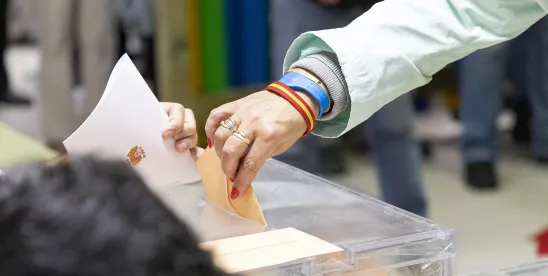

In election law, nothing says “grab the popcorn” quite like a courtroom battle over the calendar. But that is exactly what happened in New York, where the state’s highest court upheld the Even Year Election Law, a measure designed to move many local elections from sleepy odd-numbered years into the brighter, noisier, higher-turnout spotlight of even-numbered years.
The ruling is a big deal, not just because judges rarely get this much attention for discussing scheduling, but because election timing can shape who votes, how representative local government looks, and whether local races get decided by a broad public or a relatively small slice of highly engaged regulars. Supporters see the law as a turnout booster and a democracy upgrade. Critics see it as a threat to local control and a recipe for burying town issues beneath presidential campaign confetti.
Either way, New York’s Court of Appeals made one thing clear: the Legislature had the power to pass the law. That means the legal argument over whether Albany could do this is largely settled in state court. The political argument over whether Albany should have done it is very much alive and kicking.
What the Court Actually Decided
The Court of Appeals upheld New York’s Even Year Election Law in a unanimous ruling, concluding that the state Constitution does not expressly or implicitly block the Legislature from shifting certain local elections to even-numbered years. In plain English, the court said Albany did not break the rules simply by deciding that many county and town elections should happen when more voters are already headed to the polls for state and federal contests.
The legal challenge centered on New York’s home rule provisions. Several counties argued that their local charters gave them protected authority over the timing of local elections and the terms of local officials. That argument had initially found success in a lower court, which ruled against the law. But on appeal, and then again at the state’s top court, that reasoning lost steam.
The Court of Appeals essentially drew a bright line between local authority that is truly protected by the Constitution and authority that exists because state law allows it. The judges concluded that while local governments do have important home rule powers, they do not have a constitutional lock on setting election timing for the offices at issue here. In other words, the Legislature still has wide room to act unless the Constitution clearly says otherwise. And in this case, the court found no such constitutional barrier.
Why the Lawsuit Mattered
This was not just a technical dispute for legal nerds and people who alphabetize their municipal codes for fun. The case went to the heart of how power is divided in New York between the state and local governments. Opponents argued that Albany was steamrolling county charters and local decision-making. Supporters responded that elections are not just local plumbing; they affect the broader democratic health of the state.
That clash mattered because if the counties had won, the law could have been struck down as an unconstitutional intrusion into local government. Instead, the ruling preserved the state’s ability to reshape election timing for covered offices and signaled that home rule has limits when the Legislature acts within constitutional bounds.
Why Lawmakers Wanted Even-Year Elections in the First Place
The basic argument for even-year elections is simple: more people vote in even-numbered years. That is especially true when ballots include presidential or gubernatorial races, congressional contests, and other high-profile campaigns that tend to pull voters to the polls like a magnet pulls paperclips.
By contrast, odd-year local elections often struggle for attention. They can produce low turnout, limited media coverage, smaller campaign ecosystems, and results driven by a narrower electorate. Supporters of the law argued that this setup leaves major local offices in the hands of too few voters. They wanted more residents involved in choosing county executives, county legislators, town supervisors, town clerks, and similar officials.
Good-government groups have backed this logic for years. Their case is not just that turnout goes up, but that participation becomes more representative. Younger voters, working-class voters, and communities of color tend to show up in larger numbers during even-year cycles than they do in off-cycle local elections. That means election timing is not just a bureaucratic detail. It can influence whose voice is heard.
Supporters also say consolidation can reduce voter fatigue. Instead of asking people to keep making separate trips for state, federal, and local contests, the law bundles more of those choices into the same general election cycle. The pitch is basically this: if voters are already showing up, why not let them decide more of the government while they are there?
The Turnout Argument Is Hard to Ignore
This is the strongest political case for the law, and it is not exactly built on fantasy. Even-year elections consistently draw more participation than odd-year contests. That pattern is visible in New York and across the country. Research and advocacy groups focused on election reform have been hammering this point for years, and lawmakers leaned heavily on it when pushing the bill.
For supporters, the conclusion is obvious: if local offices affect taxes, roads, policing, public works, and daily life, then those races should be decided by a larger and more diverse electorate, not just by the most habitual voters in a lower-interest cycle. Their message is less “change the calendar for fun” and more “stop letting municipal power be decided in near-empty rooms.”
Who Is Affected and Who Is Not
This is where things get a little less dramatic and a little more spreadsheet-shaped.
In practice, the transition guidance from the New York State Board of Elections says the law primarily affects town offices and certain county offices outside New York City. That includes positions such as town supervisor, town board member, town clerk, highway superintendent, county executive, county comptroller, and county legislator, subject to the details of local office terms.
But the law does not sweep in every local office under the sun. Offices whose terms are fixed by the New York Constitution are excluded. That means positions such as sheriff, county clerk, district attorney, town justice, family court judge, county court judge, and surrogate’s court judge are not moved by this law. New York City offices are also outside the law’s immediate reach, and the state’s transition guidance also excludes city offices, village offices, school boards, and fire districts.
That list matters because it shows the law is not a total rewrite of New York’s election system. It is substantial, yes, but not universal. Think of it less as a demolition project and more as a major renovation with several rooms left untouched.
The Transition Is Not Instant
The ruling did not erase the 2025 local elections or send everyone into immediate electoral chaos. Instead, the law phases in the change through adjusted terms. That means some officials elected in 2025 will serve shortened terms so their offices can line up with future even-year ballots.
For example, offices that normally would have carried a two-year term in 2025 may instead be elected for a one-year term, with the regular cycle resuming in 2026. Offices that would have had a four-year term in 2025 may effectively become three-year terms so the next election lands in 2028. It is awkward, yes. But transition years usually are. Election reform rarely glides in wearing a tuxedo.
Why Critics Still Oppose the Law
The opposition argument is not frivolous. Critics, including county officials and Republican leaders, have raised several real concerns.
First, they argue local issues will get drowned out. A county executive race held alongside a presidential contest may struggle to earn headlines, donations, volunteer time, and voter attention. That concern is especially sharp in smaller communities, where local elections are supposed to focus on roads, zoning, police staffing, and county budgets, not on whatever national political firestorm is dominating cable news that week.
Second, opponents say the law weakens local control. Even though the Court of Appeals rejected the constitutional argument, critics remain politically committed to the idea that local governments should decide the structure and timing of their own elections whenever possible. To them, Albany did not modernize democracy; it overreached.
Third, some worry about ballot length and ballot drop-off. Yes, more voters may show up in even years. But not every voter completes every contest on a long ballot. Some skip lower-profile races near the bottom. So the question becomes whether a larger electorate that partly tunes out down-ballot offices is still better than a smaller electorate that is more focused. Reformers say yes. Skeptics are not convinced.
The Partisan Subtext
Let us also not pretend everyone in this fight is a neutral observer wearing a powdered wig and speaking only in constitutional poetry. Even-year elections tend to attract a broader electorate, and broader electorates can shift political outcomes. Opponents have argued that Democratic lawmakers knew exactly what they were doing by aligning local elections with higher-turnout cycles that might favor their party.
Supporters counter that boosting participation is the point, not an unfortunate side effect. They argue that if a bigger electorate changes outcomes, that is called democracy, not cheating. That back-and-forth will not disappear just because the court ruled on the legal question.
What the Decision Means for New York Politics
The biggest immediate takeaway is that the Even Year Election Law survived state constitutional review. That gives reform advocates momentum and makes the policy real for affected local governments. Candidates, election administrators, parties, and civic groups now have to plan for a different rhythm.
The ruling also adds fuel to broader conversations about New York City and other offices that still remain outside the law’s reach. Separate proposals have aimed to move more elections, including city elections, into even-numbered years, but changes involving constitutionally fixed offices would require a constitutional amendment and voter approval. That is a heavier lift and a slower road.
So while the Court of Appeals did not create a fully unified election calendar for New York, it did push the state much closer to one. The decision may end up being remembered less as a narrow court victory and more as a turning point in how New York thinks about turnout, representation, and the old habit of holding local elections when comparatively few people are watching.
What This Change Feels Like in Real Life
Election law stories can sound abstract, but the transition will feel very concrete on the ground. For voters, the experience will likely be a mix of convenience and overload. The convenience part is obvious: fewer separate election cycles to track, fewer random Tuesdays sneaking up on people, and a better chance that someone who is already motivated by a major race will also cast a ballot for local offices. The overload part is real too. Even-year ballots can be long, dense, and easy to rush through. A voter who comes in laser-focused on president, governor, or Congress may suddenly meet county legislator halfway down the page and think, “Well, this escalated quickly.”
For local candidates, the experience could be even more dramatic. Running in a quieter odd-year environment is like campaigning at a neighborhood block party. Running in an even-year cycle can feel more like setting up a folding table next to a rock concert. There are more people around, which is great, but there is also more noise. Candidates for county executive or town supervisor may have to work harder to explain who they are and why their office matters when national campaigns are vacuuming up attention, volunteers, donors, and oxygen.
Incumbents elected in transition years may have the strangest experience of all. Someone who expected a normal two-year or four-year runway may suddenly find the next campaign arriving early because the term has been shortened to fit the new calendar. That means governing and campaigning start to overlap faster than expected. One minute you are settling into office. The next minute your consultants are reminding you that the future has arrived wearing uncomfortable shoes.
Election administrators and local boards of elections will also feel the shift in a very practical way. Adjusting calendars sounds simple until you remember that ballots, petition deadlines, voter education, candidate filings, and term calculations all have to line up correctly. One wrong interpretation and everyone has a headache. The Board of Elections transition guidance exists for a reason: this is not just a philosophical reform. It is an operational one.
Civic organizations may be among the biggest winners. Groups that have long complained about low-turnout local elections now get a stronger argument for voter outreach tied to a bigger cycle. Instead of trying to persuade the public that an obscure odd-year race deserves its own trip to the polls, they can meet voters where they already are. That is a major strategic advantage.
At the same time, communities that value local focus may feel a genuine sense of loss. Odd-year elections, for all their flaws, can force attention onto municipal issues. There is no presidential circus in the room. No Senate race swallowing airtime. No giant national message machine flattening everything into red-versus-blue theater. Critics worry that local debates about taxes, public safety, infrastructure, and development will now compete against the biggest political brands in the country. That concern is not imaginary; it is the tradeoff at the center of the entire reform.
So the lived experience of the Even Year Election Law will probably not be a clean fairy tale where everyone votes more and understands everything perfectly. It will be messier than that. Some voters will appreciate the convenience. Some candidates will resent the crowding. Some reformers will celebrate. Some county officials will grumble into the middle distance. But the one thing nobody can honestly call it anymore is theoretical. New York’s highest court has spoken, and the calendar fight is now becoming everyday political reality.
Conclusion
New York’s highest court did not just uphold a scheduling tweak. It upheld a major election reform built on a simple but powerful premise: local democracy may work better when more people actually participate in it. Supporters believe the Even Year Election Law moves New York toward a fuller, fairer electorate. Opponents believe it sacrifices local focus and local autonomy in the name of turnout.
Both sides have arguments worth hearing. But as a matter of state constitutional law, the Court of Appeals has now answered the central question. The Legislature had the authority to act, and the Even Year Election Law stands.
That means the next chapter is no longer mostly about court briefs. It is about implementation, adaptation, and political consequences. In other words, New York is done arguing over whether the calendar can change. Now it gets to find out what that change actually does.