
Some friendships end with a slow fade. Others end with a typo in a text, an awkward lunch, or the kind of fight that makes everyone involved suddenly fascinated by ceilings. And then there are the friendships that go down in full cinematic fashion: a mall, missing clothes, security cameras, a false accusation, and a years-long bond snapping like a cheap bracelet from a kiosk no one should trust in the first place.
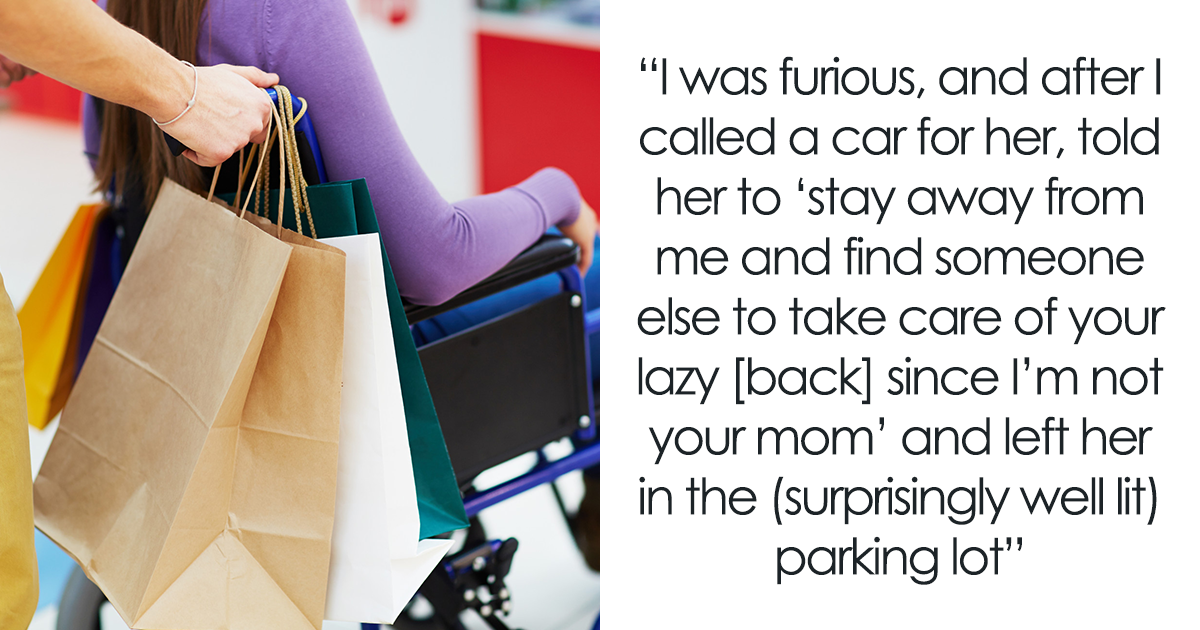
That is why this viral story landed so hard online. According to a widely shared account later summarized by entertainment site Bored Panda, a teen girl said her longtime best friendwho had become disabled after an accident and used a wheelchairstole clothes at a mall and then tried to pin the theft on her. Cameras reportedly showed what happened, the truth came out, and the friendship imploded almost instantly. The details of the anonymous post cannot be independently verified, but the emotional core of the story feels painfully real to anyone who has ever watched a friendship turn into a burden, a power struggle, or a guilt trap.
And that is exactly why the story deserves more than a gasp, a comment, and a quick scroll away. Beneath the headline drama sits a bigger conversation about teen friendship betrayal, false accusations, boundary collapse, disability and accountability, grief, resentment, and the moment when “being supportive” quietly mutates into “I am doing all the emotional heavy lifting and somebody hand me a juice box before I lose it.”
The Viral Story Hit a Nerve for a Reason
The online account described two girls whose friendship stretched back more than a decade. After one became disabled in an accident, the relationship allegedly changed shape. What used to be a friendship started to look more like an unpaid caregiving arrangement with emotional strings attached. The other teen reportedly felt obligated to be constantly available, suppress her own grief, and organize her life around her friend’s needs. Then came the mall incident, when the disabled teen was allegedly caught shoplifting and tried to shift the blame.
That last part matters. Friendships can survive annoyance, miscommunication, jealousy, and even stretches of distance. What they usually cannot survive is a deliberate attempt to sacrifice one friend to save the other. A false accusation is not just rude behavior with better lighting. It is a direct attack on trust, reputation, and safety.
American Academy of Pediatrics guidance on healthy relationships says the basics are respect, communication, honesty, trust, equality, individuality, and safety. Read that list again and this story starts looking less like a rough patch and more like a demolition project. If one person has more power, punishes independence, blames the other for their problems, or treats boundaries like decorative suggestions, the relationship is no longer healthy. It may be dramatic, intense, and impossible to explain to outsiders in under thirty secondsbut healthy? No.
Why One Accusation Can End Years of Friendship
Trust Breaks Faster Than It Builds
Trust is slow-cooked. Betrayal is microwave speed.
In teen friendships, especially long ones, there is often a deep assumption that the other person would never intentionally let you take the fall for something ugly. The second that assumption dies, the friendship changes categories. You are no longer asking, “How do we fix this?” You are asking, “Was I ever safe with this person at all?”
That is why false blame is so explosive. It does not merely create conflict; it rewrites the history of the relationship. Every past guilt trip, every controlling moment, every strange overreaction suddenly looks different. The brain starts replaying old scenes like a suspicious detective with too much coffee.
Child Mind Institute guidance on conflict resolution encourages kids to step back, look beyond one incident, and communicate without lashing out or making accusations. That advice is excellent when the conflict is ordinaryhurt feelings, crossed wires, social awkwardness, the classic “you posted the unflattering photo and now I must relocate to another planet.” But when someone tries to pin criminal behavior on a friend, it is no longer just a misunderstanding. It is a character test, and the results are not exactly glowing.
When Friendship Turns Into Duty
One of the most important parts of the story is not the mall theft. It is the long buildup before it. The alleged best friend had become less of a friend and more of a manager, helper, handler, chauffeur, audience, and emotional sponge. Cleveland Clinic experts describe unhealthy helping dynamics as situations where one person starts giving too much time, energy, and focus to another, often losing sight of their own needs in the process. What begins as care can slowly become resentment with snacks.
That dynamic is especially easy to miss when disability is involved. People around the relationship may see only the obvious need for support and completely miss the imbalance. The helper feels guilty for feeling overwhelmed. Outsiders praise them for being “such a good friend.” Meanwhile, the friendship becomes less equal by the week.
HealthyChildren.org notes that healthy relationships depend on equality and individuality. One person should not have more power than the other. Each person should be able to keep their own friends, interests, and identity. If one teen feels they cannot breathe without triggering the other person’s anger, fear, or manipulation, the friendship has stopped being a friendship and started acting like a cage with sentimental branding.
Grief and Resentment Are a Dangerous Mix
Another reason this story resonated is that it touched a truth many people hate admitting: you can love someone, feel sorry for them, and still resent what the relationship has become.
In the viral account, the non-disabled teen reportedly also lost her dog around the same time her friend’s life changed. Her pain got pushed to the background. That matters. SAMHSA and NIMH both emphasize that children and adolescents can have intense emotional reactions to grief and traumatic events, and that trusted friends and adults play a major role in helping them cope. When a teen feels like her own sadness must always come second, it does not disappear. It goes underground, where it becomes bitterness, numbness, guilt, and eventually an emotional explosion that shocks everyone except maybe the family dog, who probably saw it coming.
So no, the friendship likely did not evaporate “in seconds.” It had probably been fraying for years. The mall incident was just the match, not the drought.
Disability Is Context, Not a Free Pass
This is the part many internet takes handle badly.
A disabled person can be manipulative. A disabled person can also be funny, generous, selfish, brave, annoying, thoughtful, immature, loyal, petty, wise, reckless, and wrong. Disability does not erase personhood. It certainly does not transform every bad choice into a morally protected event.
At the same time, a story like this should not be used as an excuse for ableist stereotypes. U.S. disability-rights guidance from the Administration for Community Living stresses inclusion, dignity, self-determination, independence, and the idea behind “nothing about us without us.” That principle matters here. Respecting disabled people means taking them seriously as full human beings. Full human beings deserve support, autonomy, and access. They also remain responsible for what they do.
That balance is crucial. Equality means not infantilizing disabled teens. It also means not pretending disability makes someone incapable of hurting others. The healthiest response to a story like this is neither “poor thing, she cannot be held accountable” nor “see, disabled people are trouble.” The healthy response is: disability deserves respect, and harmful behavior still deserves consequences.
Why the Mall Theft Detail Changes Everything
Shoplifting is often dismissed by teens as minor chaos with a retail soundtrack. In reality, it can drag in store security, police, parents, school consequences, and long-lasting humiliation. Youth justice resources from OJJDP make clear that the juvenile justice system is designed to hold young people accountable while also helping them live responsibly in the community. In other words, it is not a goofy side quest. It is real.
And then there is the false accusation angle. FTC action against Rite Aid over facial-recognition-based false shoplifting accusations highlighted how deeply humiliating and damaging it can be when someone is wrongly labeled a thief. Public embarrassment, reputational harm, and emotional distress are not small things. So even though the viral story happened in a very different context, it taps into a larger truth: being falsely accused in a retail setting can stain your sense of safety in public almost instantly.
That is why many readers saw the friendship as effectively over the moment the blame-shifting happened. Once someone tries to protect themselves by throwing you under the mall bus, the relationship is no longer running on trust. It is running on fear.
What the Story Says About Teen Friendship Today
Support Without Boundaries Becomes Self-Erasure
CDC materials on social connection and youth mental health emphasize that strong, supportive relationships protect well-being. But support is not the same thing as surrender. Support says, “I care about you.” Surrender says, “I am no longer allowed to have needs.” One is friendship. The other is emotional bankruptcy with excellent attendance.
Teens are especially vulnerable to this confusion because loyalty gets romanticized. We praise the friend who is always there. We admire the person who never gives up. We tell kids to “be kind” and “think of what the other person is going through.” All of that is gooduntil kindness becomes permission for manipulation.
Adults Often Notice the Wrong Thing First
In stories like this, adults sometimes focus on optics before substance. They see a disabled teen left in a parking lot and immediately decide who the villain is. That reaction is understandable, but incomplete. A wheelchair changes logistics, not ethics. The right adult response would have been to ask harder questions: What led to this moment? Was one teen being exploited? Was a false accusation made? Was there a pattern of control or emotional dependency?
HealthyChildren.org points out that peer relationships help kids learn empathy and identify emotions like hurt, anger, sadness, and rejection. But empathy without curiosity is sloppy. Adults should be careful not to confuse visible vulnerability with automatic innocence.
The End of a Toxic Friendship Can Feel Like Relief and Grief at the Same Time
That emotional contradiction is one of the most believable parts of the entire story. A teen can feel furious, betrayed, guilty, relieved, embarrassed, and weirdly lighter all at once. That is not hypocrisy. That is what happens when a difficult relationship finally snaps. You are not just mourning the person. You are mourning the version of the friendship you kept trying to rescue.
Lessons Teens and Parents Can Take From It
For Teens
Pay attention when a friend makes you feel responsible for their moods, choices, or social survival. Notice when you are no longer allowed to have your own grief, interests, or limits. If a friend keeps crossing lines, blaming you, controlling you, or using guilt like it is a loyalty card, that is not deep friendship. That is dysfunction in a cute outfit.
Also, do not confuse compassion with cover-up duty. If your friend steals, lies, or tries to set you up, your job is not to become their public relations department. Your job is to protect yourself and get help from a trusted adult.
For Parents and Caregivers
Watch for imbalanced friendships that leave your child chronically anxious, exhausted, or isolated. Listen for phrases like “I have to,” “she’ll freak out,” “he has no one else,” or “it’s easier if I just do it.” Those are often signs that your child is stuck in a relationship organized around fear or guilt rather than mutual care.
Teach boundaries early. Teach repair when repair is possible. Teach exit when trust has been shattered. And teach this clearly: protecting yourself from a friend’s harmful choices is not cruelty.
More Experiences That Echo This Story
What makes this viral account so sticky is that versions of it happen all the time, even when there is no mall and no security footage. A teen starts out helping a friend through a hard seasonan illness, an injury, family trouble, a breakup, anxiety, social rejection. At first, the support feels meaningful. Then the demands get bigger. The helper becomes the one who answers every late-night message, walks on eggshells, explains bad behavior to other people, and cancels plans to keep the peace. Nobody names it because everybody is busy congratulating the helper for being “so mature.”
Another familiar version is the friend who weaponizes vulnerability. They do not say, “I want to control you.” They say, “If you leave, I’ll have nobody.” They do not say, “Take the fall for me.” They say, “You know people judge me already.” They do not say, “Your life should orbit mine.” They say, “A real friend would understand.” The language sounds softer, but the effect is the same: one person’s hardship becomes the other person’s trap.
Then there is the public-moment versionthe one that really fries the nerves. A missing item. A rumor at school. A teacher getting the wrong story first. A group chat pile-on. A store clerk looking at the wrong kid. Once blame moves into public, the friendship often cannot survive the embarrassment. Even if the truth comes out, the accused friend remembers the feeling of standing there, stunned, while someone they trusted let suspicion land on them like wet cement.
There is also the parent angle, and it is messier than people admit. Sometimes adults see only the child who looks more vulnerable. They rush to defend that child without realizing the “helper” has been sinking for months. The hardworking friend gets told to be patient, be understanding, be the bigger person, be kind, be generous, be there. In short: be emotionally available until your batteries leak. It is a terrible message, and a common one.
What many teens describe after ending friendships like this is not triumph. It is relief mixed with guilt. They sleep better, then cry in the shower. They feel free, then awful for feeling free. They miss the good parts, but not the constant tension. They wonder if they overreacted, then remember the accusation, the manipulation, the pressure, the exhaustion, and think, “Actually, no. That was unsustainable.” Healing often begins with that quiet realization.
And maybe that is the deepest reason this story spread so fast: people recognized the pattern. Not everyone has been framed for mall theft, thankfully. But lots of people have had the moment where they realize a friendship is no longer built on affection and trust. It is built on fear, obligation, and the hope that if they just keep giving enough, the friendship will turn back into what it used to be. Usually, it does not. Sometimes the healthiest thing a teen can do is step back, tell the truth, accept that the friendship has changed, and let the ending happeneven if it arrives with all the grace of a shopping bag splitting in the parking lot.
Conclusion
The real force of Disabled Teen Tries To Pin Mall Theft On Bestie, Years Long Friendship Evaporates In Seconds is not the headline shock. It is the uncomfortable truth underneath it: trust can survive stress, grief, awkwardness, and change, but it rarely survives deliberate betrayal. The viral story, whether read as a cautionary tale or a mirror of messy teen reality, reminds us that disability should never be used to erase accountability, and loyalty should never require self-erasure.
Healthy friendships need honesty, equality, and room for both people to remain fully human. The second one person becomes the other person’s scapegoat, servant, or emotional hostage, the friendship has already begun to collapse. The mall theft was the explosion. The emotional wreckage had been piling up long before anyone checked the cameras.