
If you’ve ever yelled “Do NOT go in there!” at your TV while a horror movie dude marched straight toward
the demon, the ghost, or the half-naked vampire, congratulations: you are the target audience of the now-iconic
Bored Panda piece “Woman Made Hilarious List Of 27 Times Horror Movie Guys Were Dumb And Horny.”
The list started as a Twitter thread lovingly roasting male characters who, when faced with obvious danger,
chose vibes over survival. Think: seductive aliens in Species, demonic cheerleaders in
Jennifer’s Body, and ethereal vampire queens in Queen of the Damned. Instead of running,
the guys in these movies basically say, “Sure, she might be a soul-eating monster, but have you seen her?”
In this article, we’ll unpack why these “dumb and horny” horror movie guys are so funny, how they connect to
classic horror tropes, and what this viral list says about how we watch scary movies in the social media era.
Plus, at the end, you’ll find a longer reflection on the shared experience of watching horrorshouting at the
screen, laughing at bad decisions, and secretly wondering if we’d do any better.
Why Are Horror Movie Guys Always Dumb and Horny?
The Bored Panda list works because it calls out something horror fans have known for decades: a lot of male
characters in horror aren’t just reckless; they’re hilariously overconfident when flirting with dangerliterally.
Film critics and horror writers have long broken down some of the genre’s most recognizable patterns:
The “Sex Equals Death” Trope
In many classic slashers, especially from the ’70s and ’80s, anyone who has sexor is just aggressively flirting
is marked for a very bad time. Commentators often describe this as the “sex equals death” trope: characters hook up,
and within minutes a masked killer appears with a knife, chainsaw, or something equally unsubtle.
While this has been debated as either accidental moralizing or a simple way to raise stakes, it clearly created a
pattern: horny characters are the ones who let their guard down first. The Bored Panda list simply points out how,
in many modern movies, the guys are often the biggest offenders. They’re warned. They’re suspicious. Sometimes they
literally know she’s a monster. And they still say, “I can fix her.”
The Overconfident Male Protagonist
Another staple of horror is the guy who assumes he is immune to all consequences. He isn’t just attracted to the
mysterious woman in the creepy househe’s sure he can charm her, save her, or handle her, even when the audience
already knows she’s a killer alien, a demon, or a centuries-old vampire who’s been snacking on men since the
Renaissance.
This kind of character works because he’s both recognizable and ridiculous. We all know someone who thinks with
their ego first and their survival instincts second. Horror just turns that personality flaw up to eleven, then
adds blood.
The Final Girl vs. the Doomed Dude
Many horror stories revolve around a “final girl”a woman who is cautious, observant, and ultimately survives
because she actually takes danger seriously. By contrast, many of the men around her seem designed to do the exact
opposite. They’re the ones who ignore warnings, wander off alone, or decide that the mysterious, supernatural entity
is definitely into them.
The viral list essentially puts a spotlight on this contrast and asks: if these guys had just stayed home, minded
their business, and maybe respected a few red flags, would the movie even exist?
Inside the Viral Bored Panda List: Dumb, Horny, and Highly Entertaining
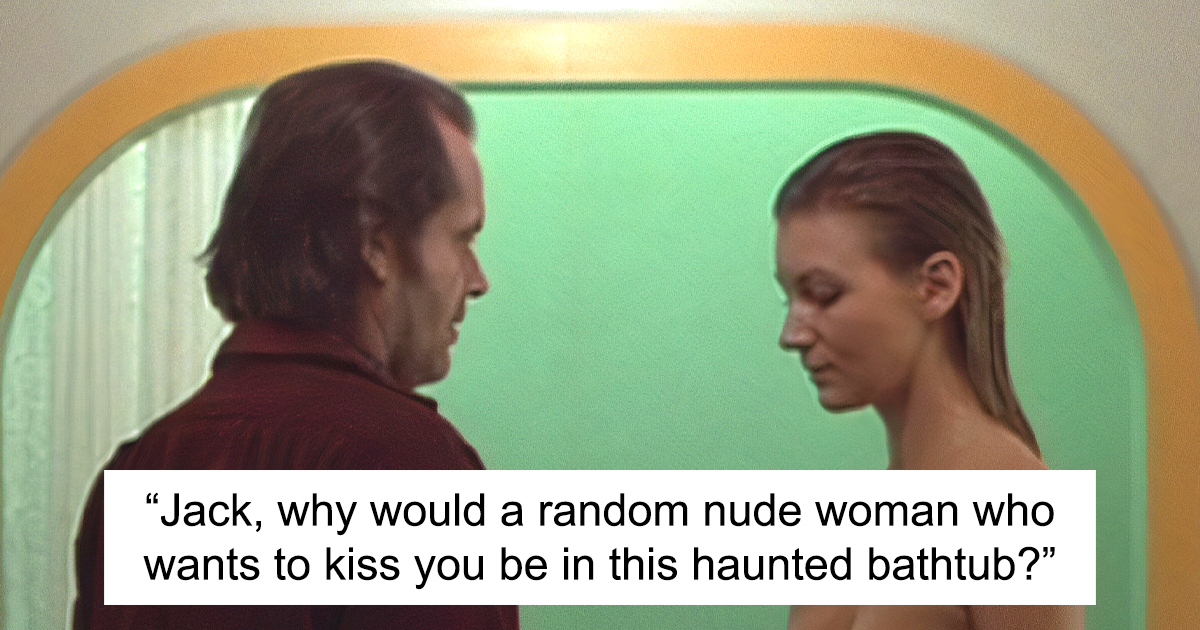
The original Bored Panda article gathers 27 movie moments where men’s attraction to dangerous women leads to
spectacularly bad outcomes. Instead of replaying the exact list, let’s look at the patterns it captures and why
they’re so funny.
1. “She’s Definitely a Monster, But…”
In movies like Species and Jennifer’s Body, the audience is clearly told what the woman is:
alien predator, demon, or supernatural killer. The men in these films often know this tooat least on some level.
Yet they still convince themselves that this will somehow end differently for them.
The humor comes from that gap between what they know and what they choose to do. It’s not ignorance; it’s pure,
chaotic optimism. They’re not victims of a twistthey’re victims of their own belief that “it won’t happen to me.”
2. Ignoring Every Possible Red Flag
Another recurring scenario the list highlights goes something like this:
- The woman appears out of nowhere in a creepy environment.
- Her entire vibe screams “ancient evil,” “haunted,” or “has definitely killed before.”
- She offers vague, ominous invitations like “Come closer,” “Stay the night,” or “You don’t need to be afraid of me.”
- The guy: “Seems legit.”
It’s funny because we all know what we’re supposed to do when a situation feels off: leave. Lock the door. Call a
friend. These guys, on the other hand, treat danger like a dating app they just can’t swipe left on.
3. The Fantasy of Being the Exception
Many of the examples in the viral list share a particular fantasy: the idea that “I’ll be the one she doesn’t kill.”
There’s a strange romance to believing that you’re the one special person who can tame a monster. Horror movies
exploit that fantasy, then brutally demolish it, often in the very next scene.
The Bored Panda list, by collecting these moments together, shows how frequently the same pattern repeatsacross
vampires, demons, aliens, sirens, and cursed women of every variety. The genre keeps returning to the question:
“What if desire overrode survival instincts?” The answer is usually: “Roll credits.”
What This Says About Horror, Gender, and Online Humor
On the surface, the list is just a very funny roast of fictional men who make terrible choices. But it also fits into
bigger conversations horror fans have been having for years.
Laughing at Gendered Tropes
For a long time, horror was criticized for punishing womenfor their sexuality, their curiosity, or simply existing
in a haunted house. More recent discussions point out that men are often punished just as brutally, but in different
ways. Where women are sometimes shamed for desire, men are mocked for being reckless, overconfident, and unwilling
to admit fear.
The viral Twitter thread and Bored Panda feature flip the script by putting male characters under the microscope and
saying, “Look how silly this is.” It doesn’t erase the genre’s complicated history with women, but it does highlight
how modern audiences can read and critique old and new tropes in more playful, self-aware ways.
The Internet Loves Calling Out “Bad Decisions”
On social media, one of horror fans’ favorite hobbies is loudly judging characters’ choices. That’s why threads, memes,
and listicles about “dumbest decisions in horror movies” are so popular. Whether it’s someone running upstairs instead
of out the front door, splitting up in the dark woods, or flirting with something obviously dangerous, viewers love
the feeling of “I would have done better.”
The “dumb and horny” angle adds a very human twist: we all understand that attraction can overpower logic, but seeing
it exaggerated in a life-or-death context invites both laughter and a tiny bit of self-recognition. It’s cringe, but
it’s relatable cringe.
Why We Secretly Love Watching Dumb Decisions
If you think about it, horror movies would be very short if everyone behaved sensibly. No one would explore
basements, answer cursed phone calls, or hook up with suspicious supernatural strangers. They’d pack a bag, move to
another city, and change their number.
Instead, horror thrives on characters making the wrong call. That’s part of what makes the Bored Panda list so fun:
it doesn’t just catalog individual scenesit highlights how baked-in these decisions are to the genre itself.
There’s also an emotional benefit for viewers. Watching fictional people mess up, especially in exaggerated ways,
gives us:
- Catharsis: We release tension by laughing and shouting at the screen.
- Distance: It’s easier to confront fear when it’s wrapped in absurdity and bad decisions.
- Control: For 90 minutes, we feel smarter than the characters, even if we’re watching in pajamas.
That mix of tension, humor, and superiority is the secret sauce behind so many horror-comedy momentsplanned or not.
How to Survive a Horror Movie If You’re a Guy With a Pulse
The Bored Panda list is hilarious, but it also doubles as a survival manual. If you ever find yourself trapped in a
horror movie universe, here are a few tongue-in-cheek rules based on those 27 examples:
-
If she appears in a thunderstorm, glowing, floating, or emerging from ancient ruins: go home.
This is not meet-cute energy. This is “you will be found by hikers next spring” energy. -
If your friend says, “Dude, she’s not human”: believe them.
You’re not “open-minded”; you’re volunteering. -
If there’s a legend about her draining men’s souls: that’s not just a rumor.
Horror lore almost always turns out to be a documentary. -
If you’re already in a cursed house, maybe don’t flirt.
You’ve used up your bad decision quota just by being there. -
If she only appears at 3 a.m., speaks ancient Latin, and has suspiciously sharp teeth: it’s not worth it.
You can, in fact, survive without this date.
In other words, the real moral isn’t “never be attracted to anyone”; it’s “don’t let attraction override every
instinct for self-preservation you have.” Horror just puts that lesson in the loudest, bloodiest way possible.
Experiences and Reflections: Why This List Hit a Nerve
Part of why “Woman Made Hilarious List Of 27 Times Horror Movie Guys Were Dumb And Horny” resonated so widely is that
it mirrors the way many people actually watch horror movieswith friends, snacks, and constant commentary. The list
feels like a transcript of every group watch-along where someone yells, “Sir, she is clearly a demon, please sit down.”
Movie Night Dynamics: Everyone Becomes a Survival Expert
Picture a typical horror movie night: the lights are off, the popcorn is already half gone, and the film introduces
a mysterious, dangerously attractive character. The moment she steps on screen, the room divides:
- Someone says, “I don’t trust her at all.”
- Someone else says, “I mean, I’d still risk it.”
- The rest suddenly become armchair survival experts.
That energy is exactly what the viral list captures. It’s a written version of all those chaotic, overlapping
reactionsonly condensed, sharpened, and made funnier through hindsight and screenshots.
Horror as a Safe Way to Explore Bad Decisions
Another reason people connected to the list is that horror lets us explore the consequences of bad choices in a
fictional, low-risk environment. Attraction does make people misjudge situations in real lifethough hopefully not
in a “vampire in the crypt” way. By exaggerating the stakes, horror exaggerates the lesson: sometimes your instincts
are whispering “nope” for a reason.
The list turns those high-stakes scenarios into comedy. It gives us permission to laugh at the characters while also
acknowledging that desire and denial are very human traits. We might not wander into a cursed castle for a date, but
we’ve all ignored at least one metaphorical warning sign at some point.
The Shared Language of Memes and Lists
Bored Panda and similar sites thrive because they understand the internet’s favorite storytelling formats: lists,
threads, and memes. A numbered list is easy to skim, easy to share, and easy to quote. Each example from the horror
thread is a self-contained little story: setup, bad decision, consequence, punchline.
Over time, these lists and memes become part of fan culture. Horror lovers don’t just talk about a movie’s plot or
scares; they trade their favorite “what were they thinking?” moments, rank them, and remix them into new jokes.
The “dumb and horny guy” trope becomes a shorthand everyone instantly understands.
Imagining Ourselves in the Story
One of the most interesting side effects of lists like this is how quickly they prompt self-reflection. After
laughing at twenty-seven different examples of doomed men, many readers start quietly wondering: “Okay, but if
a supernatural seductress showed up in my living room, what would I actually do?”
Horror has always worked partly because it invites that kind of mental role-play. We scan the scenes for mistakes,
vow we’d make smarter choices, and construct our own imaginary survival strategies. The list simply adds a more
specific, awkward question to that game: “Would I let my brain be overruled that easily?”
Why This Kind of Humor Endures
As long as horror movies keep combining danger with seduction, audiences will keep making jokes about men who ignore
every warning sign. The humor works on multiple levels:
- It pokes fun at outdated or exaggerated gender roles.
- It calls out lazy writing when characters behave in obviously unbelievable ways.
- It reflects real dynamics, just pushed into absurd territory.
That’s why the “27 times horror movie guys were dumb and horny” list feels oddly timeless. Even as new movies,
monsters, and femme fatales appear, the core joke stays the same: if you underestimate danger because you’re busy
flirting with it, don’t be surprised when the credits roll over your gravestone.
Conclusion: Dumb, Horny, and Weirdly Iconic
The Bored Panda article doesn’t just assemble a collection of funny screenshots; it taps into a huge, ongoing
conversation about how horror works. Those twenty-seven moments are reminders that:
- Attraction can cloud judgment, especially in heightened, dramatic stories.
- Horror depends on people making risky, sometimes ridiculous choices.
- Modern audiences are very aware of these patternsand love roasting them.
When we laugh at horror movie guys being “dumb and horny,” we’re not just mocking them; we’re acknowledging the
messy, illogical parts of human nature that horror stories amplify. The difference is that we get to enjoy the chaos
from the safety of our couch, remote in hand, ready to pause the movie and yell, “Buddy, she is literally glowing
with evil. You do not need to go over there.”
And if another list of bad decisions shows up tomorrow? We’ll click, scroll, laughand promise ourselves that if
we ever wake up inside a horror movie, we’ll listen to the red flags. Probably.