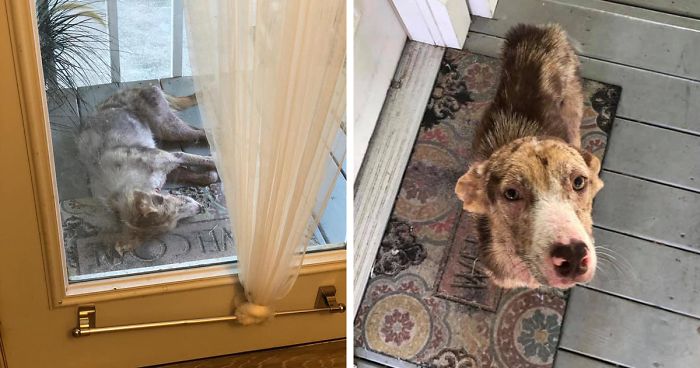

It starts like a lot of modern-day fairy tales: you open the door to grab a package, and therelike a tired little
question mark made of furis a dog you’ve never seen before… parked on your porch as if your welcome mat is now a
hotel reservation.
The dog looks worn down. Maybe skinny. Maybe muddy. Maybe rocking that “I’ve been through some stuff” expression that
would win an Oscar if dogs got invited to the ceremony. You step back inside, peek through the window, andyepstill
there. You wait ten minutes. Still there. You return with a bowl of water. The dog drinks like it just crossed the
desert. And then it does the most dramatic thing possible: it lies down and refuses to leave.
If you’ve ever had a stray dog show up on your porch and “choose” your family, you know the feeling: compassion mixed
with a little panic, sprinkled with practical questions like, “Is this dog lost?” “Is it safe?” and “How did my porch
become the main character today?”
This article breaks down what’s really happening when a stray dog settles in, why some dogs won’t budge, and exactly
what to do nextstep by stepso you can help the dog safely, legally, and with the best chance of a happy ending.
Why a Stray Dog Might Pick Your Porch (and Stick Like Glue)
Dogs don’t usually choose a random porch for no reason. When a dog lies down and won’t leave, it’s often because your
porch checks at least one of these boxes:
1) Your porch feels safe
A porch is elevated, covered, and slightly removed from traffic. For a dog that’s been dodging cars, loud noises, or
other animals, it can feel like a protected “base camp.” If there’s shade, a dry spot, and a wall to lean against,
your porch might be the nicest “shelter” the dog has found in days.
2) Your home smells like food, people, or other pets
Dogs navigate the world by scent the way we navigate it by Google Maps. If you cook often, have pets, or leave even a
faint smell of kibble near the garage, the dog may have followed that scent trail right to your front steps.
3) The dog may be lostnot homeless
A dog can look rough and still be someone’s beloved pet. Lost dogs can lose weight quickly, get dirty, and pick up
fleas or ticks even if they came from a caring home. That “stray” on your porch might actually be a “lost dog” whose
people are out looking right now.
4) The dog could be sick, injured, or exhausted
Sometimes “refuses to leave” is not stubbornnessit’s depletion. Dogs can push themselves until they can’t. Your porch
might be where the dog finally decides, “Nope. I’m done. I need a break.” If the dog seems weak, limps, coughs, or
struggles to stand, treat it as a medical concern.
The First Hour: What to Do Immediately (Without Making Things Worse)
The first hour matters because it sets the tone for safetyyours and the dog’s. The goal is simple: keep everyone calm,
prevent a bite or escape, and get the dog basic support.
Step 1: Pause and assess from a distance
- Keep kids inside and ask everyone to use “indoor voices.”
- Secure your own pets behind a door or in another room.
- Watch body language: loose tail, soft eyes, and relaxed posture usually mean “safer.” Stiff body,
hard stare, growling, or lunging means “back up and call professionals.”
Step 2: Don’t crowd the dog
A frightened dog can bite out of fear. Stand sideways (less threatening than facing head-on), avoid direct eye contact,
and let the dog decide how close is comfortable. If the dog approaches you, let it sniff first. If the dog stays put,
respect that boundary.
Step 3: Offer water first, then food (carefully)
Put a bowl of fresh water a few feet away and step back. If you offer food, keep it simple (plain kibble is best).
Avoid giving a huge meal right awayespecially if the dog looks severely underweightbecause suddenly eating a lot can
upset an empty stomach. Small portions are a safer “hello.”
Step 4: Create a “soft containment” plan
If the dog seems friendly and calm, you may be able to gently guide it into a secure area (like a fenced yard or a
closed garage) using food, a calm voice, and time. If the dog is nervous, don’t chase or grabchasing can trigger flight
mode and turn your neighborhood into a live-action dog documentary.
If you have a spare leash and the dog allows handling, clip it on slowly. If not, don’t force it. It’s better to keep
the dog on your porch, calm and present, than to turn the situation into a high-speed escape event.
How to Tell If the Dog Is Truly a Stray or a Lost Pet
There’s no single “stray dog look.” Some lost pets are well-groomed. Some are scruffy. Some wear collars. Some slipped
out without one. Instead of guessing, use clues:
Clues the dog may be lost
- Seems comfortable around people
- Knows basic cues like “sit” or “come”
- Has a collar tan line, even if no collar is present now
- Approaches homes or cars as if expecting help
Clues the dog may be unowned or long-term stray
- Extremely fearful of people
- Severe matting, long nails, untreated skin issues
- Appears to have been outdoors for a long time (heavy parasites, chronic wounds)
- Doesn’t respond to common cues and keeps distance
Still, even “rough shape” doesn’t equal abandonment. Many well-loved dogs end up looking terrible after weeks on the run.
That’s why the next step is so important: checking for identification.
Reuniting the Dog With Their Family: The Smart, Humane Checklist
If there’s any chance the dog belongs to someone, reunification should be your first goal. It’s often the fastest happy
ending and reduces strain on shelters.
1) Check for visible ID (without risking a bite)
If the dog is calm and allows touch, look for a tag. If the dog is nervous, don’t reach for its neck. A scared dog can
snap quickly. Safety first.
2) Get the dog scanned for a microchip
Many veterinary clinics, shelters, and animal control agencies can scan for a microchip. If a chip is found, it can help
connect the dog to an owner or a registration database. Even if the dog has no collar, a microchip can be the key that
opens the “Where do you belong?” door.
3) File a “found pet” report
Contact your local shelter or animal control agency and report that you found a dog. Many places have official “found
pet” procedures, and some offer programs that allow you to foster the dog while the shelter helps search for the owner.
This can keep the dog out of a crowded facility while still following the proper process.
4) Use neighborhood tools (wisely)
Post a simple “Found Dog” notice on local community spacesneighborhood apps, community boards, and local social media
groups. Include a general description and where the dog was found, but don’t reveal every unique marking. That helps
prevent scams. Ask potential owners to describe a distinguishing feature or provide photos.
5) Check local laws before you “keep” the dog
This part isn’t fun, but it matters: in many areas, the person who finds a dog does not automatically become the legal
owner. There may be required waiting periods or reporting steps before adoption is allowed. Following the rules protects
you and helps ensure the dog doesn’t get separated from a family that’s searching.
Porch-to-Protection: How to Help the Dog Safely While You Figure It Out
While you work on reunification, you can still support the dog in a way that’s safe and responsible.
Provide basic comfort
- Fresh water (refill often)
- A towel or blanket you don’t mind sacrificing to the cause
- Shade in summer, wind protection in winter
- A quiet zone away from foot traffic
Use a “quarantine mindset” around your own pets
Until a veterinarian has evaluated the dog, assume the dog could have fleas, ticks, intestinal parasites, or an
infectious illness. Keep your pets separated. Wash your hands after contact. This isn’t about fearit’s about smart
prevention.
If anyone was bitten or scratched
Take it seriously. Wash the wound thoroughly right away and contact a healthcare professional for guidance. Rabies is
rare in domestic dogs in the U.S., but it is still a medical emergency when exposure is possible. Medical professionals
can advise whether post-exposure steps are needed based on the situation and local risk.
When to Call Animal Control or a Rescue Organization Immediately
You don’t have to handle everything alone. Call professionals right away if:
- The dog is growling, snapping, or acting aggressively
- The dog appears badly injured, unable to walk, or severely ill
- You suspect cruelty or abandonment in dangerous conditions
- The dog is in immediate danger (traffic, extreme heat, freezing temps)
- The dog may have bitten someone and needs proper observation procedures
Animal control and local shelters can also advise you on your area’s legal requirements and the most effective way to
reunite the dog with an owner.
If the Dog Can’t Go Home: The “What Now?” Options That Actually Work
Sometimes, despite your best efforts, no owner is found. At that point, you have a few humane pathways:
Option 1: Foster-to-finder (temporary care while searching continues)
Some shelters support “foster-to-finder” approaches where the finder temporarily houses the dog while the shelter helps
with paperwork, owner search, and eventual placement. This keeps the dog comfortable and reduces shelter crowding.
Option 2: Work with a rescue group
Rescues can sometimes provide foster support, medical help, and adoption networks. If you can keep the dog safe for a
few days, you may have more options than if the dog must be surrendered immediately.
Option 3: Adopt the dog (after following local requirements)
Yes, the classic ending: the dog chooses your porch, and you choose the dog. If you’re considering adoption, schedule a
veterinary check, plan for vaccinations, and talk about spay/neuter. Also consider behavior supportespecially if the
dog shows fear, resource guarding, or anxiety.
Helping a Porch Dog Decompress: What the First Few Weeks Often Look Like
Even friendly dogs can be overwhelmed after life outdoors. Many newly rescued dogs go through a “decompression” period
where they sleep a lot, startle easily, or cling to a safe spot (sometimes your porch, sometimes your bathroom, because
dogs are weird in the most lovable way).
A simple approach that supports trust
- Routine: predictable meals and potty breaks reduce anxiety.
- Quiet space: a crate (left open) or a gated area can feel secure.
- Slow introductions: keep meetings with other pets calm and controlled.
- Gentle handling: let the dog choose affection instead of demanding it.
If the dog seems fearful, reward calm behavior with treats tossed near (not shoved into the dog’s face). Think of trust
like a savings account: small deposits add up.
Common Mistakes (and How to Avoid Them)
Mistake 1: Assuming “stray” means “unloved”
Lost dogs can look rough quickly. Always attempt an owner search first. It’s the kindest and most ethical route.
Mistake 2: Posting too many details online
Keep one unique identifier private so you can confirm true ownership. This reduces the risk of someone claiming the dog
dishonestly.
Mistake 3: Letting the dog roam “to find its way home”
This can increase danger and make reunification less likely. A safe, calm holding situation is better than gambling on
traffic and luck.
Mistake 4: Immediate introductions to your pets
Even if your dog is a social butterfly, the porch dog might be stressed, sick, or reactive. Separate first, vet check
early, then introduce slowly.
The Real Reason These Stories Hit So Hard
A dog choosing your porch feels personallike the universe delivered a furry plot twist to your doorstep. But underneath
the heartwarming vibe is a serious truth: a dog that stops and rests is a dog that needs something. It might need water.
It might need medical help. It might need a ride to a shelter to get scanned for a microchip. It might need a quiet
place to breathe.
When you respond thoughtfully, you’re not just “helping a stray.” You’re participating in the system that gets lost pets
home, reduces shelter overcrowding, and gives vulnerable animals a real chance.
of Real-World Porch Dog Experiences People Often Share
Since porch dogs are basically a nationwide phenomenon, people who’ve been through it tend to describe surprisingly
similar momentslittle scenes that repeat like a comforting rerun (with more shedding). Here are experiences rescuers,
foster families, and everyday neighbors commonly talk about when a stray dog shows up and won’t leave.
One of the most common stories starts with a dog who looks “too tired to be scared.” The dog doesn’t bark, doesn’t rush
the door, and doesn’t run away. It just lies downsometimes on the doormat like it paid rent, sometimes curled into the
corner where the wind can’t reach. People describe the moment they realize the dog isn’t moving on as both tender and
terrifying: tender because the dog finally chose rest, terrifying because rest usually means the dog has nowhere else to
go.
Another experience people mention a lot is the “porch perimeter test.” The dog will stand up and circle the porch, sniff
the edges, and then return to the same spotalmost like it’s mapping the safest square foot. Folks often interpret it as
the dog deciding, “This is my safest option,” especially if the neighborhood is loud or the weather is harsh. Some
families set out water and a folded towel, and within minutes the dog’s breathing slows, its ears relax, and its whole
posture changes from “alert survival mode” to “okay… maybe this place isn’t dangerous.”
People also talk about how quickly a neighborhood can mobilize. Someone posts “Found dog on Maple Street” and suddenly
three neighbors appear with spare leashes, two with dog crates, and one with an inexplicably perfect microchip scanner
connection (“My cousin’s a vet tech!”). Porch dog stories often become community storiesbecause once an animal is in
front of everyone’s eyes, it stops being abstract and becomes urgent. In many cases, that’s how reunions happen fast:
a neighbor recognizes the dog, someone else knows the family two blocks over, and within an hour the dog is back home
snoring in its usual spot.
Then there are the slower stories: the dogs who won’t let anyone close at first. People describe leaving food and water
and simply sitting quietly on the other side of the doorno reaching, no chasing, just being present. Over a few days,
the dog inches closer. It learns that hands can bring help, not harm. Many families say the “breakthrough” moment is
when the dog finally accepts a treat without flinching, or chooses to sleep with its body facing the house instead of
the streetlike it decided the danger is behind it now.
And finally, there’s the experience that turns into adoption: after the owner search, the vet check, and the paperwork,
the porch dog becomes “our dog.” People often say it wasn’t instant magicit was routine. A warm meal. A safe bed. The
same gentle voice every morning. The dog’s personality slowly reappeared as the stress faded. And months later, someone
will look at the now-healthy, tail-wagging family dog and say, “Can you believe you showed up on our porch and just…
stayed?” The dog, of course, will respond the way dogs always do: by blinking calmly, as if to say, “Yes. Obviously.
That was the plan.”
Conclusion
When a stray dog comes to rest on your porch and refuses to leave, it’s easy to get swept up in the emotion of it. But
the best outcomes come from balancing heart with practical steps: keep everyone safe, offer basic comfort, check for a
microchip, report the found dog properly, and work with local shelters or rescues. Whether the ending is a reunion or a
new forever home, your thoughtful response can turn a scary situation into a genuinely life-changing rescue storyone
doormat nap at a time.