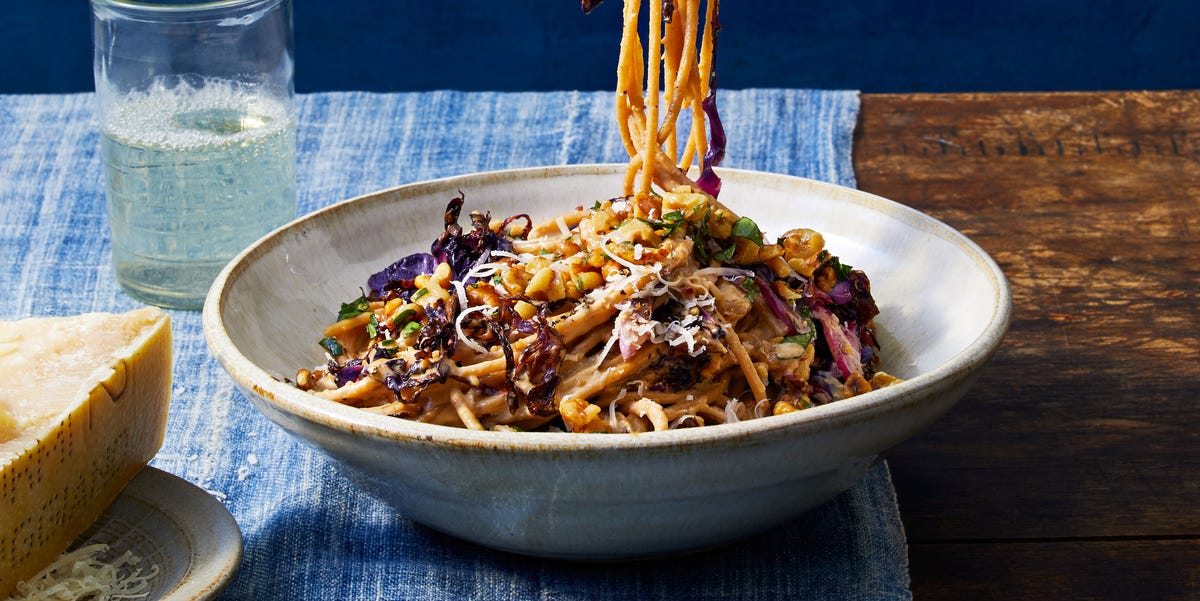

If you’ve ever stared into your pantry at 6:17 p.m. and thought, “I want dinner to taste like I tried… but I also want it done before I become the dinner,”
this is your recipe. Creamy miso pasta is one of those sneaky weeknight wins: it tastes restaurant-cozy, but it’s built on smart shortcutsumami-rich miso,
starchy pasta water, and a handful of ingredients that pull way above their pay grade.
The twist here is roasted cabbage (yes, cabbagestay with me). In the oven, it turns sweet, jammy, and a little crisp at the edges, like it finally got the
glow-up it deserved. Add toasted walnuts for crunch, a creamy miso-Parmesan sauce that clings to every noodle, and suddenly you’re eating a bowl of “how is this
so good?” comfort food.
Why This Creamy Miso Pasta Works
1) Miso adds “instant depth” (a.k.a. umami magic)
Miso is fermented, salty-savory goodness. It’s the flavor equivalent of turning on warm lights in a room: everything looks better. It makes creamy sauces taste
fuller without needing a mountain of cheese or hours of simmering.
2) Roasted cabbage becomes sweet and roastynot “sad salad”
High heat transforms cabbage by caramelizing its natural sugars. The edges char slightly, the center softens, and you get a vegetable that tastes like it has
a plan for its life.
3) Walnuts bring crunch and a toasty, buttery vibe
Toasting walnuts wakes up their flavor fast. They add texture (critical in creamy pasta) and a nutty richness that pairs beautifully with miso.
4) Pasta water turns sauce into silk
That cloudy pasta water isn’t “dirty.” It’s liquid gold. The starch helps emulsify the sauce so it coats noodles evenly instead of sliding off like a raincoat.
Ingredients
Serves: 4 | Time: about 35–40 minutes | Difficulty: very doable
For the roasted cabbage
- 1 small head red cabbage (or green cabbage), cored and thinly sliced
- 2 tablespoons olive oil
- 1/2 teaspoon kosher salt
- 1/4 teaspoon black pepper
- Optional: pinch of red pepper flakes
For the pasta + sauce
- 10–12 ounces spaghetti, linguine, or bucatini (whole wheat works great too)
- 1 tablespoon olive oil (plus more if needed)
- 1 small yellow onion, finely chopped
- 3 cloves garlic, minced
- 1/2 cup walnuts, roughly chopped
- 2–3 tablespoons miso paste (white or red; see “Which miso should I use?” below)
- 3/4 cup heavy cream (or half-and-half for a lighter version)
- 1/2 cup finely grated Parmesan (plus more to serve)
- 1–2 teaspoons lemon juice (or 1 teaspoon rice vinegar)
- 1/2 cup reserved pasta water (you may use more)
Optional finishing upgrades (highly encouraged)
- Sliced scallions
- Extra black pepper
- Chili crisp or a drizzle of good olive oil
- Chopped parsley
Step-by-Step: Best Creamy Miso Pasta with Walnuts and Roasted Cabbage
Step 1: Roast the cabbage
- Preheat oven to 425°F. Line a large sheet pan with parchment (optional, but saves your future self).
- Toss sliced cabbage with olive oil, salt, pepper, and red pepper flakes (if using). Spread out in a thin layer.
- Roast 18–22 minutes, tossing once halfway through, until edges are browned and the cabbage is tender and sweet.
Pro tip: Don’t crowd the pan. Cabbage likes personal space. If it’s piled up, it steams and stays moody instead of caramelizing.
Step 2: Toast the walnuts
- While the cabbage roasts, heat a large skillet over medium heat.
- Add walnuts and toast 3–4 minutes, tossing often, until fragrant and lightly golden.
- Transfer to a bowl so they don’t keep cooking in the hot pan.
Step 3: Cook the pasta (and save the pasta water!)
- Bring a large pot of salted water to a boil.
- Cook pasta until just al dente (1 minute shy of package directions).
- Before draining, reserve at least 1 cup of pasta water.
Step 4: Build the flavor base
- In the same skillet, heat 1 tablespoon olive oil over medium-low.
- Add onion, season lightly with salt and pepper, and cook 6–9 minutes until softened and lightly golden.
- Add garlic and cook 30–60 seconds, just until fragrant.
Step 5: Make the creamy miso sauce
- Reduce heat to low.
- In a small bowl, whisk miso with a splash of warm pasta water until smooth (this prevents stubborn miso clumps).
- Add cream to the skillet, then whisk in the smooth miso mixture.
- Stir in Parmesan until melted and creamy.
- Add 1/3–1/2 cup pasta water, a little at a time, until the sauce looks glossy and coats the back of a spoon.
Important: Keep the heat low once miso is in the party. High heat can dull miso’s flavor (and nobody invited miso just to ignore it).
Step 6: Toss everything together
- Add drained pasta to the skillet and toss vigorously for 1–2 minutes.
- Add roasted cabbage and toss again.
- Stir in lemon juice. Taste and adjust: more Parmesan for richness, more pasta water for silkiness, more pepper for bite.
- Top with toasted walnuts and any finishing upgrades you love.
Which Miso Should I Use: White, Yellow, or Red?
White miso is milder and slightly sweetgreat if you want a gentle, creamy “umami whisper.”
Red miso is bolder, saltier, and deeperperfect if you want the sauce to taste like it has a PhD in comfort food.
Yellow miso sits in the middle and is a safe “can’t-go-wrong” option.
For this specific creamy miso pasta with walnuts and roasted cabbage, red miso gives the most dramatic flavor, but white miso still makes a seriously tasty sauce.
If you’re new to miso, start with white or yellow, then level up to red once you’re feeling brave (or once you’ve survived a group project).
Easy Variations and Smart Swaps
Make it lighter (but still cozy)
- Use half-and-half instead of heavy cream.
- Or use evaporated milk for a creamy feel with less fat (it emulsifies beautifully).
Make it dairy-free
- Swap cream for full-fat coconut milk or an unsweetened oat-based cooking cream.
- Use nutritional yeast or a vegan Parmesan-style topping for savory depth.
Add protein
- Soft tofu cubes (pan-seared) soak up the sauce like a champ.
- Shredded rotisserie chicken works if you’re not keeping it vegetarian.
- Seared mushrooms add meaty texture and extra umami.
Switch the nuts
- Pecans = sweeter and buttery.
- Almonds = crisp and mild.
- Sesame seeds = tiny crunch, big vibes.
Turn up the heat
- Chili crisp on top is basically the “make it exciting” button.
- Or stir in a pinch of cayenne with the onions.
Common Mistakes (and How to Avoid Them)
Overheating the miso
Keep the sauce on low once miso goes in. Think “gentle simmer,” not “volcano audition.”
Skipping pasta water
If your sauce feels thick, grainy, or like it’s not hugging the noodles, pasta water is the fix. Add a splash and toss like you mean it.
Under-seasoning the cabbage
Cabbage needs salt and oil to roast properly. Season it before it hits the oven so it caramelizes instead of sulking.
Serving Ideas
- With a simple salad: arugula + lemon + olive oil balances the creamy sauce.
- With roasted broccoli: double roasted vegetables, double victory.
- With a crispy topping: panko toasted in olive oil adds extra crunch if you want “restaurant texture.”
Storage and Reheating
Store leftovers in an airtight container for up to 3 days. Reheat gently on the stove with a splash of water or milk to loosen the sauce.
Microwave works toojust do it in short bursts and stir in between so the sauce stays creamy.
FAQ
Can I use green cabbage instead of red cabbage?
Yes. Green cabbage roasts beautifully and tastes slightly sweeter. Red cabbage brings a deeper color and a slightly earthier bite. Both are great.
Is miso very salty?
It can be. That’s why you should add salt carefully until the very end. Parmesan and miso both bring salt, so taste first, then adjust.
What pasta shape is best for creamy miso sauce?
Long noodles (spaghetti, linguine, bucatini) give you that glossy, twirlable bite. Short shapes like rigatoni work toojust use extra pasta water so the sauce
gets into every ridge.
Can I make it ahead?
You can roast the cabbage and toast the walnuts ahead of time. For best texture, make the sauce and toss with pasta right before serving.
of Real-World Kitchen “Experience” (What Cooking This Feels Like)
This is the kind of dinner that sneaks up on you. At first, it looks almost too simplecabbage on a sheet pan, pasta boiling, walnuts toasting. Nothing about
it screams “special occasion.” Then the oven starts doing its thing, and the smell changes: the cabbage goes from raw and sharp to warm and nutty, like it’s
quietly becoming the best version of itself. The edges get those little browned bits that taste like the crispy corners of anything you’ve ever loved.
Meanwhile, the walnuts toast in minutes, and you get that unmistakable “something good is happening” aroma. It’s a tiny moment, but it makes the whole meal
feel intentionallike you planned this, even if you absolutely did not.
The sauce is where the comfort really shows up. Miso melts into cream and Parmesan in a way that feels almost unfair. It’s not just salty; it’s rounded and
savory, with that deep “why can’t I stop eating this?” pull. And then there’s pasta waterthe unglamorous hero. When you splash it in and toss the noodles,
the sauce suddenly becomes glossy and clingy, like it decided it’s never letting go. That’s the moment most people notice the difference between “pasta with
sauce on top” and “pasta that tastes like it was made by someone who understands joy.”
Texture-wise, this dish is a full conversation. You’ve got creamy noodles, tender roasted cabbage, and crunchy walnuts. That last part matters more than you’d
think. Without crunch, creamy pasta can feel heavy fast. With walnuts, every bite has a reset buttoncreamy, then crisp, then creamy again. It keeps you
interested, and it also makes leftovers feel less like “yesterday’s pasta” and more like “lunch I’m weirdly excited about.”
The flavor balance is another thing you’ll notice in real life: a tiny squeeze of lemon at the end doesn’t make it lemonyit makes it brighter. It sharpens
the miso and wakes up the cabbage, like opening a window in a cozy room. If you add chili crisp or red pepper flakes, the heat doesn’t overpower the sauce; it
just makes it feel more alive. This is one of those recipes that’s forgiving on busy nights and rewarding on calm ones. You can keep it simple, or you can
fuss with toppings and feel like a pasta stylist. Either way, you end up with a bowl that tastes far fancier than the effort you put inwhich is, honestly,
the highest form of cooking success.
Conclusion
Creamy miso pasta with walnuts and roasted cabbage is the rare recipe that checks every box: fast enough for weeknights, impressive enough for guests, and
flexible enough to match whatever your fridge is willing to cooperate with. Roast the cabbage until it’s sweet and caramelized, toast the walnuts for crunch,
and let miso do the heavy lifting in the sauce. Your future self (and your dinner table) will thank you.