
Some kitchen faucets are background noise. They do their job, keep their opinions to themselves, and never once
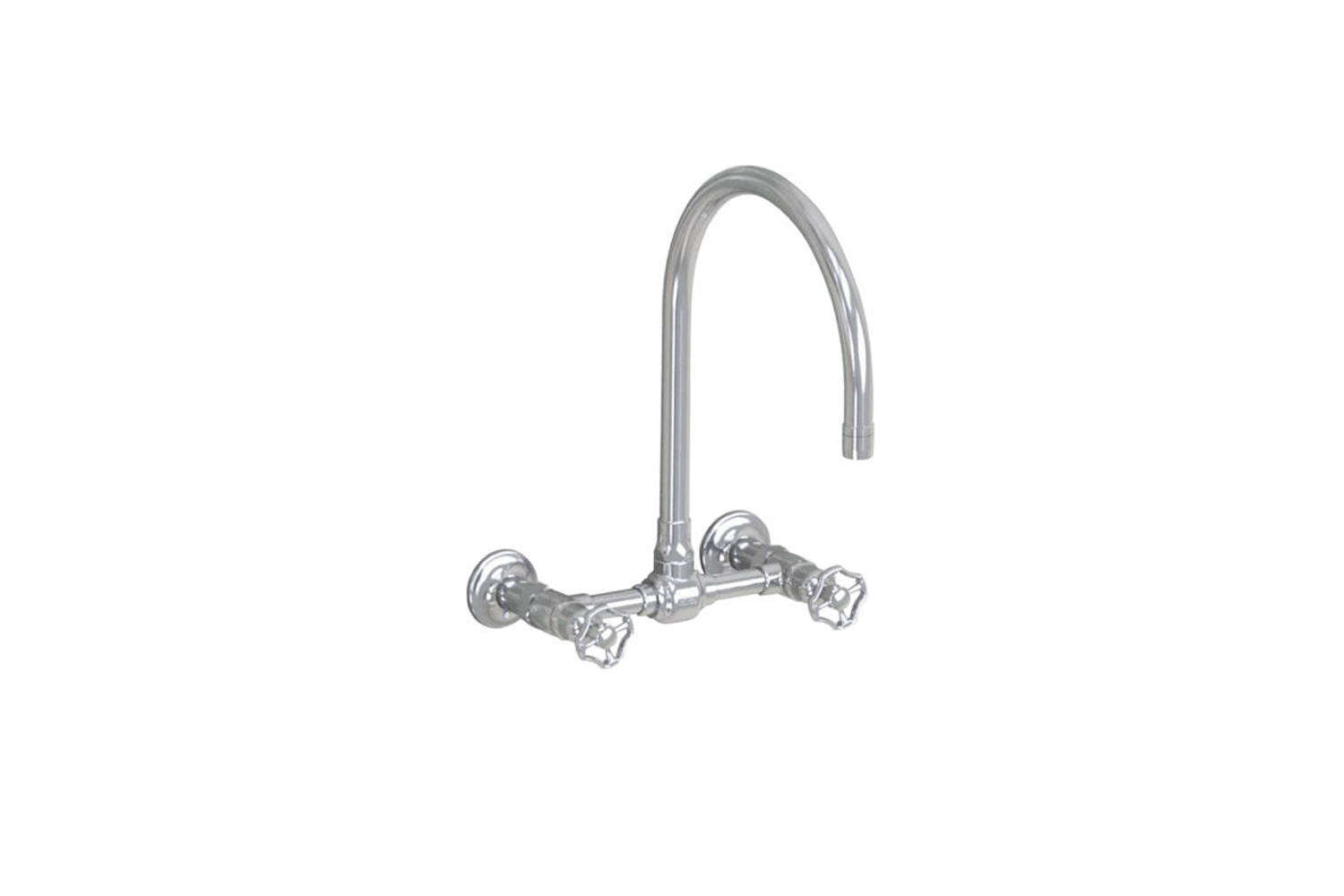
inspire a guest to say, “Waitwhat is that?” The Steam Valve Original Deck Mount Bridge Faucet
is not one of those faucets. This is the kind of fixture that makes your sink look like it belongs in a beautifully
restored loft, a classic English scullery, or the world’s most photogenic breakfast nookwhere the toast is artisanal,
the lemons are always on display, and someone definitely knows the difference between “polished” and “brushed.”
Under the charm, though, this is still a hardworking piece of plumbing: a bridge-style, deck-mounted faucet built around
modular partsspouts, handles, and body optionsso you can dial in the look and functionality without playing kitchen roulette.
If you’ve been eyeing a bridge faucet but don’t want to sacrifice real-life performance, let’s break down what makes this style
special, what to plan for, and what it’s like to live with one when the honeymoon phase ends and the dishes show up.
What “Steam Valve Original” Means (and Why Designers Keep Noticing)
Steam Valve Original is a collection known for handcrafted, retro-inspired tap styling paired with modern internals and
stainless-steel construction. The lineup is intentionally modular: multiple faucet “bodies,” several spout shapes, and a handful
of handle styles can be mixed to create different configurationsbridge mixers, mono mixers, wall-mount options, removable spray
versions, articulated spouts, and more. The result is a family of faucets that look cohesive but don’t force everyone into the same
exact silhouette.
The “Deck Mount Bridge Faucet” version is the classic centerpiece: two handles (hot and cold) connected by a horizontal “bridge,”
with a central spout rising from that bridge. Picture a tiny suspension bridge for waterexcept it won’t shut down for repairs the
first time it rains.
Bridge Faucet 101: The Look, the Layout, and the Real-World Tradeoffs
Why it’s called a “bridge”
Bridge faucets get their name from that connecting bar that visually (and physically) ties the hot and cold sides together.
The bridge creates a strong architectural line, which is why it plays so well with farmhouse sinks, fireclay, classic shaker cabinetry,
and even modern kitchens that want one vintage “anchor” piece.
Deck mount vs. wall mount
“Deck mount” means the faucet mounts to the sink deck or countertop (not the wall). That’s great if you don’t want to open a wall,
relocate plumbing, or gamble with backsplash tile. It’s also the most common route when you’re replacing an existing deck-mounted setup.
The catch: bridge faucets typically require specific hole layouts (often two or three holes, depending on the exact configuration),
so measuring and verifying compatibility is non-negotiable.
The honest tradeoff: two handles, two turns
A bridge faucet is a vibe, but it’s also a two-handle faucet. If you’ve lived with a single-handle pull-down for years, switching back can
feel like going from texting to writing letters with a fountain pen. Some people love the intentionality. Others just want hot water now.
The good news: many bridge faucets use modern cartridges that make operation smooth and consistentless “old house drama,” more “quiet competence.”
What Makes the Steam Valve Original Deck Mount Bridge Faucet Different
Stainless steel styling that’s not trying too hard
Many “vintage” faucets lean heavily on plated finishes. Steam Valve Original leans into stainless steelclean, substantial, and
naturally suited to kitchens where you actually cook. The look is understated but still special: a crisp industrial profile that doesn’t
scream “theme,” even when paired with modern countertops.
A modular collection: build the faucet that fits your sink life
One of the most practical advantages is choice. Within the Steam Valve Original collection, you’ll find multiple spout types and handle styles
including different lever looks (metal, traditional, and ceramic options). That matters because “one faucet” can mean very different daily use:
a tall gooseneck for stockpots, an articulated spout for reach, or a removable spray for quick rinse duty.
Swivel spout + sensible geometry
A bridge faucet should look great and land water in the sink where it belongs (not on your sleeves, backsplash, or the dog).
When evaluating any deck-mount bridge faucet, pay attention to:
- Spout projection (reach): how far the stream lands into the bowl.
- Spout height: clearance for filling tall pots, pitchers, and vases.
- Swivel range: especially important for double-bowl sinks or workstation sinks.
- Aerator placement: the “aim” of the water affects splashing more than most people realize.
The Steam Valve Original deck-mount bridge models are often described with a 10-inch swivel spout projection in common retail specs,
which is a sweet spot for many standard kitchen sinks: far enough to be functional, not so far that you’re constantly wiping the counter.
Performance and Water Use: What You’ll Feel Day-to-Day
Cartridges and control
In a kitchen, control matters: you want a steady stream for filling, a comfortable spray for rinsing, and predictable temperature adjustment.
Modern ceramic cartridges (common in premium faucets) tend to provide smooth operation and long-term reliability compared to older washer-style
designs. In plain English: less drip drama, more “set it and forget it.”
Flow rate reality check (and why it matters even if you don’t think about it)
In the U.S., faucet flow rates are shaped by efficiency standards and state requirements. Many kitchen faucets are designed to perform well below
the federal maximum, and some jurisdictions have stricter limits. Practically, this affects how quickly you fill a pot, how forceful the rinse feels,
and whether a faucet includes features to temporarily boost flow for pot filling.
Your goal isn’t “maximum water.” It’s useful waterenough flow to rinse a cutting board without turning your sink into a splash zone,
plus a pattern that actually moves food bits toward the drain. If you’re efficiency-minded, look for certified marks and product listings that indicate
compliance with lead-free requirements and health effects standards in addition to flow considerations.
Planning and Installation: The “Measure Twice” Section
Step 1: Confirm the hole setup before you fall in love
Bridge faucets are less forgiving than single-hole faucets. Start with these checks:
- Hole count: Is your sink drilled for two, three, or more holes?
- Hole spacing: Bridge faucets often expect standard spacing (commonly 8 inches on-center for many widespread-style layouts).
- Deck thickness: Countertop material and sink deck height can affect mounting hardware compatibility.
- Backsplash clearance: A bridge faucet’s rear geometry and handle sweep need breathing room.
Step 2: Check shutoff valves and supply lines (future-you says thank you)
Faucet installs are rarely “hard,” but they are frequently “awkward.” Under-sink work is a sport best played with a headlamp and patience.
Before installation, make sure your shutoff valves work properly, your supply lines are in good condition, and you have the right fittings.
If your valves are ancient or stiff, replacing them during the faucet project can prevent a small upgrade from becoming a recurring weekend hobby.
Step 3: Expect the bridge faucet to be the focal pointso align it like one
Because the bridge bar is such a strong visual element, a slightly crooked install looks more obvious than it would on a softer, curved pull-down faucet.
Take time to align the faucet with the sink centerline and the countertop edge. This is also where the “fun” begins if your sink was drilled slightly off
decades ago. A good installer can work around minor misalignments, but it’s worth knowing what you’re walking into.
Maintenance and Care: Keeping Stainless Steel Looking Sharp
Daily care that doesn’t feel like a new hobby
Stainless steel is generally forgiving, but water spots are persistent little artists. A quick wipe-down after heavy use keeps the finish looking clean.
For deeper cleaning, mild soap and water is usually enough, followed by drying with a soft cloth. Avoid harsh abrasives that can dull the finish or create
uneven texture over timeespecially on brushed surfaces where the “grain” is part of the look.
Don’t ignore the aerator
If water flow starts to spray sideways or the stream feels weak, the aerator may be clogged with mineral buildup. Cleaning or replacing it is one of the
simplest ways to restore performance. If you have hard water, periodic descaling can keep your faucet feeling “new” for longer.
Who Should Choose This Faucet (and Who Might Be Happier with Something Else)
This faucet makes sense if you:
- Want a statement piece that still feels timeless, not trendy.
- Prefer the deliberate control of two-handle mixing.
- Love stainless steel and want a finish that fits modern appliances and classic kitchens alike.
- Like the idea of modular options (spouts, sprays, handle styles) instead of one fixed configuration.
- Have (or can create) the right hole layout for a deck-mount bridge install.
You might prefer a different style if you:
- Want one-handed temperature control (kids, multitasking, or just a very busy Tuesday).
- Rely on a pull-down spray head as your primary kitchen cleanup tool.
- Need maximum clearance under a low cabinet or tight window ledge.
- Are trying to minimize wipe-down time in a high-splash, high-chaos kitchen.
Shopping Checklist: How to Buy Smart (Not Just Pretty)
- Confirm exact model specs: spout reach, height, handle type, and whether a spray option is included.
- Verify compliance marks: look for reputable certification listings related to lead-free and drinking water contact standards.
- Plan the install: ensure your sink/counter hole layout matches, and budget for valve/supply upgrades if needed.
- Choose the finish intentionally: brushed hides fingerprints and water spots better; polished reads dressier and brighter.
- Match the faucet to your sink behavior: deep single bowl? Double bowl? Workstation accessories? The geometry matters.
Conclusion: A Bridge Faucet with Real “Live-Here” Appeal
The Steam Valve Original Deck Mount Bridge Faucet sits in a sweet spot: it delivers that iconic bridge silhouettearchitectural, classic,
quietly luxuriouswhile leaning on modern construction and modular choices that can be tailored to how you actually use your sink. It’s the kind of faucet
that doesn’t just “match” a kitchen; it gives the space a point of view.
If you’re willing to plan the installation carefully and you enjoy the character of a two-handle bridge mixer, this faucet style can be both a design upgrade
and a daily-use win. And if nothing else, it’s a reminder that your kitchen doesn’t need to be loud to be memorablesometimes a clean stainless bridge and a
well-placed gooseneck spout can do all the talking.
Real-World Experiences with a Steam Valve Original Deck Mount Bridge Faucet
The first thing people notice is the presence. A bridge faucet has that “I was chosen on purpose” energy. In one remodel scenario, the homeowner
had a farmhouse sink and a simple tile backsplash, and the faucet became the finishing touch that made the whole kitchen feel curated. Not fussyjust
intentional. The brushed stainless version blended beautifully with stainless appliances, and it didn’t read “matchy-matchy.” It read “cohesive.”
The second thing people notice is the handles. If you’re used to single-lever life, the first week can feel like relearning the handshake. Hot is one side,
cold is the other, and yes, sometimes you’ll turn both a little too far and accidentally create a mini Niagara Falls moment while you’re holding a colander
with one hand and an ego with the other. But once you get the hang of it, the control feels satisfyingespecially if the internals are smooth and consistent.
It’s less “fight the faucet,” more “conduct the water like an orchestra.”
Designers often talk about “lines” in a kitchenthe way cabinet rails, countertop edges, and hardware align. A bridge faucet reinforces those lines. One
designer described it as a visual bridge between old and new: classic silhouette, modern material. And it’s true. The faucet can live comfortably next to
modern quartz, but it also looks at home on soapstone, butcher block, or a traditional marble. It’s a rare piece that can slide across styles without losing
its identity.
On the practical side, spout reach and height are the everyday heroes. With a generous swivel spout projection, you can fill stockpots without doing that
awkward “tilt the pot and hope” maneuver. If you cook oftenpasta, canning, big-batch soupsyou’ll feel this difference immediately. If you don’t cook often,
you’ll still feel it on the days you suddenly decide you’re making chili for twelve, because kitchen confidence is unpredictable.
Cleaning is where the relationship becomes real. Stainless steel is forgiving, but water spots are relentless. In a hard-water area, you’ll learn quickly that
a 10-second wipe-down after dinner saves you 10 minutes of scrubbing later. (This is the faucet equivalent of flossing. Everyone knows it’s true, and yet…)
A brushed finish tends to be more forgiving in daily life, while polished looks stunning when it’s spotlesslike a tuxedo that doesn’t care that you had tacos.
Installation stories are always a little dramatic, even when they end well. A plumber’s perspective: bridge faucets reward careful measuring. If the holes are
off by even a little, you may need thoughtful adjustments or a different configuration. The smartest installs happen when someone checks the shutoff valves
first and doesn’t assume a 20-year-old valve will suddenly discover its inner athlete. The happiest homeowners are the ones who replace questionable valves and
supply lines during the project, so the new faucet doesn’t inherit old plumbing headaches.
The best moment, though, is when guests use it. Bridge faucets are conversation starters because they look like something you’d find in a beautifully restored
kitchen in a magazine. People comment on the silhouette, the stainless finish, the way it “belongs.” And if you’ve ever spent time and money renovating a space,
you know that’s the point: not just to have a working kitchen, but to have one that feels good to live inmorning coffee, messy baking days, and all.