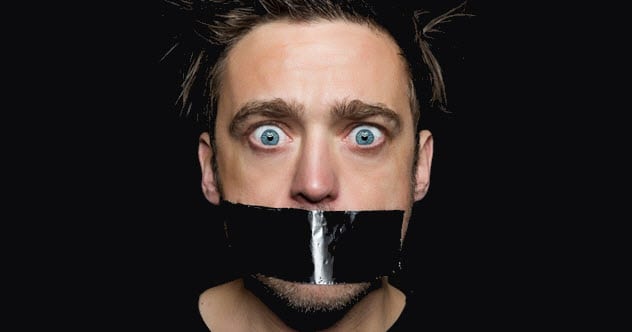

When people talk about “the West,” they often picture a place where you can say almost
anything, wave almost any sign, and roast almost any politician without a knock on the door.
Free speech is marketed as part of the Western starter pack, right next to democracy and an
unhealthy love of coffee. But the reality is much messier. Western democracies have drawn
very real lines around what you can say, when you can say it, and who you can say it to.
From wartime crackdowns on dissent to modern laws that turn social media platforms into
panicked hall monitors, the West has a long track record of sometimes saying “nope” to free
speech. The reasons vary national security, fighting hate, protecting minorities, or
maintaining “public order” but the pattern is clear: even in countries that love to lecture
the rest of the world about civil liberties, free speech is not absolute.
In this deep dive, we’ll look at ten moments when Western governments or institutions
stepped on the brakes and said, “You can’t say that.” Some of these examples might feel
understandable; others may look like classic overreach. Together, they show how fragile and
complicated free expression really is even where it’s supposedly most protected.
What Does It Mean To Say “No” To Free Speech?
First, a quick reality check: no functioning society allows absolutely everything to be said.
Laws against defamation, threats, fraud, or direct incitement to violence exist almost
everywhere. What’s interesting and often controversial is where democracies go beyond
these basics and start criminalizing ideas, symbols, historical claims, or “offensive”
opinions.
In the list below, we’re looking at moments where Western democracies:
- Criminalized certain kinds of political, religious, or historical speech.
- Heavily punished speech that most people would still see as nonviolent expression.
- Outsourced censorship to private platforms under threat of huge fines.
- Used broad, vague laws in ways that chilled everyday speech.
Whether you see these as necessary guardrails or slippery slopes, they’re all examples of the
West drawing a hard line and saying: “On this topic, your words are no longer just words.”
Top 10 Times The West Said No To Free Speech
10. Wartime America: The Espionage and Sedition Acts
During World War I, the United States decided that criticizing the war was not just rude it
was potentially criminal. Under the Espionage Act of 1917 and the
Sedition Act of 1918, people could be jailed for speech that was “disloyal,
profane, scurrilous, or abusive” toward the U.S. government, the flag, or the military.
Anti-war activists, pamphleteers, and even political figures like socialist leader
Eugene Debs were prosecuted and imprisoned simply for speaking against the
war effort. The Supreme Court, in early free-speech cases like Schenck v. United States,
backed these restrictions, famously invoking the “clear and present danger” standard.
Parts of this crackdown were later repealed, and history has not been kind to this moment.
But for a time, the U.S. government effectively declared that opposing a war out loud could
land you behind bars. For a country that wraps itself in the First Amendment, that’s a major
“no” to free speech.
9. McCarthyism and the Hollywood Blacklist
Jump forward a few decades to the Cold War. In the late 1940s and 1950s, the U.S. went on a
full-blown paranoia bender about communism. Congressional committees, loyalty oaths, and
blacklists turned political beliefs into professional death sentences especially in
Hollywood.
Suspected communists, sympathizers, or simply people who refused to “name names” could be
barred from working in the entertainment industry. The so-called
Hollywood blacklist wasn’t technically passed as a law, but it was enforced
through intense political pressure, studio fear, and a culture of conformity. Writers,
directors, and actors saw their careers evaporate over associations and opinions.
Today, McCarthyism is practically a synonym for political witch hunts. But at the time, it
was widely justified as necessary to protect national security and American values. The
message was clear: say the “wrong” thing about politics, and you’re done.
8. Canada’s Hate Speech Laws and the Section 13 Battles
Canada has long taken a more restrictive approach to hate speech than the United States. Its
Criminal Code includes provisions that ban the “wilful promotion of hatred” against
identifiable groups. In R. v. Keegstra, a teacher who taught antisemitic
conspiracy theories to his students was convicted under these laws; the Supreme Court of
Canada upheld the conviction, ruling that limiting hate speech could be justified in a free
and democratic society.
For years, Section 13 of the Canadian Human Rights Act went even further,
targeting hateful messages transmitted by phone and later online. Human rights tribunals
could punish speech that was discriminatory but not necessarily violent or directly inciting
crimes. Critics argued this blurred the line between speech and harassment and created a
powerful chilling effect online.
Section 13 was eventually repealed, but the broader hate-speech framework remains. Canada’s
approach shows a Western democracy openly prioritizing protection from hateful expression
over a more absolutist view of free speech.
7. European “Memory Laws” and Holocaust Denial Bans
In parts of Europe, denying the Holocaust isn’t just disgusting it’s illegal. Countries
like France and Germany passed laws specifically targeting
Holocaust denial, Nazi propaganda, and certain extremist symbols. France’s
Gayssot Act makes it a crime to publicly question crimes against humanity
as defined by the Nuremberg Tribunal, while Germany criminalizes incitement to hatred and
the display of Nazi symbols.
The logic is understandable: these laws are designed to prevent the revival of genocidal
ideologies and protect minority communities. European courts have generally upheld them as
compatible with democracy and human rights.
Still, they mark a clear moment where the state declares some historical narratives and
symbols off-limits. In these systems, you are free to say many things but not that the gas
chambers were a myth, and not while waving a swastika in public.
6. France’s “Apology for Terrorism” and the Post–Charlie Hebdo Crackdown
After a wave of terrorist attacks including the 2015 massacre at
Charlie Hebdo France passed and expanded laws to crack down on support
for terrorism. One especially controversial offense is “apologie du terrorisme,” or
apology for terrorism.
Prosecutors have used this provision against people who spoke positively about terrorist
attacks or groups, even when there was no clear attempt to incite violence. Social media
posts, offhand comments, and edgy jokes have led to arrests and convictions, sometimes in
expedited, high-pressure proceedings.
Supporters argue that glorifying terrorism is inherently dangerous. Critics counter that the
law is overly broad and ends up criminalizing angry, foolish, or tasteless speech rather
than genuine terror plots. Either way, it’s a textbook example of a Western government
deciding that certain forms of political expression are too toxic to tolerate.
5. The French Full-Face Veil Ban
In 2010, France enacted a law banning full-face coverings including the burqa and niqab
in public places. The law technically applies to anyone, but in practice it was clearly aimed
at a small number of Muslim women who chose to wear these garments.
A woman known as S.A.S. took the case to the European Court of Human
Rights, arguing that the ban violated her religious freedom and personal autonomy. The Court
admitted that the law restricted her rights but ultimately upheld it, accepting the French
government’s argument that face covering conflicted with the country’s vision of “living
together.”
While the debate often focuses on religion, there’s also a speech angle: clothing, especially
religious or political clothing, is a form of expression. When a state criminalizes a whole
category of symbolic expression in the name of public values, it is very much saying “no” to
that speech.
4. Germany’s NetzDG: Social Media as Speech Police
Germany’s Network Enforcement Act (NetzDG) might be the least catchy law
name in history, but it has huge implications for online speech. Passed in 2017, NetzDG
requires large social media platforms to remove “clearly illegal” content often hate
speech within 24 hours of notification or face fines of up to €50 million.
On paper, the law targets obviously illegal content already banned by German law. In
practice, platforms, terrified of eye-watering fines, often err on the side of deleting
anything remotely risky. That means lawful but controversial speech can vanish before anyone
has time to review it properly.
Human rights groups and digital policy experts warn that NetzDG encourages
over-removal and effectively turns tech companies into unaccountable censors, with
algorithms and junior moderators deciding what Germans are allowed to see. The government
isn’t directly hitting the “delete” button but it designed the system that makes deletion
the safest choice.
3. The U.S. “Material Support” Law and Holder v. Humanitarian Law Project
After the 1990s terror attacks and especially post-9/11, the United States ramped up laws
against supporting foreign terrorist organizations. One key statute makes it a crime to
provide “material support” to any group on the U.S. terror list and that support can
include speech.
In Holder v. Humanitarian Law Project (2010), activists wanted to provide
nonviolent advice to listed groups: things like how to pursue peace talks or use
international law. The Supreme Court said “no,” ruling that even this kind of training could
indirectly help terrorist organizations and could therefore be criminalized.
The decision drew fierce dissent from several justices, who argued that the government had
offered no concrete evidence that peaceful advocacy would cause harm. But the ruling still
stands. In effect, it tells Americans: you’re free to talk about almost anything unless the
government has put the person you’re talking to on a particular list.
2. Britain’s Online Speech Crackdowns and “Grossly Offensive” Posts
The United Kingdom has repeatedly tested the limits of free speech with laws that criminalize
online messages deemed “grossly offensive” or “menacing.” Under the
Communications Act 2003 and similar legislation, people have been arrested
and prosecuted for tweets, jokes, and heated posts that never came close to inciting
violence.
Famous cases range from the “Twitter joke trial” where a man was
convicted, then eventually cleared, for joking about blowing up an airport to recent
arrests tied to heated debates over gender identity and other culture-war topics. Police
forces have recorded thousands of “non-crime hate incidents” based on complaints about
speech that didn’t cross the criminal threshold, and people have been hauled in for
questioning over social media comments.
After public backlash, some of these practices are being scaled back. But for years, the
U.K. effectively told its citizens: yes, you have free expression just be careful that your
“offensive” joke doesn’t get you a visit from the police.
1. Modern Entertainment Fights: Political Pressure and Late-Night Censorship
In the modern West, direct government censorship is less common than pressure campaigns and
behind-the-scenes influence. Recent controversies around late-night TV hosts, streaming
services, comedians, and outspoken celebrities show how free speech battles have moved into
boardrooms and platform policies.
One high-profile example involved the temporary suspension of a major late-night show after
the host made inflammatory comments about a political figure’s death. Under intense pressure
from government officials and regulators, networks pulled the show, only to restore it after
a wave of legal threats, celebrity backlash, and public criticism.
At the same time, Hollywood figures have revived committees and campaigns specifically aimed
at defending free speech in the entertainment industry, warning that political pressure,
regulatory threats, and corporate risk-aversion are combining to create a chilling effect.
It’s not the old-school censor with a red pen it’s a mix of political power and corporate
fear deciding which jokes get to air.
What These Cases Tell Us About Western Free Speech
Put these ten episodes together and a pattern emerges: Western democracies believe in free
speech, but only up to a point. When other values security, equality, public order, social
cohesion, or national trauma feel threatened, speech loses the argument surprisingly
quickly.
Some of these limits are widely supported. Many people are comfortable with banning Nazi
propaganda, criminalizing calls for genocide, or stopping genuine threats. Others are far
more controversial, like punishing jokes as “terrorism,” banning religious clothing, or
turning social media companies into quasi-police.
The uncomfortable truth is that the line between “necessary protection” and “dangerous
censorship” is not fixed. It moves with fear, politics, and public opinion. The West still
has some of the strongest speech protections on the planet but these stories show that even
here, the right to speak freely is always one crisis, one law, or one court ruling away from
being narrowed.
Living With the Limits: Real-World Experiences
Lists like this can feel abstract, like a law-school seminar with better jokes. But the
limits on free speech in Western countries aren’t just legal footnotes they show up in
real people’s lives in ways that are often confusing, scary, or just plain exhausting.
Imagine you’re a university student in a Western city. On paper, your campus proudly
advertises itself as a marketplace of ideas. In reality, you’ve watched speakers get
disinvited after online campaigns, professors investigated for controversial comments, and
student groups warned that certain slogans or posters might violate harassment or hate-speech
policies. Nobody arrests you for speaking, but the message is clear: one misjudged sentence
can cost you your social life, your scholarship, or your future references.
Or picture a comedian. Comedy thrives on testing boundaries, poking at taboos, and saying
the thing you’re “not supposed” to say. In some Western countries, though, a joke can be more
than a career risk it can lead to police questioning or a criminal complaint if someone
argues it crosses a line into hate or glorification of violence. Even where the charges are
dropped, the process itself is punishing: lawyers, headlines, online mobs, and the constant
second-guessing of every new bit.
Online, the experience is even stranger. You post something edgy, political, or just clumsy.
Maybe it’s flagged as hate speech or “apology for terrorism.” A moderator deletes it. Maybe
your account gets suspended. You appeal, but the decision came from a mix of automated
filters, rushed moderators, and legal teams terrified of million-euro fines or regulatory
investigations. Nobody can quite tell you which law you allegedly broke, only that “this
content violated our policies” policies that are quietly shaped by government pressure.
Then there are people whose expression is tied to identity, not just opinions. A Muslim woman
who wears a full-face veil in a European city isn’t just making a religious choice she’s
navigating a legal minefield. Does she risk a fine? A confrontation? A court case about her
“compatibility” with national values? For her, the debate over free speech and religious
freedom is not an op-ed topic; it’s a daily decision about what to wear when she leaves the
house.
Even activists who try to promote peace can get caught in the web. Imagine working with
communities in conflict zones and wanting to talk to groups on a terrorist list about
ceasefires or humanitarian access. In some Western legal systems, that conversation can be
treated as “material support,” turning your conflict-resolution work into a potential felony.
You’re not preaching violence you’re doing the opposite but the law doesn’t always care
about your intentions.
Of course, there’s another side to these experiences. Members of targeted communities may
feel safer knowing that Holocaust denial, open calls for ethnic cleansing, or glorification
of terrorist attacks are taken seriously and punished. Survivors and minorities often argue
that their right to exist without constant public abuse deserves real, enforceable
protection, not just lofty statements about free speech.
Living in the modern West means juggling all of these realities at once. You get late-night
hosts mocking presidents, artists shredding national symbols in galleries, and protestors
shouting things that would be unthinkable elsewhere. But you also get laws that criminalize
some speech, platforms that aggressively moderate content, and social pressures that make
people self-censor long before a judge ever hears their name.
The “free speech vs. harm” debate isn’t going anywhere. Every new crisis a terror attack,
a hate-driven murder, a viral misinformation wave pushes governments to tighten the rules.
Every new crackdown triggers warnings about creeping censorship and the erosion of core
liberties. If there’s one lesson from these ten episodes, it’s this: free speech in the West
is not a finished product. It’s an ongoing argument that every generation has to renegotiate,
preferably before the next emergency hits.
Conclusion
The West loves to present itself as the global champion of free speech and compared to many
regimes, that’s still broadly true. But the reality is much more complicated than slogans or
patriotic posters suggest. From wartime censorship and ideological witch hunts to modern
hate-speech laws and platform liability rules, Western democracies have repeatedly decided
that some words cost too much to tolerate.
Whether you see each case here as justified protection or dangerous overreach, they all tell
the same story: free speech is never as simple as “you can say anything you want.” It’s a
constantly shifting balance between liberty and other values and the line is drawn by
fallible, frightened, and sometimes overconfident humans.
Paying attention to those moments when the West says “no” to speech isn’t anti-Western; it’s
the most Western thing you can do. Healthy democracies argue about where the limits should
be. Unhealthy ones pretend the limits don’t exist.