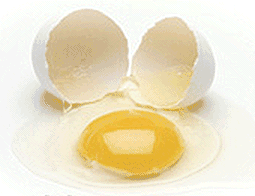

There are bigger pleasures in life, sure. Vacations. Pay raises. Finding cash in an old jacket pocket. But there is a strong argument to be made that the perfect egg crack belongs in the same emotional zip code. It is small, quick, useful, and weirdly satisfying. One tap, one clean split, no shell confetti, no broken yolk, no awkward finger fishing in a bowl while your toast burns in the background. It is the kind of kitchen moment that feels almost too tiny to celebrate, which is exactly why it deserves a place on a list like 1000 Awesome Things.
The perfect egg crack is not just about breakfast. It is about competence. It is about grace under pressure, even if the pressure is just you standing in pajama pants at 7:14 a.m. trying to make something with protein before the day turns into a parade of emails and bad decisions. It is one of those little domestic victories that says, “I may not have my whole life together, but I can at least open this egg like a civilized person.”
And unlike some kitchen myths that sound poetic but collapse on contact with reality, this one has actual substance behind it. The way you crack an egg affects cleanliness, shell fragments, yolk integrity, and even food safety. A small move can make cooking smoother, baking more reliable, and poaching far less chaotic. So yes, this article is a love letter to a humble motion. But it is also a practical guide to why the perfect egg crack matters and how to make it happen more often.
Why the Perfect Egg Crack Feels So Ridiculously Good
The best kitchen actions share one trait: they create order from potential mess. The perfect egg crack is a master class in that idea. You begin with a fragile object that could go badly in several directions. The shell could shatter. The yolk could burst. A jagged piece could cannonball into the bowl and disappear like it joined witness protection. Instead, if all goes well, the shell opens neatly, the contents slide out intact, and the counter remains blessedly free of drama.
That clean break gives you a satisfying little burst of control. It is the culinary equivalent of parallel parking on the first try or plugging in a USB cable without flipping it three times like a confused raccoon. The motion is simple enough to become routine, but just tricky enough to feel earned. That balance is what makes it awesome.
There is also the sensory side of it. The soft tap. The crisp split. The smooth release. Cooking is full of noises that make a person feel competent, and the egg crack is right up there with a loaf crust cooling on the counter or garlic hitting warm butter. It is subtle, but it tells your brain that something good is underway.
The Science Behind a Better Crack
The shell is a barrier, not decoration
An eggshell is more than packaging. It is part of a protective system that helps shield the inside from contamination. Once that shell is cracked, even if the damage looks small, the risk goes up. That is why clean, uncracked eggs are the smart starting point, and why cartons with visibly cracked eggs are worth skipping at the store. Hairline cracks are not just cosmetic flaws. They can turn a reliable ingredient into a questionable gamble.
This is also why the perfect crack is not about showing off. It is about reducing unnecessary damage. A controlled crack opens the shell where you want it to open. A sloppy crush creates jagged edges, extra fragments, and more opportunities for shell debris or exterior bacteria to come in contact with the egg itself. The cleaner the break, the cleaner the process.
Why the flat-surface method has fans
Many cooks grow up cracking eggs on the rim of a bowl or the side of a pan. It looks fast. It feels dramatic. It also tends to drive a pointed wedge of shell inward, which can make shell fragments more likely and can puncture the yolk if your aim or force is a little off. Cracking on a flat surface usually produces a more centered fracture and less inward collapse. In plain English: fewer tiny shell boomerangs and fewer sad, busted yolks.
That does not mean every bowl-rim crack is a disaster. Plenty of experienced cooks do it well. But if your goal is consistency, especially when baking or cooking multiple eggs, a flat surface is a smart upgrade. It gives you a little more control and a little less chaos, which is a fine deal for one countertop tap.
Freshness changes how the egg behaves
Fresh eggs are not just nice in theory. They behave differently in the pan. Their whites are generally tighter and hold together better, which matters a lot for poached eggs and any cooking method where shape counts. Older eggs are still useful, especially for baking and hard-cooking, but when you want that tidy restaurant-style look, freshness helps. A good crack paired with a fresh egg is like giving your breakfast a head start.
How to Get the Perfect Egg Crack Every Time
1. Start with the right egg
Choose eggs with clean, intact shells and keep them refrigerated in their carton until you are ready to use them. If you are at the store, open the carton and check before buying. That five-second inspection can save you from discovering an already cracked egg at the exact moment your skillet is hot and your patience is not.
2. Aim for the middle
The sweet spot is around the egg’s center, sometimes called the equator. That area tends to give you the cleanest opening. Tap too close to one end and you may wind up with an awkward split that feels like opening a tiny stone. Tap too timidly and nothing useful happens. Tap too hard and you invent shell gravel. The goal is a firm, confident rap, not a wrestling match.
3. Use a separate bowl when it matters
If you are frying eggs and want intact yolks, or if you are baking and cannot afford a shell shard in the batter, crack the egg into a small bowl or ramekin first. This is one of those habits that feels fussy until it saves the day. You can check the egg, remove a shell fragment easily, and pour it exactly where you want it. It is especially useful when working with several eggs, because one messy egg should not be allowed to sabotage the whole group project.
4. Pull the shell apart, do not pry it like treasure
Once the crack is made, place your thumbs in the split and pull the shell apart with a calm, even motion. The best egg cracks are surprisingly boring after the initial tap. No frantic stabbing. No overthinking. Just open and release. If the yolk breaks every time, chances are you are either cracking too aggressively or pulling the shell apart too roughly.
5. If a shell fragment falls in, fight smart
The cruel joke of eggshell fragments is that they become Olympic swimmers the second you try to catch them with a spoon. A larger piece of eggshell often works better for scooping them out. It sounds absurd, but it is one of those kitchen truths that feels like magic the first time it works. The shell recognizes its own kind, apparently, and decides to cooperate for once.
What the Perfect Crack Improves in Real Cooking
Fried eggs
A neat crack helps preserve the yolk, which is basically the emotional support center of a fried egg. If the yolk stays round and unbroken, you get that glossy, golden center that makes toast worth showing up for. Crack into a ramekin first, then slide the egg gently into the pan, and suddenly your breakfast looks less “survival food” and more “someone in this house has standards.”
Poached eggs
Poached eggs are where good cracking habits cash their biggest checks. Fresh eggs hold shape better, and cracking them into a small bowl before slipping them into hot water makes the transfer gentle and precise. If you want an especially neat poach, draining off some loose white before cooking can help. The result is less ghostly feathering in the water and more compact, elegant egg.
Baking
In baking, one shell fragment can feel like a tiny insult from the universe. Cracking eggs individually into a separate bowl keeps that problem from reaching the main batter. It also lets you catch the occasional broken yolk when a recipe needs separation or visual control. This is not glamorous advice, but it is the kind that saves cakes, custards, and moods.
Batch cooking
When you are making scrambled eggs for a crowd, breakfast sandwiches for the week, or a brunch dish with multiple eggs, consistent cracking becomes a real advantage. The motion gets faster, your cleanup stays manageable, and you spend less time performing emergency shell excavation. Good technique compounds. One clean crack is nice. Twelve in a row feels like kitchen wizardry.
Common Egg-Cracking Mistakes
- Cracking directly into a hot pan: It increases the odds of broken yolks and makes shell removal more annoying.
- Using too much force: Eggs are fragile, not dramatic. They need confidence, not vengeance.
- Ignoring a cracked store-bought shell: Start with intact eggs whenever possible.
- Leaving eggs out too long: Good cracking technique does not cancel out poor storage habits.
- Thinking older eggs behave exactly like fresh ones: They do not, especially for poaching and presentation.
Why This Tiny Kitchen Win Belongs on a List of Awesome Things
The perfect egg crack is one of those ordinary miracles that rarely gets credit because it happens so fast. It is practical, pleasing, and repeatable. It asks very little from you beyond attention and rewards you with a cleaner start to whatever you are making. In a world packed with complicated gadgets and endless hacks, there is something refreshing about a tiny skill that actually deserves the hype.
It is also democratic. You do not need a culinary degree, a marble island, or a copper pan hanging over a French farmhouse stove. You need one egg, one moment of focus, and a willingness to stop whacking it like it owes you money. That is all. The perfect egg crack is available to almost anyone, which makes it not only awesome, but delightfully humble.
Maybe that is the real charm. It turns breakfast into a tiny performance of competence. It makes baking feel smoother. It adds one more satisfying ritual to the day. And when it goes exactly right, you get that brief, lovely thought: “Yes. That was the one.”
Extra : The Everyday Experiences That Make the Perfect Egg Crack Memorable
The funniest thing about the perfect egg crack is how often it shows up in moments that are otherwise unremarkable. Not birthday dinners. Not fancy brunch reservations. Just regular life. A Tuesday morning before school drop-off. A sleepy Saturday when the coffee is still more idea than beverage. A weeknight when dinner looks bleak until an egg lands on top of leftovers and suddenly everything seems intentional. The perfect crack sneaks into those little scenes and upgrades them.
I think that is why people remember it so fondly. It often arrives in the middle of repetition. You have cracked eggs hundreds of times before. Maybe thousands. Most of them barely register. But every so often, one opens with such clean precision that you actually notice it. Tap. Split. Release. No shell. No leak. No yolk casualty. It feels like the kitchen equivalent of sinking a paper ball into the trash from across the room. Completely unnecessary to celebrate, and yet deeply satisfying.
There is also a confidence loop to it. The first time you manage a truly clean crack, you feel oddly capable. The second time, you feel like it was not luck. By the fifth or sixth time, you start standing a little differently at the counter, as though you are now a person with techniques. This is how domestic swagger is born. Not with fireworks, but with breakfast. Suddenly you are cracking eggs into a ramekin like a television chef, sliding them into the pan like you have plans for the day, and pretending this level of control extends to your inbox. Sometimes it does. Sometimes it absolutely does not. Still, the egg part is going great.
Some of the best food memories are tied to sounds more than flavors, and the egg crack is one of them. The faint tap on the counter. The delicate split of shell. The soft plop into a bowl. Those noises mean pancakes are coming. Or birthday cake. Or late-night fried rice. Or the kind of lazy breakfast where somebody says, “Should we make one more?” and everyone agrees immediately. The sound becomes part of the emotional background music of home cooking.
It also has a way of marking progress. Kids learning to cook remember the first time they cracked an egg without turning the counter into an active crime scene. College students feel triumphant when they discover breakfast can involve more than cereal. New bakers realize that separating eggs without panic is a real milestone. Even experienced cooks have those moments when they pause and think, “Wow, that one was clean.” The skill keeps paying tiny dividends, which is more than can be said for most talents acquired in adulthood.
And then there is the comfort factor. When the day feels noisy, the perfect egg crack is wonderfully low stakes. It asks for presence, not performance. It is a small thing you can do well with your hands. That matters. There is peace in ordinary competence. There is comfort in making breakfast neatly. There is something grounding about the fact that one precise movement can turn a sealed shell into an omelet, a cake, a carbonara, or a simple fried egg on toast.
So yes, the perfect egg crack is a tiny joy. But tiny joys are underrated. They are the gears that keep daily life from feeling like one long errand. They are the reason a kitchen can feel like more than a room with appliances. And if one clean crack can make a person smile before eight in the morning, that seems more than worthy of a spot on the list.