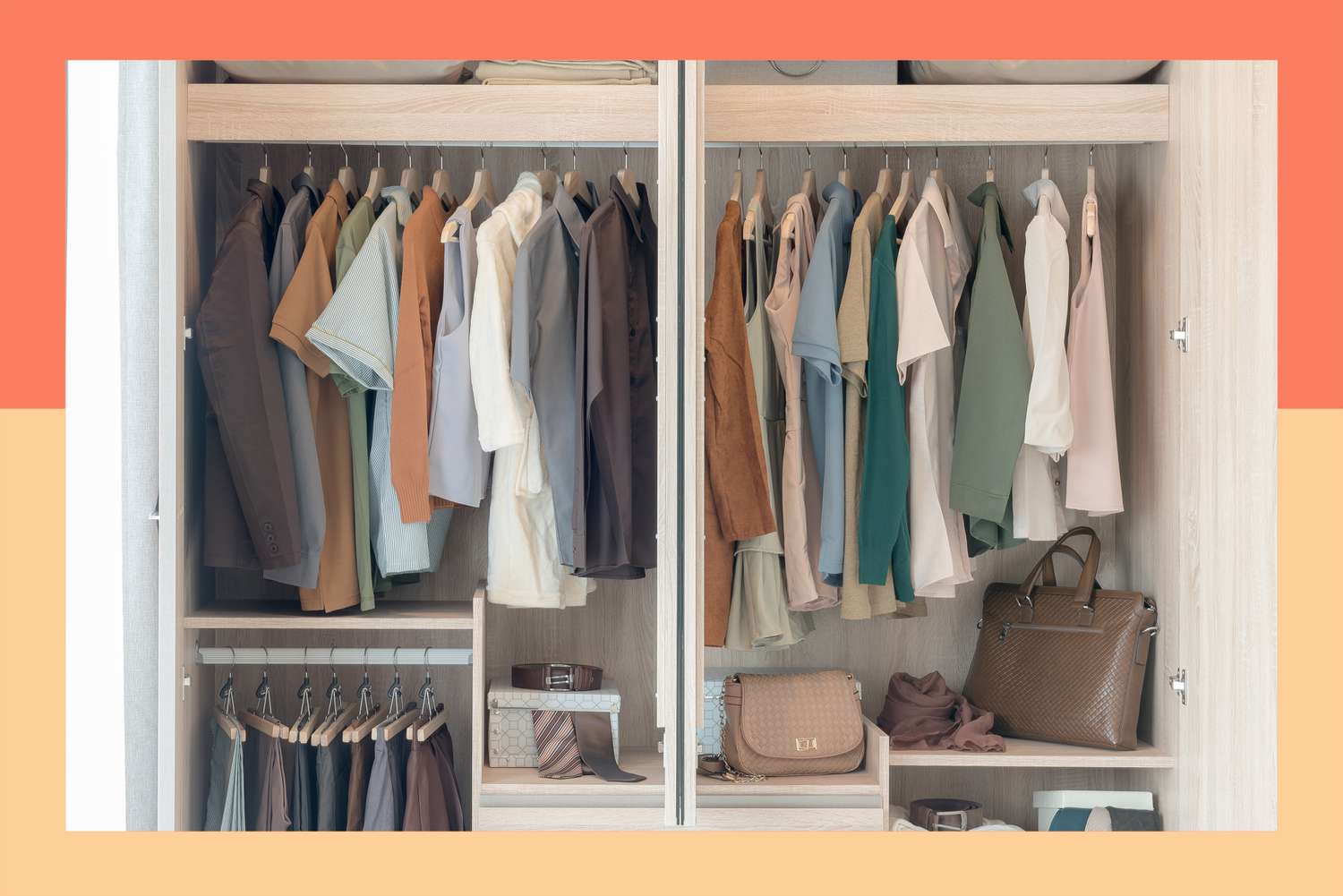

Decluttering your wardrobe is supposed to make mornings easier. Instead, it often turns into a dramatic reunion tour featuring that “almost perfect” dress, jeans from your “I ran a 5K once” era, and a shirt that’s been waiting patiently for you to become a person who enjoys ironing.
The fix isn’t brute-force purging. The fix is better questionsbecause questions turn “Should I keep this?” into a decision you can actually finish before dinner.
Before you start: a quick setup that prevents chaos
Do yourself a favor and set up five landing zones before you touch a hanger. This keeps you from making a “maybe” pile that becomes a permanent resident on your bed.
- Keep (Love + Wear)
- Repair/Tailor (only if you’ll do it soon)
- Sell (items with resale potential)
- Donate (clean, gently used, ready for someone else)
- Recycle/Trash (worn-out, damaged beyond reason)
Pro tip: keep a bag or box for donations right next to you. If it’s out of sight, your “donate pile” will mysteriously evolve into “seasonal storage.”
Question 1: “What do I want my wardrobe to do for me?”
This question sounds fluffy, but it’s the most practical one. Your closet is a tool. Define the job.
Examples of clear goals
- “Get dressed in 5 minutes without trying on three outfits.”
- “Build a work-friendly wardrobe I actually wear.”
- “Make space so I can see what I own (and stop buying duplicates).”
- “Create a smaller ‘core wardrobe’ and store off-season items.”
Why it helps: When you know the job, it’s easier to spot the employees who never show up for work. (Looking at you, scratchy sweater.)
Question 2: “If I had to pack for two weeks with only my favorites, would this make the cut?”
Imagine you’re staying locally for two weeksenough time to need variety, but not enough time to justify the entire wardrobe. This thought experiment reveals your true “A-team” clothing: the pieces you trust, reach for, and actually feel good in.
How to use it
- If it’s not even in the top group of things you’d pack, it’s not “essential.”
- If you’d pack it only “in case,” treat it like a maybe and move it to a short trial period (more on that soon).
- If you’d pack it but only if you had the right shoes/bra/alteration… that’s a clue, too.
Wardrobe reality check: Your closet should support your real life, not your imaginary life where you attend rooftop parties every Thursday.
Question 3: “Does it fit my body comfortably today?”
Not “Could it fit if I stand very still and avoid breathing.” Not “It fit when I bought it during the optimistic spring of 2019.” Today.
What “fit” actually includes
- Comfort: Can you sit, walk, reach, and exist?
- Function: Does it work with your daily activities (commute, errands, work, parenting, travel)?
- Confidence: Are you adjusting it all day, or forgetting you’re wearing it?
If it doesn’t fit and it’s not an easy, realistic fix, it’s not helping you. It’s taking up rent-free space and charging you interest in the form of guilt.
Question 4: “Have I worn this in the last yearand if not, why?”
The “one-year rule” isn’t law, but it’s a great flashlight. If you didn’t wear it through all four seasons (and all your usual events), you need a reason stronger than “I forgot it existed.”
Good reasons to keep (even if you didn’t wear it)
- A true special-occasion piece you actually use (weddings, formal events, interviews)
- Seasonal gear (heavy coats, snow boots) that’s genuinely necessary in your climate or travel plans
- A uniform/basic staple that rotates in and out (think: black blazer, quality denim)
Reasons that usually mean “let it go”
- It’s uncomfortable (scratchy, tight, fussy, high-maintenance)
- It needs a “perfect” scenario that never happens
- You have three other items that do the same job better
Try this: If you’re unsure, flip the hanger backward. If it’s still backward in 60–90 days, your closet just answered for you.
Question 5: “When I pick it up, do I feel goodlike it ‘sparks joy’ or boosts confidence?”
Yes, “spark joy” became a catchphrase, but the underlying idea is solid: your reaction matters. Clothing isn’t only about utility; it’s also about how you feel in your own skin.
Signs a piece is a “closet bully”
- It makes you feel guilty (“I spent so much money…”) rather than happy.
- It makes you feel less like yourself (“It’s nice, but not me.”).
- It drags you into negative self-talk (“When I lose weight…”) every time you see it.
Decluttering isn’t about punishing past purchases. It’s about curating a closet that treats you well. Your wardrobe should feel like a supportive friend, not a snarky critic.
Question 6: “Is it in good enough condition to deserve closet space (or to be responsibly passed on)?”
Condition is a decision shortcut. If something is stained, stretched out, pilled, smells weird, or has a zipper that’s been “almost fine” for two years, the next step matters.
Use the “repair reality” test
- If it’s a simple fix (button, hem, small seam) and you’ll do it in the next month, put it in Repair/Tailor.
- If it’s a fantasy fix (“I’ll learn to tailor this someday”), it’s probably not staying.
Donation note: Most donation centers want items that are clean and in wearable condition. If it’s not something you’d feel okay giving to a friend, it’s not a kind donation. Choose recycling or disposal instead.
Question 7: “Would I buy this again todayat full price?”
This question neutralizes two classic closet traps: sunk cost (“But I paid a lot for it!”) and aspirational identity (“This is for the future version of me!”).
How to answer honestly
- If you wouldn’t buy it now, ask: What changed? (fit, lifestyle, taste, comfort, maintenance)
- If the only reason you’re keeping it is the price tag, remember: the money is already spent. Keeping it doesn’t “recover” the cost.
- If you’d buy it again but it’s redundant, keep the best version and release the rest.
Closet math: Space is a limited resource. Every “meh” item makes it harder to find the “yes” items.
Turn answers into action: a simple wardrobe decluttering workflow
Questions are powerfulif you actually finish the process. Here’s an easy way to wrap it up without creating a laundry-mountain apocalypse.
Step 1: Do a fast “no-brainer” pass (10–15 minutes)
- Anything damaged beyond repair → Recycle/Trash
- Anything that clearly doesn’t fit and isn’t worth tailoring → Donate/Sell
- Anything you love and wear weekly → Keep
Step 2: Handle the “maybe” items with a time limit
If you’re stuck, set a rule like: “If I can replace this for a small amount of money and minimal effort, I don’t need to store it ‘just in case.’” Or use a trial box: tape it shut, date it, and if you don’t open it in 60–180 days, donate it without reopening (future-you will thank you).
Step 3: Choose the right exit for what leaves
- Sell: Great condition, recognizable brands, current styles, items with clear demand.
- Donate: Clean, wearable clothing you want someone else to use soon.
- Recycle: Worn-out textiles or damaged items your donation center can’t use.
Step 4: Maintain the calm with one “anti-clutter” habit
- Try an 80/20 closet rule: keep about 20% of space open so it’s easy to browse and put things away.
- Do a 5-minute reset once a week: return stray items, re-hang clothes, and move “maybes” toward a decision.
- When you buy something new, ask: “What is this replacing?” (If the answer is “nothing,” you’re expandingon purpose or by accident.)
Common experiences people have while decluttering a wardrobe (and what to do about them)
(These are composite, real-to-life scenariosbecause most closets have the same cast of characters.)
Experience 1: The “aspirational” section that belongs to another version of you
Many people discover a cluster of clothing that fits an identity more than a life: business suits from a job you no longer have, ultra-trendy pieces from a style phase, or athletic gear for workouts you keep meaning to start “next Monday.” The emotional logic is understandablekeeping the clothes feels like keeping the dream.
The practical fix is kinder: keep one or two items that genuinely support your next-step goals (like a great blazer for interviews or a comfortable workout set you’d actually wear), then release the rest. Ask, “What would I buy to support my real life right now?” and let that guide you. You’re not deleting ambitionyou’re clearing space for clothes that help you show up today.
Experience 2: The “closet bully” that creates guilt every time you see it
Almost everyone has an item that makes them feel bad: the expensive jeans that never fit right, the gift you don’t like but feel obligated to keep, the dress that looked amazing on the model and confusing on Earth. These pieces don’t just take up space; they take up emotional bandwidth. You open the closet andbaminstant micro-stress.
A helpful move is to treat guilt as data. If the item triggers negative feelings, it’s not neutral clutterit’s active clutter. If you can sell it, you might recover a little money. If you can donate it in good condition, you might help someone else. If it’s not suitable for either, recycle it responsibly. The win is getting your closet back to a place that feels supportive, not judgey.
Experience 3: The “I’ll fix it” pile that becomes a long-term roommate
People often create a repair stack with good intentions… and then it lives on a chair for six months like it pays rent. The trick is to limit repairs to what you’ll realistically complete. A simple rule: if it’s not repaired within 30 days, it moves to donate/sell/recycle. Another option is to batch repairs: schedule one tailoring drop-off, or keep a small “mending kit moment” once a week for 15 minutes.
This prevents your wardrobe declutter from turning into a “craft project you didn’t ask for.” Tailoring is greatwhen it actually happens.
Experience 4: The sentimental items that don’t belong in daily wardrobe space
Sentimental clothing is tricky: concert tees, college hoodies, a wedding outfit, a loved one’s sweater. The issue usually isn’t whether to keep themit’s where to keep them. Daily closet space should hold clothes you wear. Memory items deserve a different home.
If you truly won’t wear it, store it intentionally: a labeled keepsake box, a garment bag, or a memory bin. You can even choose one “sentimental capsule” (a few meaningful pieces) and let the rest go. The goal is to honor the memory without letting nostalgia crowd out the clothes that serve your current life.
Experience 5: The surprise duplicate problem (aka “Why do I own seven black tops?”)
During a closet cleanout, people often discover accidental collections: multiple similar tees, near-identical jeans, or “backup” items bought because the original was misplaced in the closet chaos. This is where your questions pay off fast.
Line up duplicates and choose the winner: the best fit, best fabric, and the one you reach for first. Keep one backup only if you truly wear the category constantly (like everyday tees). The rest can be sold or donated depending on condition. This single move frees a surprising amount of spaceand it reduces decision fatigue because your closet stops offering ten versions of the same choice.
Conclusion
Decluttering your wardrobe isn’t about becoming a minimalist or owning exactly 33 items. It’s about making your clothes work for your actual lifeand making it easy to get dressed without stress.
When you use the seven questions above, you’re not just removing stuff. You’re building a closet you can trust: pieces that fit, feel good, and get worn. And that’s the real goalless clutter, more confidence, fewer “nothing to wear” moments while staring at a closet full of clothing.