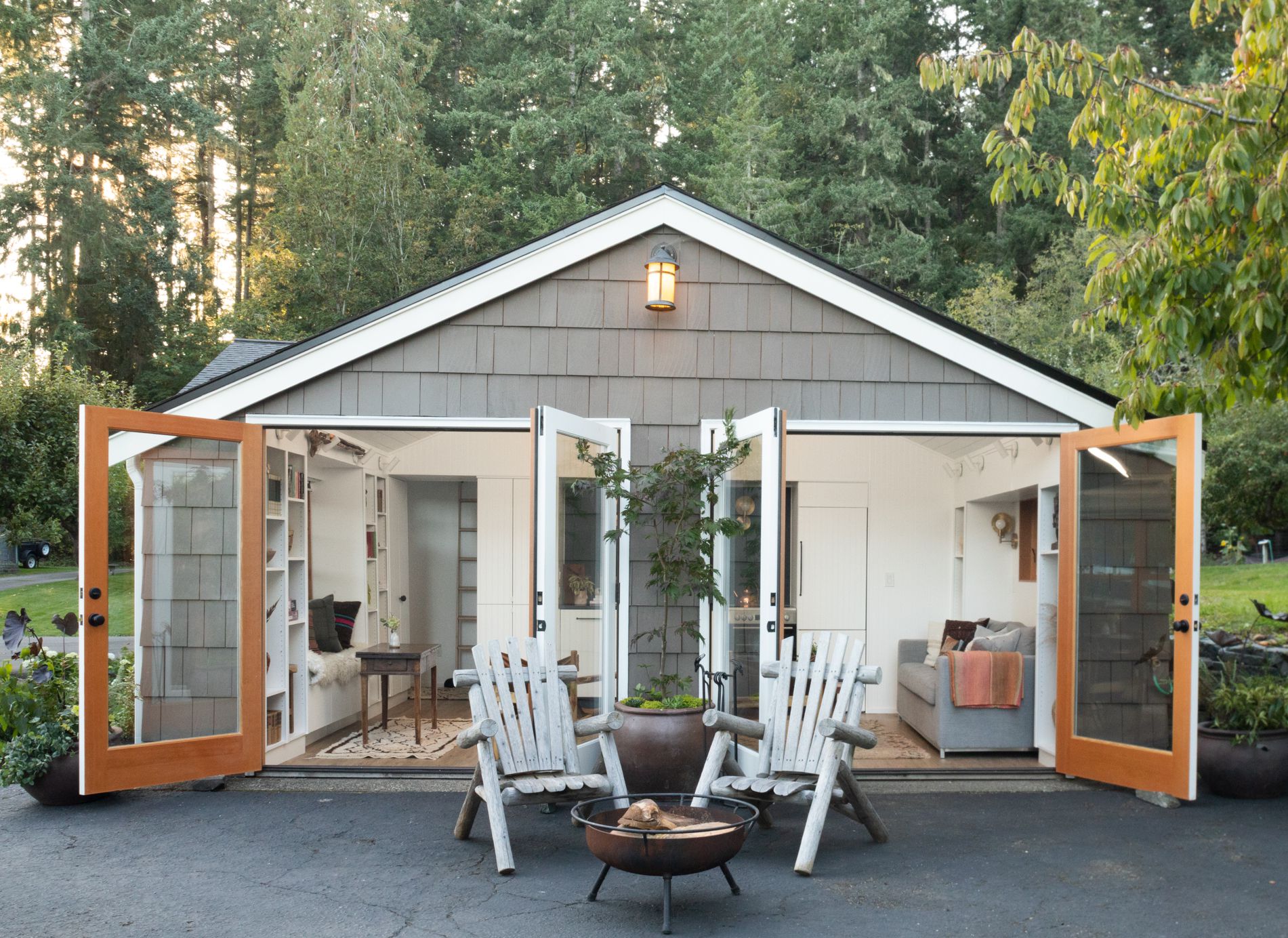

Tiny homes are adorable. Like a golden retriever in a hoodie. But before you trade square footage for square charm, there are a few very un-cute realities to deal withlike zoning, inspections, utility hookups, and the fact that your “open concept” is basically your entire life happening in one room.
This guide walks through six practical, real-world things to consider before building a tiny home, with examples and decision tips so you can plan smarter, spend better, and avoid learning expensive lessons the hard way.
1) Zoning and where your tiny home can legally live
Here’s the truth: the hardest part of tiny living is often not the tiny partit’s the where. “Can I put it there?” is the question that decides everything else: your design, your budget, and whether your home becomes a dream or a very expensive yard ornament.
Start with the tiny-home “type” you’re building
- Tiny home on a foundation is usually treated like a small house or cottage and must comply with local building codes and inspections.
- Tiny home on wheels (THOW) is often regulated like a recreational vehicle (RV) or park model in many placesmeaning different rules, different labels, and sometimes restrictions on full-time occupancy.
Minimum size rules and “ADU” pathways
Many communities set minimum dwelling sizes or have zoning rules that unintentionally block small homes. Others allow tiny homes through an Accessory Dwelling Unit (ADU) pathwaybasically a small secondary home on a lot with an existing primary home (think: backyard cottage, garage conversion, or detached unit).
Example: You want a tiny home behind your parents’ house. If your city allows ADUs, you may be able to build legallybut you could still face requirements for setbacks, parking, utility connections, fire access, or owner-occupancy rules. If the same tiny home is on wheels, it might be treated as an RV and restricted to short-term staysor allowed only in specific zones.
Practical step before you draw a single wall
Call (yes, actually call) your local planning/zoning office and ask:
- Is a tiny home on a foundation allowed as a primary dwelling in my zone?
- Are tiny homes allowed as an ADU, and what size/utility/setback requirements apply?
- If it’s on wheels, is it allowed as a long-term residence, and where can it be parked?
- Do you have pre-approved ADU plan programs or expedited pathways?
If the answer is “maybe,” ask about variances, planned-unit developments, tiny home communities, or ADU-friendly options. You’re looking for a legal lane that matches your lifestylenot a loophole you’ll regret.
2) Building codes, safety standards, and inspections (aka: the stuff that keeps you alive)
A tiny home still needs big safety: structural integrity, safe electrical systems, fire protection, and sane escape routes. Codes and standards can feel like paperwork, but they also prevent “cute” from turning into “combustible.”
Appendix Q and the “tiny house code conversation”
If you’re building a tiny home on a foundation, you’ll hear about Appendix Q (International Residential Code). It’s designed for tiny houses (generally 400 sq. ft. or less, excluding lofts) and includes allowances that make tiny layouts more feasibleespecially around loft access, stair geometry, and ceiling heights that would otherwise be difficult in a compact build.
Key reality check: Appendix Q is a model-code appendix. Your local jurisdiction must adopt it (or allow it) for it to help you. If your town hasn’t adopted it, you may be required to follow standard residential rules that can make tiny design much harder.
If it’s on wheels, standards matter even more
Tiny homes on wheels often fall under RV-style standards, and certification can impact everything from financing to insurance to where you can park.
- NFPA 1192 is a major fire/life safety standard used for RVs.
- ANSI A119.5 is commonly referenced for park model RVs.
- RVIA inspection programs and labels are frequently used as proof of compliance for RV/park model builds.
- NOAH is a well-known inspection/certification pathway used in the tiny home space, particularly for demonstrating compliance with nationally recognized standards.
Example: If you plan to move your tiny home and stay at RV parks, a build aligned with RV standards (and recognized certification) can make the difference between “welcome” and “sorry, no.”
Plan your inspection strategy upfront
Don’t treat inspections like a surprise pop quiz. Decide early:
- Are you building under local residential inspection (foundation)?
- Are you building to RV/park model standards (wheels)?
- Will you pursue third-party certification to support insurance, resale, and parking access?
This choice affects framing, electrical layouts, plumbing venting, egress, and even which materials make sense.
3) Budget beyond the build: land, site work, and the “tiny home math”
Tiny homes can be less expensive than traditional homesbut only if you price the whole ecosystem, not just the cute box with shiplap.
Common budget categories people underestimate
- Land (purchase or long-term lease) and any HOA restrictions
- Site preparation: grading, driveway, drainage, foundation/pads
- Utility hookups: trenching, meters, sewer taps, water lines, power runs
- Wastewater solutions: septic system, holding tanks, permitted alternatives
- Permits and fees: building permits, inspections, impact fees, plan reviews
- Certification costs (if you go that route)
- Storage: sheds, offsite storage, or creative built-ins
Financing: your options depend on what your tiny home legally is
Financing a tiny home can be straightforwardor weirdly complicateddepending on whether it’s classified as real property, an RV, or something in between.
- Traditional mortgage often requires the home to be real property (on a permanent foundation, titled properly, meets lender requirements).
- Personal loans may work for smaller amounts but typically have shorter terms and may have higher rates.
- RV loans may be available for tiny homes on wheels that meet RV-related standards and inspection requirements.
- Factory-built/modular pathways may open additional lending options when the home meets applicable code and classification requirements.
Example: Two tiny homes can cost the same, look identical, and have completely different financing outcomes because one is legally a dwelling on a foundation and the other is legally treated as a vehicle/park model.
Money-saving tip: Before you buy materials, price the “boring” parts: utility runs, permits, driveway access, and wastewater. Those costs can rival your interior finisheswithout giving you a single Instagram-worthy backsplash.
4) Utilities and systems: water, power, ventilation, and waste (the glamorous stuff)
A tiny home is small, but its systems still need to be safe, legal, and comfortable. Tiny living is delightful until your shower drains into a bucket you forgot to empty. (Ask literally any tiny home forum.)
Water and wastewater: what’s permitted beats what’s Pinterest
Local health departments often regulate wastewater and sanitation. Your options may include sewer hookup, septic, holding tanks, or other permitted systems depending on location and classification.
If you’re considering a composting toilet, keep in mind that legality and permitting vary widely. It can help to look for systems evaluated to recognized standards (for example, NSF/ANSI standards) because inspectors and permitting officials often want objective proof of performance.
Greywater and reuse
Greywater reuse can be appealing in tiny living, especially for off-grid or water-scarce setups. But it’s regulated differently across jurisdictions and can require design choices that prevent health risks and nuisance conditions. Guidance exists at the federal level for water reuse best practices, but local rules still rule.
Power and HVAC: small spaces swing temperature fast
Tiny homes heat up and cool down quickly. That’s great for efficiencyuntil you discover your space swings from “arctic” to “sauna” because your heat source is oversized or poorly placed.
- Right-size your heating/cooling based on climate and insulation.
- Prioritize air sealing and moisture control.
- Plan dehumidification if you live in a humid region.
Ventilation: tiny air gets stale fast
In a compact home, everyday activitiescooking, showering, even breathingchange indoor air quality quickly. Mechanical ventilation is a big deal in energy-efficient houses and helps keep moisture and pollutants under control, which matters even more when the entire home is basically one shared air zone.
Example: If you cook often, a decent range hood with proper exhaust (and make-up air considerations where needed) is more than a “nice-to-have.” It’s the difference between “cozy” and “smells like last Tuesday’s salmon forever.”
5) Layout and livability: tiny is a design problem before it’s a lifestyle
When you build a tiny home, you’re not just building a smaller houseyou’re designing a high-performance container for daily habits. If your habits don’t fit, nothing fits.
Design around routines, not trends
Ask yourself:
- Do I cook most meals, or am I a microwave-and-mystery-snack person?
- Do I work from home, and do I need quiet calls?
- Do I have hobbies that require gear (music, camping, tools, sports)?
- Do I need accessibility-friendly design now or later?
Lofts are common, but not always comfortable
Sleeping lofts save space, but they can be tricky for comfort and safety. Think through headroom, ventilation, and how you’ll actually use the ladder/stairs at 2 a.m. half-asleep. If stairs are part of your plan, code pathways (like Appendix Q where adopted) can influence what’s feasible.
Storage is either genius… or your downfall
Tiny homes punish clutter like it’s a competitive sport. Plan:
- Built-in storage under seating and stairs
- Vertical storage (but not so high you never use it)
- A “drop zone” near the entry for shoes, bags, coats
- Where bulky items go (vacuum, winter gear, tools)
Example: If you own two bikes, a pet, and a seasonal wardrobe, you may want an exterior storage box, a small shed, or a tiny home design with a dedicated gear wall. Otherwise you’ll be playing “Tetris: Real Life Edition.”
6) Mobility, insurance, and resale: the long-term reality check
Even if you never plan to move your tiny home, you still need to plan for the realities of ownership: insurance coverage, transport rules, and what happens if you need to sell.
Weight and transport planning
If your tiny home is on wheels, weight is a safety and legality issue. You’ll need a trailer with a Gross Vehicle Weight Rating (GVWR) that can handle the finished build, and you’ll want a realistic estimate of your completed home’s weightmaterials, systems, furniture, and all the stuff you swear you “won’t own much of.”
Practical note: Overloading a trailer can create serious safety risks and legal headaches. It’s worth treating weight calculations as a core design constraint, not a footnote.
Insurance depends on how you use the tiny home
Tiny home insurance isn’t one-size-fits-all. Coverage commonly varies based on whether the home is stationary or mobile, whether it’s financed, and whether it’s insured as a dwelling or an RV-type unit. Some lenders require coverage as a loan condition even if insurance isn’t legally required.
Example: If you plan to travel, you’ll likely need coverage that applies in motion and while parked. If you’re stationary, the policy type may look more like manufactured/mobile home coverage than standard homeowners insurance.
Resale and appraisal realities
Tiny homes can be harder to appraise and sell if they’re not treated as real property or if comparable sales are scarce. Certification, documented build specs, and clear compliance pathways can help buyers (and insurers and lenders) feel confident.
When you plan your build, think like Future You (or Future Buyer): keep build documentation, receipts, plans, and inspection/certification records organized. Your tiny home will thank you later, even if it can’t talk.
Quick pre-build checklist
- Legal pathway: foundation dwelling, ADU, or on-wheels/RV-style?
- Code strategy: local residential inspection vs. recognized RV/park model standards
- Budget reality: land + site work + utilities + permits + contingency
- Systems plan: wastewater, power, HVAC, ventilation, moisture control
- Livability: routines, storage, accessibility, noise, work-from-home needs
- Long-term: insurance, weight/transport, resale documentation
Experiences: what tiny-home owners wish they’d known (the extra )
Talk to enough tiny-home owners and you’ll notice a pattern: most people don’t regret going smallthey regret the parts they didn’t plan for. The tiny home itself is rarely the problem. The “tiny home in the world” is the problem.
The most common surprise is zoning. People fall in love with a floor plan, order a trailer, start framing… and then discover their county won’t allow a tiny home as a primary dwelling, or only allows it as an ADU, or requires a permanent foundation, or limits occupancy for homes classified as RVs. Owners often describe this as the moment their dream turns into a spreadsheet. The lesson: before you fall in love with a design, fall in love with a legal pathway.
The second surprise is site work. Even when the tiny home build is DIY-friendly, the land may not be. Driveway access, grading, drainage, and utility trenching can add up fast. Owners who budget only for lumber and appliances sometimes end up pausing the project because the “boring stuff” costs real money. A frequent win is to choose land that already has a driveway and nearby utility accessor to place the tiny home where hookups are short and simple.
Then there’s moisture. In a small space, one long shower can feel like you fogged up an entire carbecause you basically did. Owners regularly mention that good ventilation and dehumidification are not optional comfort upgrades; they’re how you prevent musty smells, condensation on windows, and ongoing mold anxiety. Tiny living is amazing when the air feels clean and dry. It’s miserable when it feels like living inside a wet towel.
Storage is the silent deal-breaker. Many first-time builders underestimate “life objects”: vacuum cleaners, laundry baskets, pet food, boots, tools, hobby gear, suitcases. Owners who thrive in tiny homes often have one of three things: built-ins everywhere, a shed (or external storage), or a ruthless relationship with clutter. If you’re not naturally minimalist, don’t try to “become one” through panic. Design storage like you design your kitchenon purpose.
Lofts get romanticized. Owners who love lofts usually love them because they’re efficient and cozy. Owners who hate lofts usually hate them because of nightly ladder climbs, head bumps, and temperature differences (hot air risesyour loft knows). One practical compromise some owners swear by is a slightly larger footprint with a main-floor sleeping area, or stairs with storage that feel stable and safe.
Finally, many owners say the biggest “aha” is that tiny living magnifies habits. If you’re messy, tiny feels messier. If you’re organized, tiny feels luxurious. If you love cooking, a well-designed tiny kitchen feels like a tiny restaurant. If you hate cooking, a giant kitchen won’t save you anyway. The best tiny homes aren’t just smallthey’re aligned with how the owner actually lives.
So if you’re considering building a tiny home, the most valuable “experience” to borrow is this: plan the legal path first, design for real routines, and treat ventilation, storage, and site work like first-class citizens. Your future selfstanding in a warm, dry, beautifully functional tiny spacewill be extremely grateful.
Conclusion
Building a tiny home can be a smart, freeing moveif you treat it like a real housing project, not a weekend craft. Nail down zoning and code requirements early, budget for land and utilities, design around real life (not just vibes), and think through insurance, mobility, and resale. Do that, and your tiny home won’t just be cuteit’ll be livable, legal, and built to last.