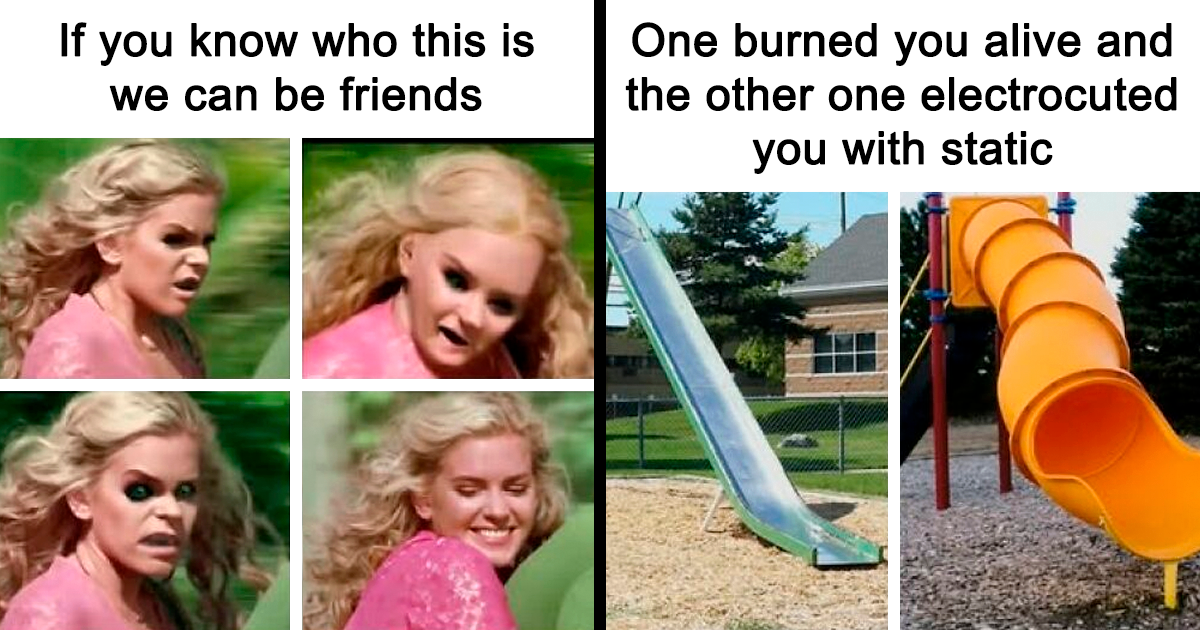

If you’ve ever laughed at a meme and immediately felt 12 years old again, welcome. You just got hit with a nostalgia
flashbang: one part memory, one part emotion, and three parts “why does this feel so personal?”
Nostalgia memes don’t just remind us of old stuffthey remind us of old us. The kid who could spend
an entire afternoon turning a cardboard box into a spaceship. The teen who survived dial-up internet like it was a
wilderness expedition. The era when “screen time” meant the family TV, not a pocket-sized portal to every opinion on
Earth.
This isn’t a “kids these days” roast (okay, maybe a gentle toast). It’s a celebration of the little things that made
childhood feel big: simple rituals, imperfect technology, and the kind of boredom that accidentally turned into
creativity. Below are 50 meme-worthy moments that capture that vibeplus a longer, story-style memory lane at the end
for anyone who likes their nostalgia with extra sprinkles.
Why Nostalgia Memes Hit So Hard
They’re not really about the pastthey’re about identity
Nostalgia is sneaky. You think you miss the thing (the show, the snack, the toy), but you’re often missing the
feeling: safety, freedom, belonging, and not having to remember passwords. Memes work because they compress a whole
era into one punchline. Your brain sees a single detaillike a VHS tape or a classroom overhead projectorand then
auto-loads a full emotional playlist.
Memes are time machines you can share
Childhood memories can feel lonely until you realize other people lived the same weirdly specific momentslike
fighting over who gets to sit by the window in the minivan, or deciding whether to risk the last slice of cafeteria
pizza. Memes make that “Wait… you too?!” feeling instant, which is basically social bonding in JPEG form.
A Quick Reality Check (Because Our Childhoods Weren’t Perfect Either)
Let’s be fair: childhood wasn’t universally better “back then.” Some people had awesome tech-free adventures; others
dealt with bullying, family stress, or feeling like they didn’t fit in. And “now” has real wins: easier access to
information, more ways to find communities, more openness about mental health, and better tools for learning and
safety.
What nostalgia memes usually miss is nuanceand that’s okay. They’re not history textbooks. They’re emotional
snapshots. The point isn’t to declare one generation “superior.” The point is to laugh at the contrast between a
childhood built on limited options and big imagination and a present built on infinite options and
constant noise.
The 50 Meme Moments That Scream “My Childhood Was Elite”
Outside Was the Main App (1–10)
- Streetlights as a curfew notification: The original “low battery” warningif the streetlights came on, you better teleport home.
- Riding bikes with zero destination: Just vibes, a water bottle you didn’t drink, and one friend who insisted the hill was “totally not that steep.”
- Calling it a “club” because you found a cool stick: Membership fee: bring your own stick. Dress code: dirt.
- Sidewalk chalk masterpieces that lasted 12 minutes: One sprinkler run and your Mona Lisa was gone forever.
- Drinking from a garden hose like it was fine dining: Notes of rubber. A hint of summer. Zero health inspections.
- “You can’t leave until the game ends” rules: The game never ended. That’s how we stayed outside for four hours.
- Tree-climbing as confidence training: You learned courage, balance, and which branches are liars.
- Capture the flag wars: Neighborhood diplomacy failed. Chaos reigned. Everyone accused someone of cheating.
- Jumping ramps you definitely built “safely”: One plank, two bricks, and the unstoppable belief in your own immortality.
- Walking to a friend’s house unannounced: You just showed up like a friendly side quest.
School Was a Whole Cinematic Universe (11–20)
- The overhead projector era: Nothing says education like a teacher writing on a clear sheet while the class watches in silence.
- Chalk dust and squeaky erasers: The soundtrack of learning, plus the occasional chalkboard screech that rewired your DNA.
- Scholastic Book Fair day: You entered with $5 and left with a poster, a novelty pencil, and a book you swear you’ll read.
- Passing notes like a spy thriller: “Do you like me? Circle yes/no.” The original high-stakes messaging app.
- Computer lab greatness: One printer. Twenty kids. A teacher begging everyone to stop changing the desktop background.
- Learning typing on a keyboard that survived wars: Keys worn smooth, spacebar screaming for mercy, and you still had to hit 25 WPM.
- Library checkout stamps: The due date stamp was basically a prophecy you ignored until panic day.
- Field trips with permission slips: The most thrilling paper contract of your life.
- “Put your name on it” as a survival tactic: If your name wasn’t on it, it belonged to the floor now.
- Pizza day / taco day hype: The cafeteria could serve “mystery” and you’d still be like, “BEST DAY EVER.”
Technology Had Personality (and Problems) (21–30)
- Dial-up internet noises: The sound of connecting… and also the sound of your family yelling, “I need the phone line!”
- Burning a mix CD like an artist: One wrong track order and you had to start over. Curating was a lifestyle.
- MP3 players with 37 songs total: Storage was limited, so every song had to earn its spot like a reality show contestant.
- Rewinding VHS tapes: “Be kind, rewind” was basically a moral philosophy.
- Disposable camera suspense: You took 24 photos, waited two weeks, and discovered 18 were thumbs.
- Printing MapQuest directions: Nothing says “adventure” like 12 pages of instructions that start lying the moment you miss one turn.
- Texting with T9: You became fluent in predictive chaos. “Home” could become “good,” and you just accepted it.
- AIM/IM away messages: The original status update, always dramatic: “brb… maybe.”
- Ringtones as a personality test: If your phone played an embarrassing song in public, that was character development.
- Gaming with no updates: You put in the game and played. No 40GB download. No patch notes. Just destiny.
Snacks, Toys, and Tiny Joys (31–40)
- Lunchbox negotiations: Trading snacks was the stock market, and fruit snacks were blue-chip assets.
- Capri Sun battles: You stabbed the straw wrong once and suddenly your juice pouch became a sprinkler system.
- Cereal as a prize delivery system: The toy inside was the main event. The cereal was just the ticket fee.
- Fruit snacks with suspicious shapes: You didn’t know what creature it was, but you knew it tasted like happiness.
- Rollerblades and scraped knees: If you didn’t have at least one dramatic fall story, did you even skate?
- Tamagotchi stress: You were eight years old learning responsibility because a pixel creature demanded it.
- Game Boy link cable friendships: Bonding through shared batteries and the sacred promise to not yank the cable.
- Action figures with epic storylines: You created entire cinematic universes… on the living room carpet.
- Sticker collections with no purpose: You never used the “good” stickers. You simply guarded them for eternity.
- Board games with missing pieces: You just invented new rules and pretended it was part of the experience.
Pop Culture Rituals You Had to Be There For (41–50)
- Saturday morning cartoons: You woke up early on purpose. That alone proves it was a different era.
- Commercial breaks as snack missions: The moment ads started, you sprinted like a professional athlete to the kitchen.
- Movie rental night: Wandering aisles, judging covers, picking one movie, and somehow leaving with candy you didn’t need.
- Late fees as emotional trauma: Returning a movie late felt like committing a crime.
- Waiting a week for the next episode: Cliffhangers taught patience. Or rage. Sometimes both.
- Family TV rules: “One show each” was democracy. “Dad controls the remote” was the actual government.
- Music videos and countdown shows: You didn’t just listenyou watched pop culture happen in real time.
- School dances with awkward slow songs: Everyone pretended not to care while absolutely caring.
- Getting news from the world… later: No constant breaking alerts. Your day didn’t start with a crisis notification.
- Going online felt like an event: You “went on the computer.” You didn’t just live there.
What These Memes Are Really Saying (Under the Jokes)
We miss the freedom of being unreachable
A lot of “childhood was better” energy is really “life was quieter.” When you weren’t instantly reachable, your time
belonged to you. You could disappear into a bike ride, a book, or a living-room floor adventure without notifications
dragging you back to the internet.
We miss boredombecause boredom created imagination
Today, boredom gets solved in three seconds. Back then, boredom had to marinate. And when it did, you invented games,
built weird contraptions, wrote terrible comics, or stared at clouds until they became dragons. Memes about “playing
outside all day” aren’t just about outdoorsthey’re about having space to create.
We miss shared rituals more than specific products
The VHS tape isn’t magical. The ritual was magical: movie night, the same snack bowl, the same argument about what to
watch, and the same feeling that this was your little tradition. Modern life still has rituals, but they’re easier to
fragment when everyone’s on a different algorithm-fed schedule.
We’re reacting to “always-on” life
A big part of the meme contrast is pace. Childhood felt slower because there was less to track: fewer accounts, fewer
updates, fewer social comparisons running 24/7. The “now” in these memes isn’t just technologyit’s intensity.
How to Bring Back the Best Parts of Childhood (Without Rejecting the Present)
- Create small offline rituals: A weekly board game night, a movie night with phones away, or an evening walk where the only notifications are crickets.
- Make room for “productive boredom”: Don’t rush to fill every quiet moment. Let your brain wander; it still knows how to play.
- Choose experiences over scroll sessions: Cook something nostalgic, visit a library, play a pickup game, or build something with your hands.
- Share the stories across generations: Nostalgia doesn’t have to be gatekeeping. It can be a bridge: “Here’s what we didwhat do you do now?”
Extra Memory Lane (About of Childhood Vibes)
The funniest part about nostalgia is how it shows up in your senses, not your logic. You don’t just remember “playing
outside.” You remember the warm pavement under your sneakers, the way your bike tires sounded on gravel, and the exact
moment the sun started turning everything goldlike the day was giving you a soft warning that the fun had an
expiration time.
You remember little rituals that felt ordinary then and legendary now. The dramatic sprint to the bathroom during a
commercial break, because missing the start of the show was basically a tragedy. The way your favorite snack tasted
after you’d been running around for hours, like hunger was the secret seasoning. The thrill of opening a new book from
a school book order, even if you’d picked it mostly because the cover looked cool and not because you knew what “plot”
meant yet.
You remember the “technology moments” that required patience and bravery. Waiting for a page to load while the whole
house prayed nobody picked up the phone. Rewinding tapes because future-you deserved to start the movie at the
beginning (and because you didn’t want to be “that person”). Making a playlist wasn’t just tapping a buttonit was a
mission. You hunted songs, borrowed CDs, listened to the radio like a fisherman waiting for the perfect catch, and
celebrated when you finally got the track you wanted.
And then there’s the social stuffthe kind that can’t be replicated by a group chat, even though group chats can be
great. You remember showing up at someone’s house and asking, “Can they come out?” like you were requesting an
audience with royalty. You remember the way friendship was built by shared time, not just shared memes. You got bored
together. You invented weird inside jokes together. You had arguments, made up five minutes later, and then kept
playing like nothing happened because the game was more important than the ego.
When people say childhood felt better, they’re often pointing at a feeling of spacespace to be
messy, space to be unproductive, space to be silly without worrying how it would look if it got recorded. Modern life
gives us a lot, but it also asks for a lot: attention, responsiveness, awareness, performance. Childhoodat least in
the version our brains replaywas simpler because the expectations were smaller and the imagination did more of the
heavy lifting.
That’s why these memes land. They don’t prove the past was perfect. They prove it was forming. Those little
moments taught us how to entertain ourselves, how to wait, how to play, and how to connect. And here’s the best part:
you don’t have to go back in time to get some of that feeling again. Sometimes it’s enough to shut the laptop, step
outside, and let your brain remember how to be a kid for ten minutespreferably before the streetlights come on.
Conclusion
“Our childhood was better” is usually shorthand for “our childhood felt lighter.” These memes are funny because they
reveal a real contrast: fewer distractions, more shared rituals, and more room to be bored enough to get creative.
Keep the best partsplay, presence, and real connectionwithout pretending the present has nothing to offer. The goal
isn’t to live in the past. It’s to steal its best habits and bring them into now.