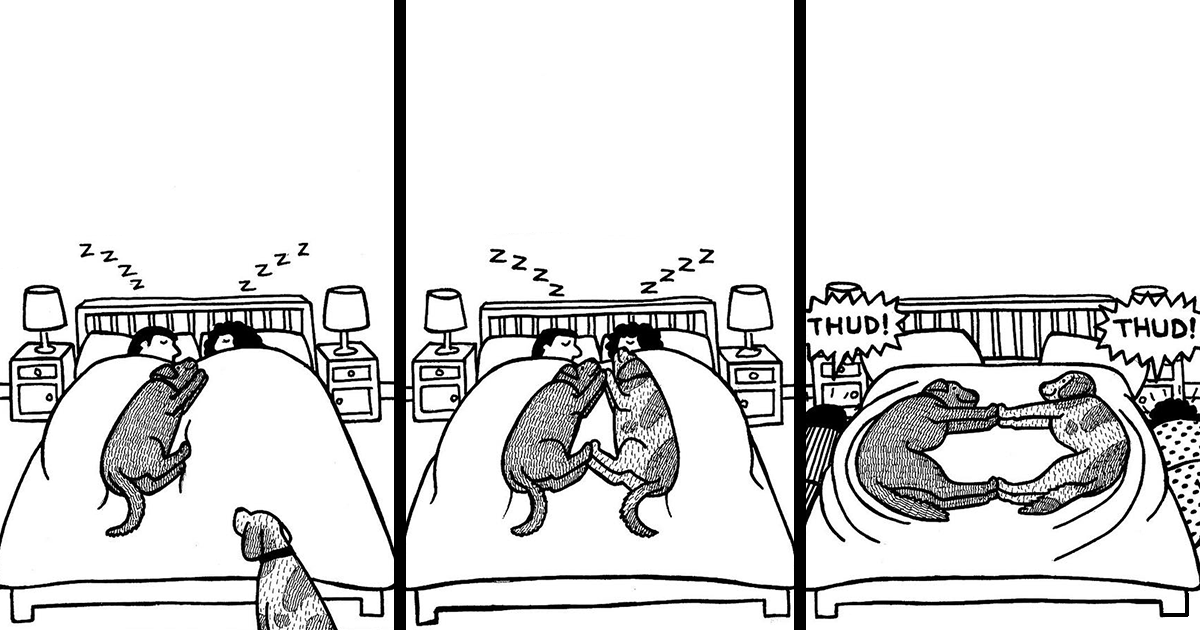

If you’ve ever tried to eat a sandwich while your dog stares at you like it’s the last snack on Earth, congratulations: you’re already living inside an “Off The Leash” comic. The beloved dog-cartoon series by Rupert Fawcett, often featured on Bored Panda, has become a cult favorite because it doesn’t show the idealized, perfectly trained pet. It shows the actual dog you know and lovethe one shedding on your black clothes, hogging your bed, and pretending not to understand the word “come.”
The Bored Panda collection of 45 relatable comics about the reality of owning a dog captures exactly why life with dogs is messy, chaotic, exhausting, and somehow still the best decision you’ve ever made. These cartoons feel so true because they mirror what science, veterinarians, and behavior experts keep telling us: dogs bring companionship, structure, health benefits, and a whole lot of comedy into our lives.
Let’s dig into why “Off The Leash” hits dog owners right in the feelings (and funny bone), what these comics reveal about real-life dog parenting, and how they can even help us become better, more patient humans to our four-legged roommates.
Meet “Off The Leash” and Its Creator
Rupert Fawcett’s dog world
“Off The Leash” is the brainchild of British cartoonist Rupert Fawcett, who has been drawing quirky, character-driven cartoons for decades. Before the dogs took over, he created popular characters like “Fred” and “Daddy,” but it’s his dog universe that blew up globally. Fawcett grew up with dogs and has said that living around them helped him “understand” their behavior and emotional logic, which he channels into the comics’ sharp one-liners and expressive body language.
The style is instantly recognizable: simple black-and-white panels, slightly bewildered humans, and dogs who appear to be having full-blown internal monologues. Those thought bubbles capture what every dog owner secretly suspectsour dogs absolutely have opinions about us, our routines, and our inability to open the treat jar fast enough.
How the Bored Panda collections amplified the series
Bored Panda has repeatedly featured “Off The Leash” in multi-image compilations, including the well-known roundup of 45 relatable comics about the reality of owning a dog. These collections gather fan-favorite strips about everything from couch-hogging pups to early-morning wake-up calls, making it easy for readers to binge-laugh their way through the everyday drama of dog ownership.
What makes these roundups so addictive is how universal the scenarios are. You don’t need a specific breed or training level to get the joke. If you’ve ever had a dog in your space, you’ll recognize the look of triumph when they claim the sofa or the tactical planning that goes into choosing the loudest spot on the hardwood floor for their 2 a.m. zoomies.
Why These 45 Dog Comics Feel So Relatable
They capture the daily chaos of dog ownership
Many of the comics revolve around simple routineswalks, meals, bedtimethat spiral into absurdity when dogs are involved. In one recurring type of scenario, the humans announce something like, “Let’s sit down and watch TV,” and in the next panel, the dogs have launched a full-scale sofa takeover. That exaggerated moment reflects a very real truth: once a dog enters your life, your home layout, furniture rules, and personal space boundaries are all “under negotiation.”
Dog experts often emphasize that dogs thrive on routineregular feeding times, consistent walks, predictable cues. These comics flip that idea on its head by showing how dogs also take advantage of our routines. They somehow know the exact second you sit down with a snack, the moment you put on your shoes, or when you touch their leash. Suddenly, you’re not running the schedule; you’re reacting to it.
Dog logic vs. human logic
Another recurring joke in “Off The Leash” is the wild gap between how humans think and how dogs think. Humans want clean floors, no barking at the mail carrier, and calm walks. Dogs want to roll in mysterious smells, announce every delivery with a full siren performance, and zigzag down the sidewalk like they’re drawing crop circles.
Behavior specialists explain that dogs experience the world primarily through scent and movement, not through our verbal logic. For a dog, sniffing every lamppost isn’t “being difficult”; it’s checking their social feed. Fawcett’s comics exaggerate that contrast in a way that makes owners laughand maybe feel a bit more patient the next time their dog refuses to walk past a suspicious trash can.
The emotional bond behind the punchlines
Under all the humor, the comics radiate affection. Even when the humans look exasperatedstepping over a dog in the kitchen, washing muddy paw prints off white linens, or trying to reclaim blanket territorythe final feeling is always love. And that’s backed up by research: studies show that dogs can reduce stress, anxiety, and loneliness, while encouraging exercise and routine.
Those 45 panels aren’t just jokes; they’re a visual love letter to the strange but powerful bond between people and their pups. The comics remind us that we’re not just dealing with a petwe’re dealing with a family member who doesn’t pay rent but definitely thinks they own the place.
Big Themes from “Off The Leash” That Every Dog Owner Knows
1. The eternal food obsession
If you had to sum up dog priorities in one pie chart, “food” would probably take up 90%. Many “Off The Leash” strips show dogs politely (or not-so-politely) observing every snack, meal, and grocery bag. They plant themselves under the table like furry vacuum cleaners and interpret every rustling package as a potential treat.
This isn’t just a gagveterinary nutrition guides note that dogs are highly motivated by food, which is why reward-based training is so effective. The comics exaggerate it to comedic extremes, but every owner who’s ever been guilt-tripped by soulful eyes over a bag of chips knows the struggle is very real.
2. Furniture: shared, invaded, or surrendered
Another favorite motif is the “no dogs on the sofa” rule being heroically announcedand then quietly abandoned. In one classic setup, the humans have big intentions in the first panel, and by the last, the dogs are sprawled across the entire couch while the people are clinging to a tiny edge.
Pet-care organizations often point out that many owners end up allowing dogs on furniture because it strengthens bonding and comfort, as long as basic hygiene and behavior rules are in place. The comics simply show what really happens: even the strictest “no couch” policy tends to wilt under the power of cuddles and puppy snores.
3. Walks, zoomies, and the illusion of control
“Off The Leash” walks are rarely serene. There are tangled leashes, sudden stops, questionable puddles, and dramatic dog decisions about where (and when) bathroom breaks should happen. That perfectly mirrors real life: we imagine peaceful strolls, but often we get cardio, strength training, and public embarrassment in one convenient package.
At the same time, walking and playing with your dog are part of the reason pet ownership is linked with better cardiovascular and mental health. Studies show that dog owners are more active overall and report less loneliness, partly because walks create chances for social interaction with other people. A comic panel of a dog dragging you down the street is funnybut it’s also quietly honest about the way dogs keep us moving and connected.
4. Hair, dirt, and household chaos
One of the most painfully accurate themes in “Off The Leash” is the omnipresence of dog hair. There are comics where outfits, couches, and even formalwear are covered in fur, with owners trying to make peace with it. Add muddy paw prints, chewed toys, and squeakers that mysteriously squeak only at 11 p.m., and you have a pretty realistic snapshot of a dog household.
While lifestyle guides cheerfully recommend regular grooming, vacuuming, and washable throws to manage the mess, dog owners know there’s always a trade-off: a cleaner home versus a happier, more playful dog. The comics lean into that trade-off and gently suggest that a fur-covered life might actually be the better one.
What These Comics Reveal About Being a Responsible Dog Owner
It’s easy to focus on the jokes and forget that dog ownership is, in fact, a serious responsibility. That contrast is part of what makes “Off The Leash” so sharp: by exaggerating the silly stuff, it quietly points to the real work happening behind the scenes.
Routine, training, and boundaries
Behind every cartoon of a dog ignoring a command, there’s a real-life situation where training matters. Animal behavior organizations emphasize positive reinforcementrewarding good behavior instead of punishing mistakesas the gold standard for modern dog training.
When you see a comic dog gleefully misunderstanding “stay” or “heel,” it’s funny, but it also reminds us of the importance of consistency. Clear rules, frequent rewards, and lots of patience not only improve behavior but also strengthen the bond between dog and human. And yes, you can still laugh when it all goes off the rails sometimes.
The emotional side of dog care
Studies show that dogs can reduce stress, support mental health, and give people a sense of purpose and routine. But there’s another side: dogs also rely on us emotionally. They need stability, calm correction instead of anger, and a sense of safety in their environment.
“Off The Leash” often shows dogs shadowing their humans from room to room, crowding into bathrooms, or refusing to sleep alone. It’s funny, but it reflects a real emotional need: dogs are social animals who seek closeness and connection. Understanding that can turn annoyance (“Why are you under my feet again?”) into appreciation (“Wow, I’m their safe person”).
The health benefits go both ways
Research has linked pet ownership with reduced blood pressure, lower stress hormones, and better mood. More recent studies even suggest that owning a dog or cat may help preserve certain brain functions as we age, potentially slowing cognitive decline by encouraging physical activity, social interaction, and emotional engagement.
When the comics show owners humorously “complaining” about all the walks, grooming, and playtime, the punchline is that these chores are secretly good for us. Our dogs are unpaid personal trainers, therapists, and social coordinators disguised as chaos goblins.
How “Off The Leash” Helps Us Laugh, Learn, and Let Go
One underrated gift of the “Off The Leash” series is how it normalizes imperfection. Your dog isn’t the only one who refuses to come when called in the park. Your couch isn’t the only one covered in fur. Your 6 a.m. wake-up call isn’t uniqueit’s practically a universal dog-owner experience.
By seeing these struggles turned into comics, owners get two messages at once:
- You’re not alone. Other people are going through the exact same “my dog stole my spot again” drama.
- It’s okay to laugh about it. Laughter can relieve stress and make the hard parts of dog care feel more manageable.
That mix of relatability and humor can make owners more resilient. When the next big mess happens, you might think, “Well, at least this would make a great cartoon,” instead of spiraling into frustration.
Real-Life Experiences Inspired by “Off The Leash” (Extra of Dog-Owner Reality)
You don’t have to be a professional cartoonist to recognize yourself in these comics. Most dog owners could storyboard a whole new volume of “Off The Leash” just from last week. Here are a few classic “episodes” that echo the spirit of those 45 relatable comics.
The 6 a.m. Furry Alarm Clock
In the comics, dogs often decide that dawn is the perfect time to start the day. Maybe they’re staring silently next to the bed, maybe they’re gently tapping with a paw, or maybe they’re all-in with barking and leaping. In real life, this might look like a cold nose on your face, a paw on your chest, or the unmistakable jingle of a leash being nosed off its hook.
For many owners, that early wake-up can be both annoying and oddly comforting. Yes, you lost an extra 30 minutes of sleep, but you gained a quiet walk in the morning air, a bit of exercise, and a head start on the day. That’s exactly the kind of moment the comics highlight: inconvenient and wonderful at the same time.
The Sofa Negotiation That Never Ends
One “Off The Leash” staple is the furniture battle. In real homes, this often plays out as a slow but inevitable surrender. It starts with: “The dog can sit here, but only on a blanket.” Then it becomes, “Okay, the dog can sleep here, but only at the foot.” Eventually, you’re perched on the edge while your dog lies diagonally like a furry king.
Owners frequently share stories of contorting themselves around sleeping dogs because, somehow, moving the dog feels like a violation of sacred trust. The comics exaggerate this, but just barely. They tap into that deep, slightly ridiculous love that says, “My comfort is optional; my dog’s comfort is not.”
The Great Outdoor Drama
Another real-life storyline straight out of “Off The Leash” is the unpredictable outdoor adventure. Picture this: you finally get time for a peaceful walk. The weather is perfect. You’re imagining a calm, meditative stroll. Your dog, meanwhile, is auditioning for a slapstick comedy.
They may refuse to walk past a trash can, slam on the brakes at a suspicious leaf, or suddenly lunge toward a squirrel like they’re being paid per chase. If you’ve ever had to do the “sorry, he’s just excited!” speech to strangers while untangling your leash, you already know the plot. These are exactly the moments that Fawcett distills into four clever panelsreminding us that even our most chaotic walk is part of a much bigger, shared experience.
The Costume Compromise
Seasonal comics often show dogs suffering through sweaters, raincoats, or festive outfits with an air of patient humiliation. In real life, some dogs genuinely need protective gearshort-haired dogs in winter, small breeds in heavy rainbut that doesn’t mean they’re thrilled about it.
Owners learn to walk a fine line between “this is practical” and “okay, this is just for my Instagram.” The joy of “Off The Leash” is that it pokes fun at both sides: the humans who can’t resist cute outfits, and the dogs who tolerate it because, honestly, we’re their favorite weird humans in the world.
Why these stories (and comics) matter
Collecting 45 comics in one Bored Panda article might feel like light entertainment, but it’s more than that. It’s a shared diary for dog lovers everywhere. Each panel says, “Your dog’s madness is normal. Your frustration is normal. Your overwhelming love is normal.”
When we laugh at those comics, we’re also quietly acknowledging everything that doesn’t fit into four panels: the vet bills, the late-night worries, the grief when we eventually have to say goodbye. The humor doesn’t erase those realities, but it makes the journey a little softer around the edges.
In the end, “Off The Leash” doesn’t just show us dogsit shows us ourselves. Slightly frazzled, frequently sleep-deprived, perpetually covered in dog hair, and still absolutely convinced that life with a dog is better than life without one.
Conclusion: Life with Dogs, Perfectly Imperfect
The 45 relatable comics from the “Off The Leash” series featured on Bored Panda work so well because they tell the honest truth about dog ownership: it’s funny, messy, exhausting, and incredibly rewarding. Rupert Fawcett’s panels capture the daily negotiations over furniture, the never-ending snack patrol, and the emotional intensity of living with a creature who thinks you’re their whole world.
Backed by research showing the physical and mental health benefits of dogsand by the countless real-life stories of owners who see their own homes in those black-and-white drawingsthese comics are more than just a quick laugh. They’re small reminders that the chaos is worth it, the fur is temporary, and the love is permanent.
So the next time your dog steals your pillow, blocks the hallway, or insists on a walk at the least convenient moment, imagine it as a cartoon panel. If you’re lucky, you’ll be able to laughand maybe even think, “Somewhere out there, this is already an ‘Off The Leash’ strip.”