
Your boyfriend smokes. You love him. And yet somehow your life has become a highlight reel of “Where did you put the lighter?”, “Why does this hoodie smell like a campfire?”, and the occasional existential question: “How do I get him to quit… without turning into the Relationship Police?”
Good news: there are practical, evidence-based ways to help a partner quit. Not-so-good news: you can’t “force” a grown adult to stop doing a thing their brain is convinced is a tiny, portable stress-relief machine. Nicotine addiction is real, complicated, and often takes more than one attempt to beat. That’s normal.
This article gives you four smart, partner-friendly ways to support quittingwithout nagging, shaming, or pulling a dramatic “I threw away your cigarettes” stunt that ends with both of you Googling “trust issues.” (Spoiler: don’t do that.)
First, a quick reality check (that will save your relationship)
The title says “stop your boyfriend from smoking,” but the healthiest approach is: help him want to quit, then make quitting easier, and protect yourself with boundaries. People are more likely to quit for good when they feel supportednot controlled.
Also: secondhand smoke isn’t just “annoying.” There’s no safe level of exposure, and even brief exposure can cause harm. So while you can’t control his choices, you can control what you allow in your home, car, and shared routines.
Note: This is educational content, not medical advice. If your boyfriend uses tobacco and has health conditions, takes medications, or has depression/anxiety, encourage him to talk with a clinician or pharmacist about the safest quit plan.
Way #1: Have the right conversation (support, not a courtroom cross-examination)
1) Pick the moment like you’re defusing a tiny bomb
Not when he’s actively craving. Not right after a stressful day. Not during an argument. Choose a calm moment: a walk, a drive (if it’s smoke-free), or when you’re both relaxed.
2) Use “I” statements and get curious
Try a script that sounds like a partner, not a prosecutor:
Example: “I care about you a lot, and I get worried about your health. I also notice the smoke makes me feel awful. I’m not here to lecture youI just want to understand what smoking does for you and whether you’ve thought about quitting.”
3) Ask questions that unlock motivation
You’re aiming for his reasons, not your reasons. Questions that work:
- “When do you smoke the moststress, boredom, after meals, driving?”
- “What do you like about smoking? What do you hate about it?”
- “If you quit, what would be the best part for you?”
- “What’s your biggest fear about quittingcravings, weight, stress, failing?”
4) Make a specific request (and keep it doable)
If “quit forever starting now” feels impossible to him, start with a smaller step that builds confidence:
- “Can we make the car 100% smoke-free?”
- “Can we try no smoking inside the homeonly outside?”
- “Would you be open to picking a quit date within the next month?”
- “Could we talk to a pharmacist about nicotine patches or gum?”
5) Avoid the top three quit-killers
- Shame: “You’re disgusting” rarely leads to behavior change; it leads to secrecy.
- Nagging: Daily reminders can sound like “You’re failing,” even if you mean “I’m rooting for you.”
- Ultimatums you won’t keep: If you say it, be prepared to follow throughor don’t say it.
Way #2: Build a quit plan as a couple (and make it ridiculously easy)
1) Treat smoking like a routine, not a personality
Smoking isn’t just nicotine; it’s a schedule. Morning coffee cigarette. After-meal cigarette. “I survived a meeting” cigarette. Map the pattern for one weekno judgment, just data.
Quick exercise: Have him list three “automatic cigarettes” he reaches for without thinking. Those are your first targets for replacement.
2) Pick a quit dateand plan the “craving ambushes”
Quitting goes better when it’s planned. Choose a quit day (some people like a Monday; others prefer a low-stress weekend). Then plan for triggers:
- After meals: brush teeth, chew gum, walk around the block, or do a quick dish sprint.
- Driving: keep mint gum, sunflower seeds, or a straw to chew; change the route if it’s linked to smoking.
- Stress: 90-second breathing reset, short workout, cold water on face, quick phone call with you.
- Social situations: plan a “two-minute exit” script to avoid the smoker crowd outside.
3) Replace the ritual (because the hands and mouth get lonely)
Nicotine addiction has a physical component, but the ritual is powerful. Give his brain something else to do:
- Keep a water bottle on hand (the “sip instead of smoke” move is underrated).
- Hard candy, gum, toothpicks, cinnamon sticks, or crunchy snacks.
- Fidget objects (stress ball, ring, coin) for the “I need something in my hand” moments.
- Short walks together after dinnerbuild a new “us” routine that crowds out the old one.
4) Use real support tools (not just willpower)
Willpower is nice. Support is better. In the U.S., free quit help includes telephone quitlines (like 1-800-QUIT-NOW), text programs, and quit apps. These tools help with cravings, planning, and relapse prevention.
If he likes coaching, suggest calling a quitline together or having him do it while you make dinnersupport without hovering. If he hates phone calls (respect), try text support or a structured quit app.
Way #3: Encourage evidence-based tools (medication + coaching = a stronger combo)
If you remember one thing, make it this: quitting is more successful when people use behavioral support and FDA-approved stop-smoking medications. That’s not a vibe. That’s what major clinical guidance recommends.
1) Nicotine Replacement Therapy (NRT): the “nicotine without the smoke” bridge
NRT delivers controlled nicotine without the toxic cocktail in cigarette smoke. Options include patches, gum, lozenges, inhalers, and nasal spray (some are over-the-counter; some require prescriptions).
NRT can reduce withdrawal and cravings, helping him focus on the behavioral side of quitting. Some evidence summaries report that NRT can nearly double the chances of quitting compared with no medication.
Partner tip: If he’s worried NRT is “cheating,” remind him: the goal is to stop inhaling smoke. Nicotine can be tapered.
2) Prescription medications: ask a clinician, especially if he’s a heavy smoker
Prescription options (like varenicline or bupropion) can reduce cravings and withdrawal. A clinician can help decide what’s appropriate, how to start (some are begun before quit day), and what side effects to watch for.
Partner tip: Offer to help schedule the appointment or go with him if he wants supportthen let the clinician do the persuading.
3) Combination approaches often help
Some people do best with a long-acting nicotine patch plus a short-acting option (like gum or lozenges) for breakthrough cravings. Coaching plus medication tends to outperform either alone, and quitlines can pair counseling with medication support.
4) Plan for withdrawal like you’re planning for a storm
Withdrawal can include cravings, irritability, sleep issues, restlessness, and mood changes. It’s commonand it fades over time. Make a “cranky week” plan that protects both of you:
- Choose low-conflict activities (movies, walks, simple meals).
- Use a code phrase: “I’m craving” (translation: “I need support, not a debate”).
- Agree on a quick reset: shower, short workout, or a 10-minute walk.
- Keep your environment stocked with replacements (gum, snacks, fidgets).
Important: Slips happen. A slip is not a failure; it’s data. What triggered it? What can change next time? Many successful quitters took more than one attempt before it stuck.
Way #4: Reinforce progress, handle slip-ups, and protect the relationship
1) Celebrate milestones (yes, even small ones)
The brain loves rewards. Tie quitting to positive reinforcement:
- 24 hours: favorite takeout or a small treat.
- 1 week: date night with the money saved from cigarettes.
- 1 month: upgrade something tangible (new cologne, earbuds, gym gear).
Bonus: the CDC notes quitting improves health and can add years to life. That’s a pretty solid “return on investment.”
2) Create smoke-free zones (boundaries, not punishment)
If you live together, protect your space. Smoke can linger indoors, and “just opening a window” doesn’t eliminate exposure. A smoke-free home and car policy is one of the strongest, simplest steps you can take for your own health.
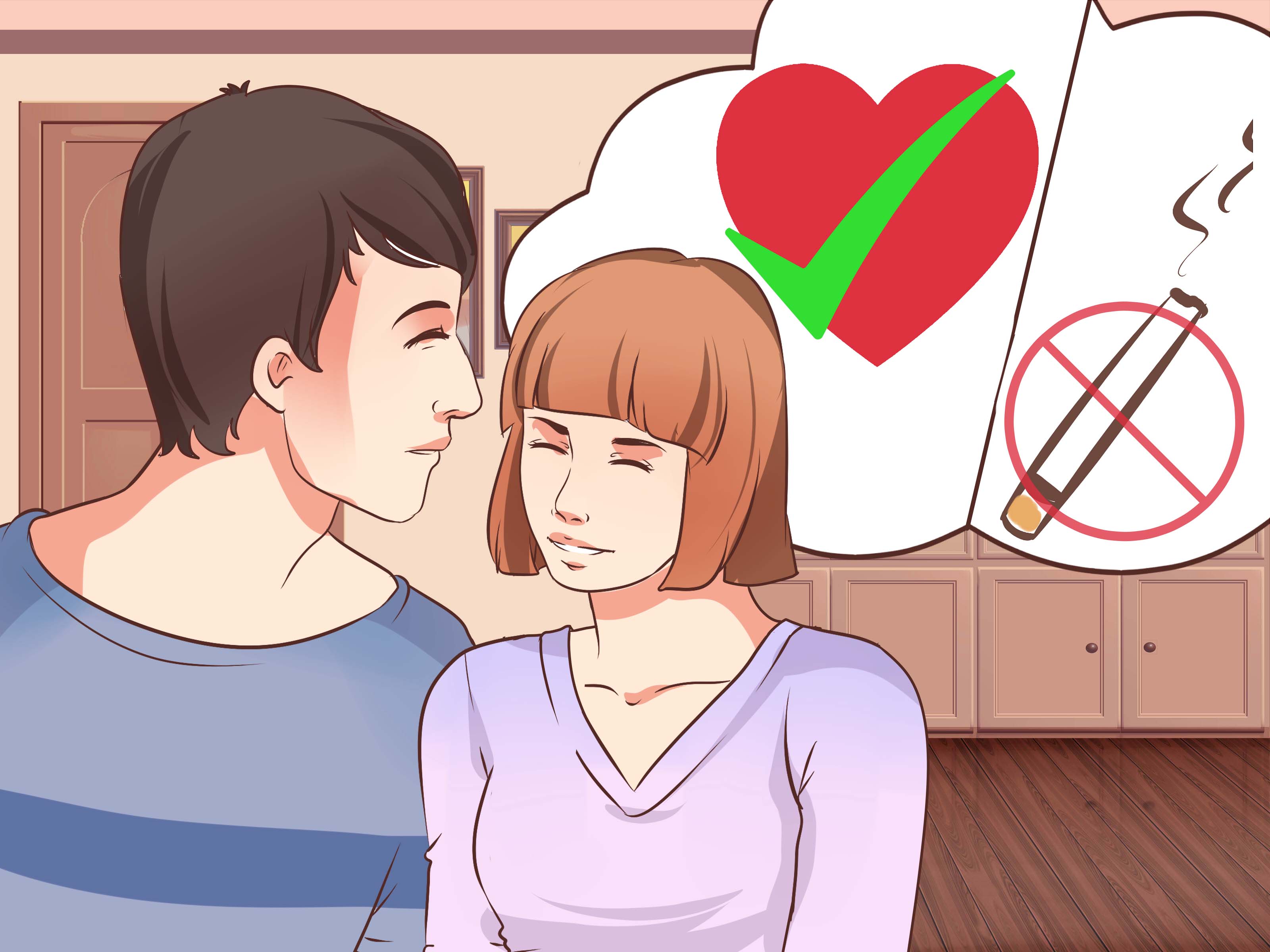
How to say it: “I’m not trying to control you. I’m protecting my air. I need our home/car to be smoke-free.”
3) Make a relapse plan before relapse happens
Agree on what to do if he smokes:
- No hiding. No lying. Just honesty.
- One question: “What triggered it?”
- One action: “What’s the plan for the next craving?”
- Reset fast: remove cigarettes, restock replacements, reconnect with support tools.
4) If he’s not ready to quit, decide what you need
Sometimes the hard truth is: he doesn’t want to quit yet. In that case, your power is in boundaries and choices:
- Keep your space smoke-free.
- Limit time in smoky environments.
- Ask for smoking to be outside and away from doors/windows.
- Decide what you will do if the behavior doesn’t change (this is about your wellbeing, not threats).
Quick FAQ (because you will be tempted to Google these at 2:00 a.m.)
Should I throw away his cigarettes?
No. It’s understandable, but it usually backfires: resentment, secrecy, and a midnight run to the gas station. Support works better than sabotage.
What if he smokes to deal with stress?
Then the quit plan must include stress tools: movement, breathing, therapy/coaching, better sleep routines, and replacing “smoke breaks” with short resets. Stress isn’t an excuseit’s a trigger to plan around.
Is vaping a good way to quit smoking?
Some people use e-cigarettes to try to quit, but major guideline panels have noted gaps/insufficient evidence for recommending e-cigarettes for cessation in clinical practice. Evidence-based options (counseling + FDA-approved medications) are still the most consistently recommended route.
How can I help without becoming annoying?
Ask him what support feels helpful. Some people want check-ins; others want silent backup. A good default is: praise effort, help remove triggers, keep smoke-free boundaries, and be calm during cravings.
Partner Experiences : What It Looks Like in Real Life
Below are common “relationship patterns” partners describe when smoking comes upplus what tends to help. These are composite scenarios (not one person’s story), but if you’re nodding aggressively, you’re not alone.
Experience #1: “He says he’ll quit… after this stressful thing”
There’s always a stressful thing: a deadline, a family issue, a work project, a Tuesday. In this pattern, smoking becomes the “temporary” solution that’s permanently rescheduled. What helped was shifting from “Quit forever immediately” to “Let’s run a two-week experiment.” One couple picked a quit date two weeks out, used that time to remove ashtrays, stock gum, and identify triggers (driving + after meals). The boyfriend agreed to call a quitline once and try a nicotine patch. The partner agreed to stop bringing it up daily and instead do one supportive check-in at dinner: “How were cravings today?” The experiment reduced pressureand suddenly quitting felt like a plan, not a punishment.
Experience #2: “He gets irritable and snaps at me when he tries to quit”
Withdrawal can make people edgy. In this pattern, the couple did best when they treated irritability like a symptom, not a character flaw. They used a simple rule: if he felt a craving spike, he’d say, “I’m in it,” and take a 10-minute walkno relationship discussions allowed. The partner helped by keeping the house calm: easy meals, fewer loaded topics, and a shared evening routine (short walk, then a show). They also learned that cravings came in waves, and waves pass. The biggest breakthrough was dropping the “Why are you being like this?” and replacing it with “What do you need right nowspace, distraction, food, or a pep talk?”
Experience #3: “He hides smoking because he doesn’t want to disappoint me”
This is the shame spiral: he smokes, feels guilty, hides it, gets caught, you feel lied to, everyone’s upset, and the cigarette wins again. What helped was changing the “reporting system.” Instead of “Did you smoke?” (a yes/no trap), they used “What triggered you today?” That moved the focus from blame to problem-solving. They also agreed on non-negotiables: no smoking indoors or in the car. If he slipped, he’d tell her within 24 hours, and they’d adjust the plan (more gum in the car, avoiding the after-work bar patio, restarting support texts). Surprisingly, honesty reduced smoking more than anger ever did.
Experience #4: “We fight about it, and now it’s a power struggle”
When quitting becomes a relationship tug-of-war, nobody wins. In this pattern, the partner stopped framing it as “You vs. me” and reframed it as “Us vs. nicotine.” They set one boundary (smoke-free home), then one support offer (help finding medication options). After that, they stepped back: no lectures, no daily interrogations. The boyfriend eventually admitted he was scared of failing. That opened the door to a quit plan that included permission to “try and learn” rather than “try and prove.” They also made quitting about identity: “We’re building a future with better lungs, better sleep, and fewer coughs.” Corny? Maybe. Effective? Also yes.
Experience #5: “He quit… and months later he suddenly wants one”
Lots of people are surprised by late cravings. In this pattern, the couple learned that urges can pop up long after quitting, especially around old triggers (vacations, alcohol, big stress). Their strategy was a “three-step drill”: (1) name it (“This is an urge, not a command”), (2) delay 10 minutes, (3) do a replacement ritual (mint gum + walk + water). They also kept a “why list” in his phonehis top reasons for quittingand reread it during cravings. The partner’s role wasn’t to panic; it was to normalize the moment: “An urge doesn’t erase your progress.” That calm response kept a craving from becoming a relapse.
Conclusion: Helping him quit without losing yourselves
If you want your boyfriend to stop smoking, aim for the sweet spot: support + structure + evidence-based tools + clear boundaries. Talk in a way that builds motivation. Make a plan that anticipates triggers. Encourage real treatments (medications and coaching). Celebrate progress and handle slip-ups like learning moments, not moral failures.
And remember: you don’t have to choose between being supportive and protecting your own health. You can do both. The goal isn’t to “win” against your boyfriendit’s to help both of you win against nicotine.