
Pool day is supposed to end with “I feel amazing,” not “Why does my hair feel like a broom that learned to swim?”
Chlorine is great at keeping pools safer, but it’s also great at robbing hair of its natural oils, leaving strands
dry, rough, tangly, and sometimes even oddly… scented. (If your ponytail smells like a public pool, congratulations:
you’ve achieved “swimmer’s hair.”)
The good news: you don’t need a PhD in Chemistry or a dramatic haircut to bounce back. You just need the right order
of operations. Below are three practical, proven ways to get chlorine out of your hairplus prevention tips so next
time your hair doesn’t come home from the pool and file a complaint.
Why Chlorine Clings (and Why Your Hair Feels Crunchy)
Chlorine is an oxidizing disinfectant. In plain English: it’s reactive. That reactivity helps kill germs in pool
water, but it can also strip some of the protective oils on your hair and leave the cuticle (the outer layer) feeling
raised and rough. The result is that “squeaky,” dry texture (the opposite of the good kind of squeaky clean).
Another common surprise: “green hair.” Despite the legend, the greenish tint is often tied to metals (especially
copper) depositing onto hair in pool waternot simply chlorine painting your hair like a seaweed costume. Chlorine can
still play a role by altering hair and making it more porous, which can make discoloration more likely, especially
for blonde, gray, or color-treated hair.
Before You Start: A 60-Second Reality Check
- Time matters: The sooner you rinse after swimming, the less pool chemistry lingers on your strands.
- Gentle beats aggressive: Over-scrubbing or blasting hair with harsh cleansers can turn “chlorine problem” into “breakage problem.”
- Pick your plan: If your hair feels coated or smells like chlorine, start with Way #1. If it still smells or feels stubborn, add Way #2. Then finish with Way #3 to restore moisture.
Way 1: Rinse Fast + Shampoo Smart (the “Don’t Let It Settle In” Method)
This is the simplest and most consistently helpful approach: rinse quickly, then use the right shampoo.
Dermatology guidance commonly emphasizes rinsing immediately after swimming and washing with a swimmer-specific shampoo,
followed by conditioning to restore moisture.
Step-by-step
-
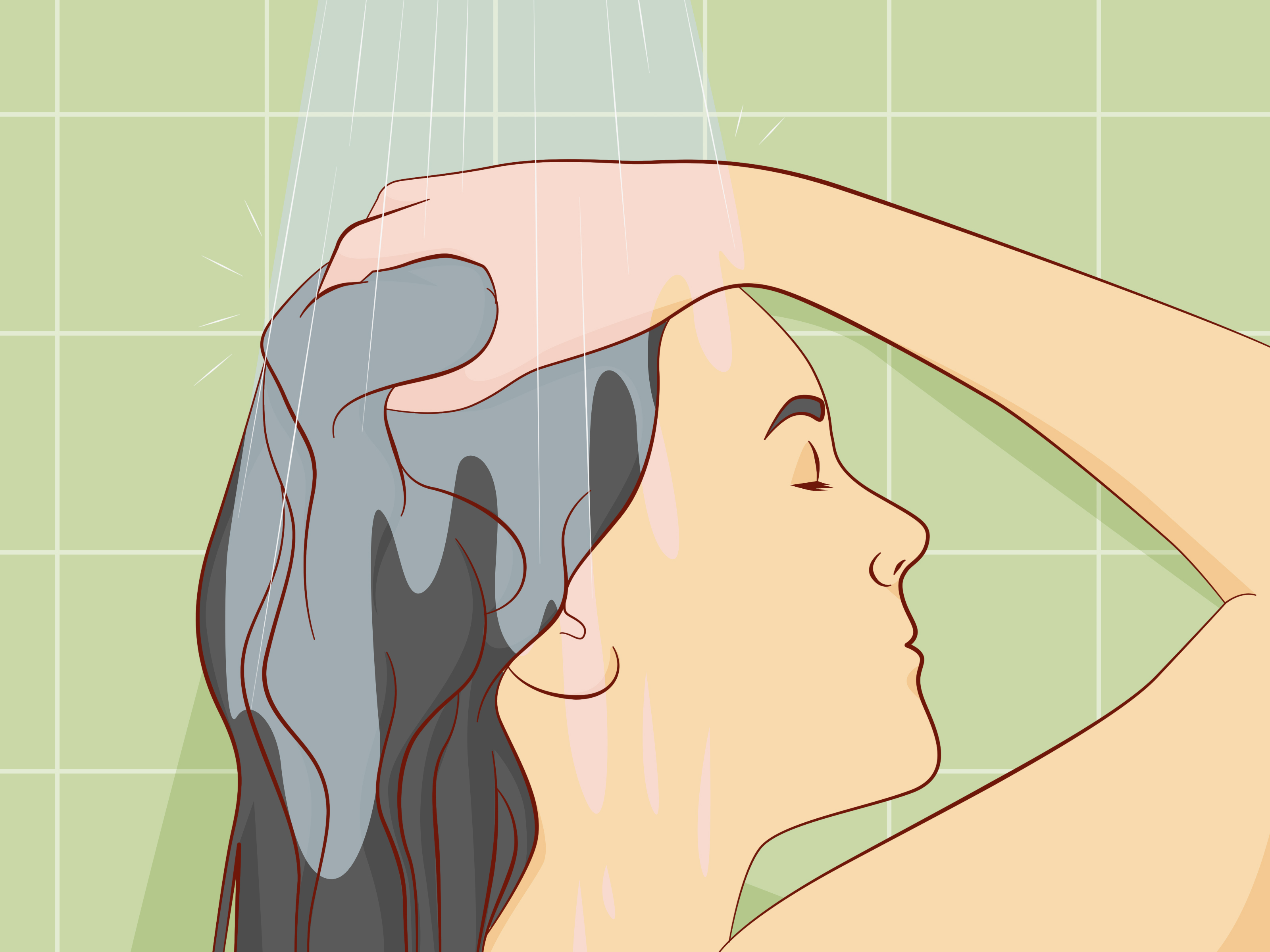
Rinse your hair ASAP with fresh water. Use lukewarm water if you can. Hot water can make already-dry hair feel even drier.
Aim for a thorough rinse, not a polite splash. -
Use a swimmer’s shampoo or a clarifying/chelating shampoo.
Swimmer’s shampoos are often formulated to remove pool chemicals and buildup more effectively than everyday shampoo.
If you swim frequently, this is worth keeping in your shower like it pays rent. -
Lather the scalp first; be gentler on the ends. Your scalp needs cleansing. Your ends usually need mercy.
Work shampoo through the lengths only as needed, especially if your hair is dry, curly, highlighted, or fragile. - Rinse wellthen condition. Follow with a conditioner (or better, a deep conditioner) to help smooth the cuticle and replace lost moisture.
How often should you use swimmer’s shampoo?
If you swim occasionally, using it after pool days is usually enough. If you swim often (multiple times a week),
consider alternating: swimmer’s/chelating shampoo on heavier pool-exposure days, gentler moisturizing shampoo on others.
Hair that’s already dry or color-treated often does best with fewer “heavy cleanse” days and more conditioning support.
Way 2: Neutralize with Vitamin C (the “Science-y but Simple” Rinse)
Vitamin C (ascorbic acid or sodium ascorbate) is widely used to neutralize chlorine in water systems because it can
reduce oxidizing chlorine compounds. That same ideaused carefullycan help with chlorine smell and residue on hair,
especially when a regular wash still leaves that pool-ish vibe behind.
DIY Vitamin C rinse (gentle, practical version)
- What you need: Vitamin C powder (ascorbic acid) or crushed plain vitamin C tablets, a cup/bottle, water, and conditioner.
- Mix: Dissolve a small amount of vitamin C in water (think “lightly acidic,” not “lemon juice dare”).
- Apply: After rinsing your hair with fresh water, saturate the hair with the mixture.
- Wait: 1–3 minutes is usually plenty.
- Rinse: Rinse thoroughly, then condition well.
Important safety notes (because your scalp deserves respect)
- Do not use this every day. Vitamin C rinses are best as an “as needed” reset, not your new personality.
- Avoid eyes and broken skin. If your scalp is irritated, skip the DIY chemistry and focus on gentle cleansing + conditioning (Way #1 and #3).
- Color-treated hair: Most people tolerate vitamin C well, but anything acidic can potentially affect tone over time. If your hair color is precious to you (as it should be), do a strand test first.
What if your hair turned green?
If you’re dealing with a green tint, you may be facing metal (often copper) buildup rather than chlorine alone.
A chelating shampoo (Way #1) is often the most helpful first step. If discoloration is stubborn, a salon treatment
designed for mineral/metal removal can be more predictable than trying ten DIY experiments and accidentally inventing
“chartreuse balayage.”
Way 3: Rehydrate + Repair (the “Undo the Pool’s Vibes” Recovery Plan)
Removing chlorine is only half the mission. The other half is getting your hair back to “touchable human hair”
instead of “decorative straw bundle.”
Your post-swim conditioning routine
- Deep condition once a week (or after heavy swim weeks). Look for masks focused on moisture and slip.
- Use a leave-in conditioner on damp hair, especially on mid-lengths and ends. This helps with detangling and reduces friction.
- Detangle gently. Use a wide-tooth comb and start at the ends, working up. Wet hair is more vulnerable to stretching and snapping.
- Go easy on heat. If your hair already feels dry from pool exposure, high heat can compound the problem. Air-dry when possible, or use lower heat and a protectant.
Bonus: Prevention that makes chlorine removal easier next time
Here’s the trick swimmers swear by: wet your hair with fresh water before you get in the pool.
Hair is like a spongeif it’s already saturated with clean water, it’s less likely to absorb as much pool water.
Add a leave-in conditioner or a small amount of oil as a barrier, then consider a swim cap for maximum protection.
Troubleshooting: Common Chlorine Hair Problems (and What to Do)
“My hair still smells like chlorine after washing.”
Try a second thorough rinse + swimmer’s shampoo (Way #1). If the smell persists, use the vitamin C rinse (Way #2),
then condition well. Odor often lingers when hair is dry and porousso moisture (Way #3) matters more than you’d think.
“My hair feels stiff and tangles like it’s doing it on purpose.”
Stiffness usually means dryness + residue. Use swimmer’s/chelating shampoo (Way #1), then a deep conditioner (Way #3).
Add leave-in conditioner before detangling. And consider the pre-wet + conditioner barrier next time so chlorine has
less opportunity to set up camp.
“My scalp is itchy after swimming.”
Rinse promptly, wash gently, and moisturize the scalp/hairline area if needed. If irritation is frequent or severe,
consider limiting exposure, making sure the pool is properly maintained, and talking to a clinicianespecially if you
have eczema, psoriasis, or sensitive skin.
When to See a Pro
If you notice persistent breakage, major color changes, or scalp irritation that doesn’t improve with gentler routines,
it’s worth consulting a dermatologist or a trusted stylist. Sometimes the best “product” is a professional assessment
(and occasionally, a trim that ends the drama).
Real-Life Experiences: What Chlorine Hair Feels Like (and What Actually Helps)
If you’ve ever stepped out of a pool, squeezed your ponytail, and felt that unmistakable “rubber-band squeak,” you’re
not alone. A common experience for casual swimmers is thinking, “I’ll deal with it later,” then letting the pool
water dry on their hair while they drive home, run errands, or lounge around. That’s usually when hair goes from
“a little dry” to “why does my brush sound like it’s sanding wood?” The quickest win people report is simply rinsing
immediatelyeven a fast shower at the poolbecause it stops that lingering residue from sitting on the hair for hours.
Frequent swimmers often describe a cycle: the more they swim, the more shampooing seems to “stop working,” hair feels
coated, and conditioner doesn’t glide the way it used to. That’s a classic sign of buildup. In those cases, switching
from an everyday shampoo to a swimmer’s or chelating shampoo once or twice a week is often the turning point. It’s
also where people overdo it. Many swimmers try to solve dryness by scrubbing harder and washing more aggressively,
which can backfire. A smarter pattern is “remove residue, then restore moisture”: cleanse effectively (not violently),
then deep condition like it’s your job.
Parents of kids in swim lessons tend to notice a specific problem: tangles that appear out of nowhere. The hair was
fine before class, and after? Instant bird’s nest. The most practical fix is a leave-in conditioner applied to damp
hair after rinsing, followed by gentle detangling with a wide-tooth comb. The goal isn’t to win a battle against
knotsit’s to prevent the war. Braiding hair before swimming also helps reduce tangling and mechanical damage, which
matters because chlorine plus friction is a combo meal nobody ordered.
For blondes, highlighted hair, and silver/white hair, the “green tint panic” is real. People often blame chlorine
directly, then try random internet hacks. The more consistent experience is that targeted products work better than
kitchen-sink experiments: a chelating wash to address metal buildup, followed by deep conditioning to soften the hair.
If the green is noticeable and stubborn, many find that one salon-grade metal-removal treatment is less stressful
(and often cheaper) than buying five products and still avoiding mirrors.
And then there’s the “chlorine smell that won’t quit.” A common experience is washing once, smelling hair when it
dries, and realizing the pool has emotionally moved in. In that situation, a carefully used vitamin C rinse can be a
helpful reset for some peopleespecially when paired with a good conditioner afterward. The key is moderation: most
swimmers who have success with vitamin C use it occasionally, not daily. Think of it as a special tool, not a forever
routine.
The most universal experience is this: chlorine hair issues get dramatically easier when you treat pool care like a
before-and-after ritual. Wet hair with fresh water before swimming. Rinse quickly after. Cleanse smart. Condition
generously. Do that, and your hair can enjoy the pool without acting like it needs a vacation afterward.
Conclusion: Your Simple “Chlorine-Out” Game Plan
If you want the cleanest, healthiest outcome, follow this order:
(1) rinse promptly and wash with a swimmer’s/chelating shampoo,
(2) use a vitamin C rinse occasionally when odor or residue won’t budge,
and (3) restore moisture with deep conditioning and gentle handling.
Then, for next time, pre-wet your hair and use a leave-in barrier (and a swim cap if you’re serious).
Chlorine doesn’t have to ruin your hairit just needs boundaries.