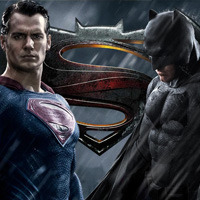

Comic book movies borrow the best parts of superhero history: iconic costumes, clean origin stories, and big emotional payoffs.
But comics also have a shadowy attic filled with plotlines that make even die-hard fans whisper, “We don’t talk about that.”
These are the stories that make you laugh, wince, and briefly consider taking up a calmer hobbylike competitive beekeeping.
This list isn’t about “dark” stories done well. It’s about the moments that felt like a writer’s room dare:
messy retcons, tonal whiplash, shock-value events, and “bold new directions” that aged like an open carton of milk.
And yesHollywood has mostly kept its distance. For once, restraint deserves a slow clap.
Why movies dodge certain comic plots (and it’s not just because they’re weird)
1) Brand protection is a real superpower
Studios can handle “hero loses,” “hero doubts,” and “hero punches a sky-beam.” What they can’t easily sell is a core character
being rewritten into someone fans don’t recognizeor a twist that makes audiences feel tricked instead of thrilled.
2) Retcons are easier on paper than on screen
Comics can reboot, relaunch, renumber, and hand-wave a decade of continuity with a single caption box. Movies? Not so much.
Big-screen continuity is already fragile. Add a confusing retcon and suddenly you’re explaining “what counts” in a press tour.
3) Some ideas were “of their time”… and should stay there
Even when a story was popular in the moment, modern audiences might read it as mean-spirited, sloppy, or just plain uncomfortable.
That doesn’t mean the characters are badjust that the plot needed a stronger editor (or a time machine).
The 28 cringeworthy storylines movies (mostly) refused to touch
1) Spider-Man: “One More Day” (Marvel)
A high-stakes reset button that trades long-term character growth for a cosmic “do-over.” It’s infamous because it doesn’t just change
a status quoit changes the emotional logic of Spider-Man’s life. Films have flirted with “clean slate” vibes, but they’ve avoided
recreating the exact bargain-and-backpedal structure that made readers groan.
2) Spider-Man: “Sins Past” (Marvel)
A retcon that reached backward and poked at a classic Spider-Man tragedythen added a twist many fans wished they could unread.
Movies keep Spider-Man’s supporting cast emotionally grounded; this storyline is the opposite: soap opera shock engineered to “reframe”
the past. It’s the narrative equivalent of rewriting your yearbook quotes after graduation.
3) Spider-Man: “The Clone Saga” (Marvel)
A massive, tangled storyline that sprawled across titles and years, spinning identity drama into a continuity pretzel.
It has cool concepts (and passionate defenders), but the length and constant pivots created exhaustion.
A movie could adapt a clean “clone” arcjust not this full, labyrinthine version without turning into a flowchart.
4) Spider-Man: “Chapter One” (Marvel)
A well-intended refresh that became a controversial “remix” of early Spider-Man history.
Even when the craft is competent, fans often bounce off the feeling that classic beats were being rewritten for the sake of rewriting.
Movies already update origins; they don’t need a story about updating an update.
5) “Trouble” (Marvel)
A miniseries that tried to recontextualize Spider-Man’s “before he was Spider-Man” world in a way that made readers squirm.
The big issue isn’t complexityit’s taste. Hollywood likes Aunt May as a warm anchor for Peter’s life.
This story messes with that vibe in a way that’s hard to imagine any studio choosing on purpose.
6) Avengers #200 (Marvel)
A notorious Avengers-era plot involving Carol Danvers that has been widely criticized for its handling of consent and agency.
Movies have worked hard to make Carol a confident, self-directed hero; importing this story would undercut that foundation.
It’s a prime example of a “just because it happened in canon doesn’t mean it should be repeated” storyline.
7) “Secret Wars II” (Marvel)
The Beyonder arrives with enormous power…and an awkward fascination with humanity that often lands more bizarre than profound.
The story swings between cosmic spectacle and “what if a god had the social skills of a confused tourist.”
The MCU loves cosmicbut it prefers awe over secondhand embarrassment.
8) “The Crossing” (Marvel)
A ’90s Avengers tangle that tried to reshape major characters through convoluted revelations and reversals.
It’s remembered as a cautionary tale about pushing shock twists so hard that the emotional core breaks.
Movies will do betrayal arcs, but they want the betrayal to feel earnednot like a continuity trapdoor.
9) “Heroes Reborn” (Marvel)
A high-profile reinvention experiment that split fans: bold for some, baffling for others.
The biggest “cringe” factor is the sense of characters being rebuilt into something that didn’t feel like them.
Movies reboot franchises all the timebut they prefer clean relaunches, not midstream reality swaps that confuse casual audiences.
10) “Ultimatum” (Marvel)
Often cited as a shock-value event that left the Ultimate Universe feeling bleak and mean rather than thrilling.
Big superhero films can go darkbut they still need the audience to like somebody by the end.
“Ultimatum” is the kind of carnage-heavy reset that’s hard to translate without alienating everyone who showed up for fun.
11) “Civil War II” (Marvel)
A follow-up that asks a smart questionshould heroes act on predictions?but is frequently criticized for muddy execution and character friction.
Movies might borrow the premise one day, but they’d likely streamline it to protect character likability.
The comic’s reputation makes it a risky blueprint for a blockbuster that wants viewers arguing happily, not angrily.
12) “Avengers & X-Men: AXIS” (Marvel)
A big event that leans on moral “inversion” as its central hook. That can be fun in theory, but it can also feel like an excuse to make
characters act wildly out-of-character for the sake of chaos. Movies do “evil versions” in smaller doses; this is the full buffet.
13) “Secret Empire” (Marvel)
The infamous “Hydra Cap” era is a masterclass in how to light the internet on fire with one creative choice.
The controversy wasn’t just plotit was what the plot implied about a symbol. Movies might explore corruption, doubles, or mind games,
but they’ll usually avoid reframing a cultural icon in a way that feels like it’s daring the audience to rage-quit.
14) X-Men: “The Draco” (Marvel)
A storyline often mocked for its odd revelations and tonal mismatch with the characters involved.
X-Men films already juggle big ideas (identity, prejudice, found family). “The Draco” adds a layer of “wait, why?” lore
that would demand a whole movie just to justify its own existence.
15) “Fear Itself” (Marvel)
A crossover with a heavy “event” structurebig threat, many tie-ins, lots of noise.
Some fans enjoy the spectacle; others find it exhausting and emotionally thin.
Movies can absolutely do mythic fear themes, but they need a tighter character spine than a sprawling publishing event sometimes delivers.
16) “Avengers vs. X-Men” (Marvel)
A concept that sounds like a guaranteed box-office hit… and still managed to frustrate readers with uneven character logic and “because the event needs it”
plotting. Films might eventually build toward this matchup, but the comic’s reception is a reminder: a big fight isn’t a story by itself.
17) “Heroes in Crisis” (DC)
A story with a strong headline premiseheroes coping with traumapaired with choices that sparked major backlash.
It’s exactly the kind of sensitive topic films approach carefully, because one misstep turns “serious” into “exploitative.”
The idea could work on screen, but not with the same controversial execution.
18) “Identity Crisis” (DC)
A murder mystery that pushed DC into darker, more “mature” territoryyet became divisive for relying on grim material, including a sexual assault plotline.
Movies can be intense, but they tend to avoid using trauma as a shortcut for “stakes.”
This story is influential, but also a reminder that “edgy” isn’t automatically “deep.”
19) “Cry for Justice” (DC)
A loud, dramatic miniseries with gorgeous art and a reputation for melodrama that can border on unintentionally funny.
It’s the kind of story where the tone is “everything is the most important thing ever,” all the time.
Movies prefer emotional escalation with breathing roomthis one rarely inhales.
20) “Amazons Attack!” (DC)
An event that left many Wonder Woman fans unhappy with how Amazons were portrayed and how the conflict was framed.
Big-screen adaptations rely on audience affection for Themyscira and its characters.
A storyline that paints them in a messy, controversial light would be a tough sell without a major rewrite.
21) “Countdown to Final Crisis” (DC)
A weekly series that tried to be an essential runway to a major eventand is often criticized as a sprawling, uneven slog.
The “cringe” factor here is structural: it can feel like homework you didn’t sign up for.
Movies avoid “required reading” energy whenever possible.
22) “Convergence” (DC)
A continuity-heavy event built around bottled cities from different timelines.
It has fascinating meta ideas, but it can also feel like a corporate “continuity management” story first and a character story second.
Films already wrestle with multiverse fatigue; this is the sort of plot that risks becoming a glossary with capes.
23) “Armageddon 2001” (DC)
A future-mystery event remembered for behind-the-scenes twist drama and a reveal that left readers frustrated.
The lesson is brutal: if your entire story depends on a surprise ending, the ending has to satisfy.
Movies can handle twistswhen the twist feels like the destination, not the escape hatch.
24) Batman: “War Games” (DC)
A Gotham gang-war arc with major fallout and long-running controversy around character treatment and bleak storytelling choices.
Batman movies love crime epics, but they typically choose a focused emotional journey.
“War Games” is more like a citywide crisis spiral that can feel punishing rather than compelling.
25) “All-Star Batman & Robin, the Boy Wonder” (DC)
A famously divisive series that turns Batman into an aggressively unpleasant storm cloud in a cape.
Some readers treat it like satire; others can’t believe it’s played straight.
Movies might do “Batman is harsh,” but they still need him to be a hero the audience can root foreventually.
26) Green Lantern: “Emerald Twilight” (DC)
A pivotal Hal Jordan storyline that’s iconic, controversial, and emotionally explosive.
It’s not “cringe” because it’s smallit’s “cringe” because it’s such a massive tonal swing that demands careful handling.
A movie could adapt it, but only if it earned the fall with real character groundwork.
27) Superman “Electric Blue / Red” (DC)
Superman transforms into an energy-based version of himselfan era remembered with a mix of nostalgia and “what were we doing?”
Visually it’s striking, but thematically it can feel like change-for-change’s-sake.
Movies already struggle when they “rework” Superman too drastically; this would set off alarms before the first trailer dropped.
28) “Batman: Odyssey” (DC)
A late-era Neal Adams Batman series that many readers describe as surreal, melodramatic, and wildly unconventional.
It’s the kind of comic that makes you stop mid-page to ask, “Is the book pranking me?”
Hollywood likes weird Batmanjust not “fever dream with a utility belt” weird.
What these stories teach us (besides “editors are heroes too”)
The common thread isn’t that comics are “bad.” It’s that long-running universes are vulnerable to two temptations:
(1) the shortcutusing shock, retcons, or character derailment to force a reaction, and
(2) the sprawlstretching a premise so far it collapses under its own tie-ins.
The best movie adaptations don’t copy comics beat-for-beat. They translate what works (clear motivation, strong themes, emotional stakes)
and quietly leave the “what were we thinking?” material on the shelf. Sometimes the most faithful adaptation choice is… politely declining.
Reader experiences: surviving the cringe (and still loving comics)
If you’ve spent any time around comics fandomshops, book clubs, conventions, Discord servers, or the comment section wildernessyou learn quickly
that “cringe storylines” are weirdly communal. People don’t just read them; they swap survival stories. Someone will say,
“I finally read that infamous arc,” and three other readers will reply like veterans of the same bizarre campaign: “Oh no. Are you okay?”
A lot of readers first encounter these plots through reputation. You hear the titles long before you read the issues:
“One More Day,” “Ultimatum,” “Identity Crisis,” “Heroes in Crisis.” They become shorthandlike warning labels.
Then curiosity kicks in. Sometimes it’s academic (“I want to understand why it’s controversial”), sometimes it’s masochistic (“How bad can it be?”),
and sometimes it’s accidental (“Wait… this trade includes that storyline?”).
The experience often follows a predictable emotional roller coaster. Phase one: intrigue, because the premise sounds big and dramatic.
Phase two: confusion, when the story starts stacking odd choices like Jenga blocks. Phase three: disbelief, when you realize the comic is serious.
Phase four: group therapyaka telling your friends about it, because you need witnesses.
That last part is important: even the worst arcs can become part of the fun of being a fan, because fandom turns them into shared folklore.
Another common reader experience is learning how to “read around” a messy era. Comics teach you practical skills that should probably count as life skills:
how to identify a clean jumping-on point, how to spot an event tie-in trap, and how to separate “cool concept” from “bad execution.”
You also learn that a character’s entire legacy rarely hinges on one storyline, no matter how loud the internet gets.
Spider-Man is bigger than one controversial reset. Captain America is bigger than one headline twist.
Wonder Woman is bigger than one messy event. The characters endure because the best runs eventually re-center what matters.
Finally, reading cringe can sharpen your taste. After you’ve watched a plot derail because it prioritized shock over character,
you start noticing the opposite: the comics that earn big moments with patience and empathy. You appreciate good pacing.
You value consistency. And when a movie adaptation wisely trims a notorious comic beat, you don’t complainyou nod like a sommelier:
“Ah yes. Excellent. Notes of restraint. A vintage year for good decisions.”
So if you’re exploring these storylines, treat them like spicy food: sample carefully, have water nearby, and maybe don’t start with the hottest one.
Read them to understand the history, laugh at the odd choices, and then reward yourself with a genuinely great run afterward.
The point isn’t to dunk on comicsit’s to appreciate how hard it is to keep a shared universe coherent for decades… and how miraculous it is when it works.
Conclusion
Movies didn’t skip these storylines because comics are “too weird.” Movies skipped them because these plots are
the kind of weird that breaks character trust, confuses casual audiences, or turns “fun escapism” into “why did I do this to myself?”
The good news: comics are resilient. For every cringeworthy event, there’s a brilliant arc waiting nearby to remind you why you fell in love
with superheroes in the first place.