
If your home has ever looked you dead in the eyes and whispered, “You’ll never find that charger again,” you’re not alone.
Clutter is basically a hobby we didn’t sign up for. The good news: professional organizers don’t rely on magicthey rely on
smart, repeatable systems… and a handful of products that do the heavy lifting.
This list is a greatest-hits album of organizer-approved Amazon finds that help you contain the chaos, create “homes” for your stuff,
and keep daily mess from turning into a weekend-long archeological dig. These aren’t just pretty bins for your “miscellaneous” feelings.
They’re tools that support the habits that actually keep a space tidy.
What Makes a Product “Organizer-Approved”?
Pros tend to love products that do at least one of these things (bonus points if they do three and don’t crack in month two):
- Containment: It creates a boundary so items stop migrating like they’re on a gap year.
- Visibility: You can see what you own, which reduces duplicates and “Where did I put it?” spirals.
- Accessibility: You can grab and put things back with one handno gymnastics, no removing five items first.
- Flexibility: It works in more than one room and still makes sense when your needs change.
- Label-friendliness: Because “I’ll remember what’s in here” is a lie we tell ourselves every January.
With that in mind, here are ten practical, pro-favorite organization products from Amazonplus exactly where they shine and how to use them
without accidentally creating a “bin museum” you’re afraid to touch.
10 Professional Organizer-Approved Products From Amazon
1) Brother P-touch Label Maker
In the organizer world, labels aren’t “extra.” They’re insurance. A label maker turns your system into something your future self can maintain
even when you’re tired, busy, or feeling personally attacked by your junk drawer.
- Best for: Pantries, linen closets, kids’ bins, office files, storage totes, cords and chargers.
- Why pros love it: Fast, consistent labels reduce decision fatigue and keep shared spaces (like kitchens) from becoming a free-for-all.
- Pro tip: Label the front and the top of containerstop labels are clutch for stacked bins.
- Watch out: Don’t label before you declutter. Otherwise you’ll lovingly label items you don’t even like.
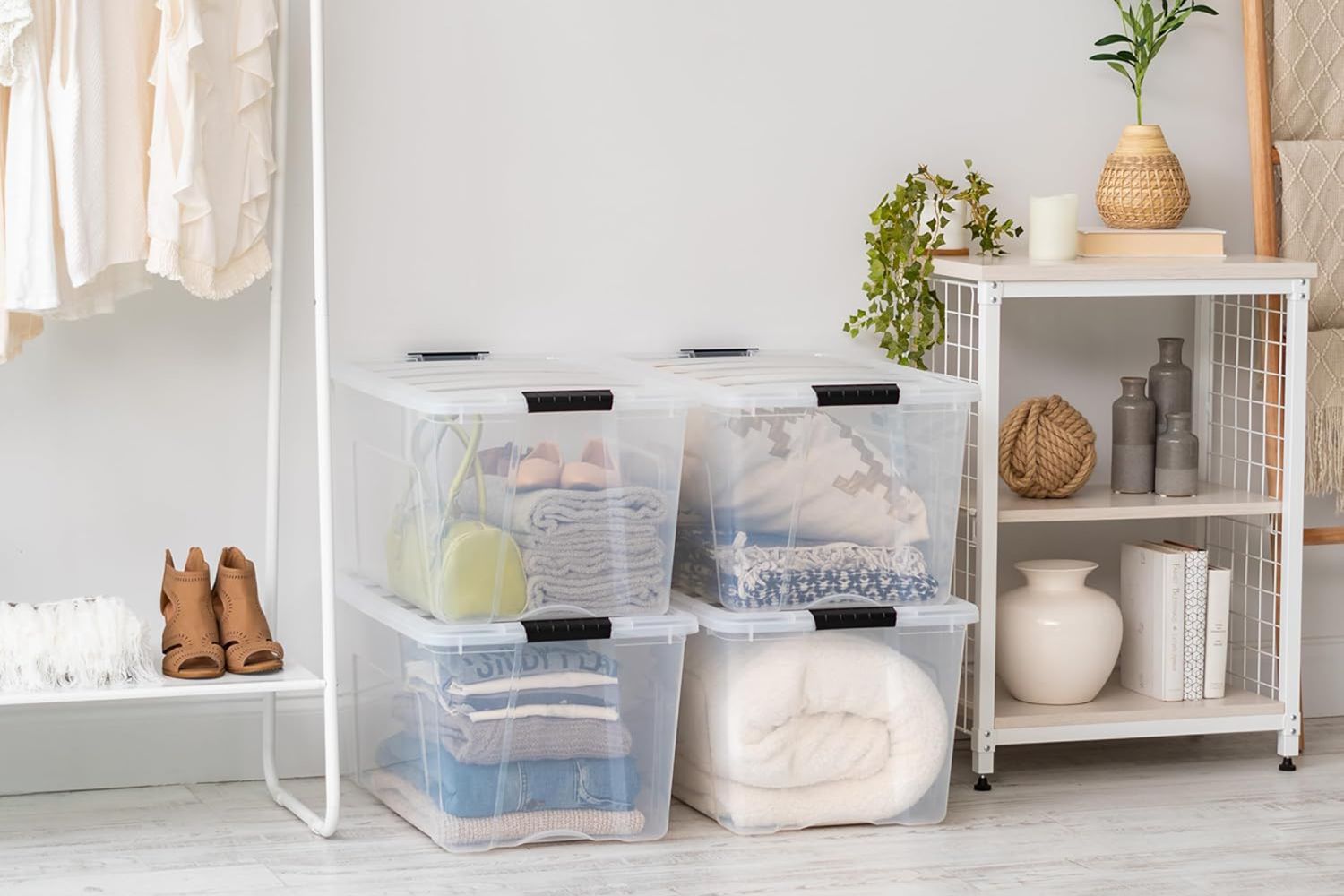
2) Clear Plastic Storage Bins With Handles
Clear bins are the organizational equivalent of turning the lights on. When you can see what you have, you use it. When you can’t, you buy another one.
Handle bins are especially helpful because they behave like drawer replacements on shelvespull out, grab, put back.
- Best for: Fridges, pantries, cleaning supplies, snacks, sunscreen, medications, pet gear.
- Why pros love it: Creates instant “zones” and keeps small items from scattering into the abyss behind your cereal boxes.
- Pro tip: Group by category, not by packaging. One bin for “breakfast,” one for “baking,” one for “grab-and-go snacks.”
- Watch out: Measure shelf depth first. Bins that are too deep become “everything goes in front” traps.
3) Lazy Susan Turntable (Non-Skid Preferred)
A Lazy Susan is a tiny rotating stage for your everyday items. And yes, your hot sauce deserves the spotlight. Turntables reduce “lost inventory” in deep cabinets,
corner shelves, and fridge corners where condiments go to retire.
- Best for: Oils and spices, vitamins, sauces, skincare, hair products, cleaning sprays under the sink.
- Why pros love it: It makes everything reachable without reorganizing the entire shelf every time you want paprika.
- Pro tip: Use one turntable per “micro-category” (coffee add-ins, baking extracts, daily meds) instead of one giant everything-spinner.
- Watch out: Choose a size that leaves a little breathing room. If it rubs the walls, you’ll stop using it.
4) Expandable Drawer Organizer Trays
Drawers are where good intentions go to mingle. Modular trays (especially expandable ones) create structure so your drawer doesn’t instantly revert to
“random stuff lasagna.” They’re also a sneaky way to make your morning routine faster.
- Best for: Kitchen utensils, makeup, desk supplies, tools, “junk” drawers that are one rubber band away from collapse.
- Why pros love it: A dedicated compartment turns “put away” into a single motion instead of a negotiation.
- Pro tip: Leave one small flexible section for life’s weird items (measuring spoons, chip clips, USB adapters). Label it “ODDS.” Be honest.
- Watch out: Over-compartmentalizing can backfire. If it’s too fussy, you won’t maintain it.
5) Slim Velvet (or Slim Non-Slip) Hangers
If your closet feels tight, start with the hangers. Matching slim hangers instantly reduce bulk and help clothes hang neatly, which makes your closet feel calmer
even before you do any deeper organizing. Also: fewer hanger types = fewer “why does this one hate my sweater?” moments.
- Best for: Small closets, slippery tops, maximizing hanging space, creating visual calm.
- Why pros love it: Uniform hangers create consistency and prevent clothes from sliding into a pile on the floor.
- Pro tip: Dedicate sturdier hangers for heavy coats and delicate hangers for blousesyour closet can be “capsule,” not “fragile.”
- Watch out: If velvet sheds or snags, switch to slim rubberized or high-quality plastic non-slip options.
6) Over-the-Door Shoe Organizer (Pocket Style)
It’s called a shoe organizer, but organizers use it for everything except shoes. Those clear pockets are basically vertical real estate. If you’re short on
cabinet space, this turns a door into a storage wallwithout drilling a single hole.
- Best for: Shoes, cleaning cloths, sunscreen, kids’ accessories, crafts, snacks, hair tools, toiletries.
- Why pros love it: Uses “dead space” while keeping items visible and easy to grab.
- Pro tip: Assign pockets by category and label rows (e.g., “HAIR,” “FIRST AID,” “SUN”). It’s like a tiny supply closet.
- Watch out: Don’t overload pockets with heavy bottles unless the organizer is rated for it and has sturdy hooks.
7) Vacuum Storage Bags (for Seasonal Soft Items)
Bulky textilescomforters, winter coats, extra blanketsare space hogs. Vacuum storage bags compress them down dramatically so you can reclaim closets,
under-bed space, or that one shelf you’ve been afraid to open.
- Best for: Seasonal bedding, puffy jackets, guest linens, stuffed animals (the emotionally durable ones).
- Why pros love it: They create predictable, stackable storage and reduce visual clutter fast.
- Pro tip: Add a paper label inside the bag (facing outward) in case the exterior label peels off over time.
- Watch out: Not ideal for natural fibers or delicate items long-term. Think “seasonal rotation,” not “forever storage.”
8) Pull-Out Under-Sink Organizer (L-Shaped or Height-Adjustable)
Under-sink cabinets are notoriously awkward: pipes, disposals, random angles, and the constant fear of a mystery leak. A pull-out organizer makes the space usable
because it brings items to youno more kneeling to excavate sponges from the back corner.
- Best for: Cleaning supplies, dish pods, extra soaps, bathroom backups, hair tools (in the bath cabinet).
- Why pros love it: Sliding access prevents the “front-only storage” problem where the back of the cabinet becomes a landfill.
- Pro tip: Store “daily” items on the easiest-to-reach level and “backup/refills” on a secondary level.
- Watch out: Measure around your pipes. Choose an organizer designed to accommodate plumbing.
9) Cable Management Box + Cord Clips
If your power strip looks like a bowl of spaghetti had a bad day, this combo is for you. A cable management box hides the power strip and the extra cord slack,
while clips keep frequently used cords (phone charger, laptop cable) from sliding behind the desk like they’re trying to escape adulthood.
- Best for: Desks, TV consoles, bedside tables, work-from-home setups, gaming stations.
- Why pros love it: Visual clutter drops instantly, and cleaning becomes easier because you’re not dusting around a cord jungle.
- Pro tip: Label both ends of important cords. Future-you will thank you when something stops charging at 11:47 p.m.
- Watch out: Leave ventilation space and don’t cram heat-generating adapters tightly together.
10) Container Lid Organizer (Adjustable Dividers)
Food container lids are the sock drawer of the kitchen: chaotic, mysterious, and always missing the one you need. An adjustable lid organizer creates lanes so lids
stand upright, sorted by size. Suddenly your cabinet opens without a lid avalanche trying to end your career.
- Best for: Plastic container lids, reusable silicone lids, cutting boards (some models), baking sheets (with the right style).
- Why pros love it: Upright storage makes lids visible and prevents warped stacks.
- Pro tip: Sort by shape first (round vs. square), then by size. You’ll match lids faster and stop hoarding “maybe it fits?” pieces.
- Watch out: Don’t keep containers without lids. That’s not storage; that’s emotional baggage.
How to Use These Products Without Creating More Clutter
Organization products are tools, not trophies. If you’ve ever bought a gorgeous bin and then used it to store other empty bins… welcome. Here’s the organizer
approach that keeps products from becoming the problem:
- Declutter first: Keep what you use, donate what you don’t, and be ruthless with duplicates.
- Measure next: Cabinets and drawers are liarsmeasure width, depth, and height.
- Create zones: Group by category and store items where you use them (not where you think they “should” live).
- Contain last: Add bins, turntables, trays, and organizers only after categories are defined.
- Label the system: Labels turn your setup into a shared language everyone can follow.
A One-Weekend “Reset” Plan
Want results fast? Try this simple schedule:
- Friday night (30 minutes): Pick one problem zone (pantry, under-sink, closet, desk). Remove everything and wipe surfaces.
- Saturday (1–2 hours): Declutter and categorize. Decide what stays, what goes, and what needs a “home.”
- Saturday afternoon (30 minutes): Measure and choose 1–3 products max for that zone (not tenpace yourself, hero).
- Sunday (1 hour): Install products, label, and do a quick maintenance check: can you put everything away in under 60 seconds?
Experience Notes: What Organizers See in Real Homes (and What Actually Works)
Professional organizers will tell you the same truth in ten different ways: clutter isn’t a character flawit’s usually a system flaw.
In real homes, the mess shows up in predictable patterns, and these products fix those patterns when they’re used strategically.
One of the most common “organizing pain points” is the pantry that looks fine… until you try to cook. The front row is neat, the back row is chaos,
and somehow you own three open jars of paprika. Clear handled bins change the game because they create lanes. Snacks stop free-ranging across shelves,
and ingredients stop hiding behind tall cereal boxes. Organizers often set up a few “high traffic” binsbreakfast, lunchbox items, bakingand the daily mess
drops because everything has an obvious return path.
Another classic is the under-sink cabinet: half-used cleaners, random sponges, and a collection of mystery bottles that might be soap or might be regret.
The real issue is access. When you can’t reach the back, you keep buying new supplies “just in case.” A pull-out under-sink organizer (especially an L-shaped one
that works around pipes) makes that cabinet function like a drawer. Suddenly you can pull everything out, see what you have, and stop stockpiling duplicates.
Many organizers also recommend splitting the space into “daily use” and “backup/refills,” which prevents the cabinet from becoming a dumping ground again.
Closets have their own drama. A closet can be technically “organized” and still feel stressful if it’s visually loud: mixed hangers, slippery blouses on wire,
bulky plastic hangers stealing space, and clothes that slide off and form a floor pile that quietly judges you. Slim non-slip hangers help because they create
consistency. The closet becomes easier to scan, and clothes stay put. The surprising “experience lesson” here is that visual calm mattersif a space looks
manageable, people maintain it longer. That’s why organizers love solutions that simplify the look as well as the function.
Then there’s the junk drawer. Almost everyone has one, and that’s okaylife comes with tiny objects. The failure happens when the drawer becomes
“a category-free zone.” Expandable drawer trays (or modular sets) work because they turn the drawer into neighborhoods: batteries, tape, pens, tools,
takeout sauce packets you’re definitely not going to use (be honest). The best organizers also leave one small “wildcard” compartment, because forcing every odd
object into a perfect category is how people give up and throw everything back in.
Cords are another surprisingly emotional category. A tidy desk can look instantly messy when chargers drape everywhere like sad electronic vines.
Cable clips are a small fix with a big payoff: they keep your everyday cords anchored where you actually use them. Pair that with a cable management box to hide
the power strip and excess slack, and your space feels cleaner without you owning fewer things. In organizer-speak, that’s a “high ROI” changeminimal effort,
maximum calm.
Finally, a reality check from the field: even the best products won’t save a system that’s too complicated. If you need to unstack three bins, open a lid,
remove another bin, and then rotate a turntable to reach the vitamins… you’ve built a museum exhibit, not a storage solution. Pros consistently aim for
one-step access in high-use zones: open the door, grab the thing, close the door. Turntables, clear bins, and trays win because they reduce friction.
The smoother the habit, the longer it lasts.
The takeaway? Start small. Pick one space that annoys you weekly, use one or two of these products to remove friction, and label the system so it’s easy to keep.
Organization isn’t about perfectionit’s about making “putting it away” easier than “leaving it out.” When that happens, your home basically organizes itself.
(Okay, not literally. But it gets suspiciously close.)
Conclusion
The best organization products don’t just store your stuffthey support the habits that keep your home running smoothly. If you’re building a system that lasts,
focus on visibility, easy access, and simple containment. Start with one problem area, choose products that reduce friction, and label everything like you’re
preparing your home for a friendly (but slightly judgey) roommate.