
Some animals politely follow the rulebook: four legs, fur, straightforward diet, no glowing under UV light.
Then there are the rebels of evolutionthe creatures so strange that if you sketched them from memory,
people would assume you fell asleep on your biology textbook. This list dives into
10 animals that are truly in a class all their ownthe kind of oddballs you’d expect to
see headlining a Listverse countdown of “Are We Sure These Are Real?”
From egg-laying mammals to sea slugs that steal venom and wear it like designer armor, these
unique and weird animals stretch our idea of what life on Earth can look like.
We’ll explore what makes each species special, where it lives, and the wild adaptations that have helped
it survive. By the end, you’ll never look at the phrase “stranger than fiction” quite the same way again.
1. Platypus: Nature’s Franken-mammal
If you hired a committee of toddlers to design an animal, you’d probably get something close to the
platypus. It has the bill of a duck, the tail of a beaver, the feet of an otter, lays eggs like a reptile,
and yet is absolutely, definitively a mammal. Scientists were so baffled when the first preserved
specimen arrived in Europe that they suspected it was a taxidermy prank stitched together from leftover parts.
What makes the platypus one of a kind
The platypus is one of only five monotremesegg-laying mammalson Earth, and it’s the only one with a
soft, flexible bill packed full of electroreceptors. Instead of relying on sight or smell under water,
it “feels” the faint electric fields given off by the muscles of its prey. It’s also one of the few
venomous mammals: males have spurs on their hind legs that can deliver an excruciatingly painful
sting during the breeding season.
Where it lives
Platypuses are semi-aquatic and live in freshwater rivers and streams in eastern Australia and Tasmania.
They spend much of their time swimming, diving, and foraging along the riverbed for insects, worms,
and crustaceans, then retreating to burrows dug into the banks.
One fact you’ll never forget
Under UV light, platypus fur glows a ghostly blue-green. Scientists are still trying to figure out why,
but it makes this already strange animal feel even more like it crawled out of a sci-fi movie.
2. Echidna: The Spiky Egg-Laying Puzzle
If the platypus is the weird cousin at the evolutionary family reunion, the echidna is the equally strange
sibling. At first glance it looks like a hedgehog that’s been upgraded with porcupine spines and a tiny bird
beak. But like the platypus, it’s a monotremean egg-laying mammal with a very unusual biological tool kit.
Why echidnas are in a category of their own
Echidnas have no visible teeth. Instead, they use a long, sticky tongue to slurp up ants and termites,
grinding them against hard pads inside the mouth. Their bodies are covered in sharp spines for protection,
and they carry eggs in a temporary pouch until they hatch. Their anatomy is so odd that whole papers have
been written about it, including their multi-headed reproductive organswhich is one reason biologists
quietly admit echidnas are some of the strangest mammals on Earth.
Where echidnas roam
These spiny insect-eaters live in Australia and New Guinea, where they shuffle through forests, grasslands,
and rocky hillsides, using powerful claws to dig for food or instantly vanish into the ground when threatened.
Cool echidna trivia
Echidnas can go into torpor, dropping their body temperature and slowing their metabolism to cope with harsh
conditionsa low-energy strategy that helps them survive in unpredictable environments.
3. Axolotl: The Forever-Young Salamander
The axolotl is basically the Peter Pan of the amphibian world. While most salamanders start life in water
and eventually trade their gills for lungs, axolotls decide, “No thanks, I like it here,” and stay in their
juvenile, gilled form for life.
What makes axolotls so special
Axolotls exhibit neoteny, meaning they retain larval featureslike frilly external gillseven as
sexually mature adults. That alone would earn them a spot on any list of weird animals, but their true
superpower is regeneration. Axolotls can regrow entire limbs, parts of their spinal cord, chunks of their
heart, and even portions of their brain with minimal scarring. Researchers study them to better understand
how regeneration might someday be encouraged in humans.
Where axolotls live (in the wild, anyway)
Wild axolotls once thrived in the lake systems around Mexico City, especially Lake Xochimilco.
Urbanization and pollution have pushed them to the brink of extinction in nature, even as captive-bred
axolotls have become popular in labs and among exotic pet enthusiasts.
Fun axolotl fact
Despite their slightly alien look, axolotls often appear to be smiling, which is why they’ve become
unofficial mascots of “cute but bizarre” animal fandoms online.
4. Naked Mole-Rat: The Underground Super-rodent
The naked mole-rat looks like a wrinkled pink sausage with teethand yet, from a biological standpoint,
it’s an all-star. This tiny creature breaks nearly every rule of normal mammal behavior.
Why naked mole-rats stand alone
Naked mole-rats live in eusocial colonies, much like ants or bees, with a single breeding queen and
specialized worker and soldier castes. They are surprisingly long-lived for a rodentsome live more than
30 yearsand they show exceptional resistance to cancer and certain forms of pain. Their bodies tolerate
low-oxygen environments, allowing them to thrive in crowded underground tunnels that would overwhelm most
other mammals.
Home beneath the surface
Native to the arid regions of East Africa, naked mole-rats rarely, if ever, visit the surface. Instead,
massive tunnel networks help them find tubers and roots, which can feed an entire colony for months.
A gross but fascinating habit
To squeeze the last bit of nutrition from their food, naked mole-rats sometimes eat their own feces.
It’s not glamorous, but in lean environments, nothing goes to waste.
5. Tardigrade: The Indestructible Micro-animal
You don’t need to be big to be in a class of your own. Tardigradesalso known as water bearsare microscopic,
eight-legged creatures that look like tiny vacuum-sealed hippos and are famous for their almost absurd
toughness.
The ultimate survivor
Tardigrades can survive temperatures from far below freezing to well above the boiling point of water,
endure crushing pressure and intense radiation, and even handle the vacuum of outer space. When conditions
turn deadly, they curl into a dried-out ball called a “tun,” shutting down most of their metabolism and
waiting yearssometimes decadesuntil water returns and they can rehydrate and walk away as if nothing
happened.
Where to find them
Despite their superpowers, tardigrades are everywhere: in moss on your sidewalk, in leaf litter, even in
puddles on your roof. With a simple microscope, almost anyone can go tardigrade-hunting.
Why they matter
Scientists study tardigrades to understand how their cells avoid damage under extreme stress. Their abilities
could one day help improve long-term storage of vaccines, protect human tissues, or even inform future
space travel.
6. Mantis Shrimp: The Technicolor Boxer of the Sea
At first glance, the mantis shrimp looks like someone turned the saturation slider all the way upits shell
glows with electric blues, greens, oranges, and reds. Under all that color, though, is an animal built like
a tiny wrecking ball.
Punches like a bullet
Mantis shrimp have club-like appendages that accelerate faster than a .22-caliber bullet when they punch,
generating shock waves that can crack aquarium glass and smash snail shells in an instant. The water around
the strike briefly boils thanks to the extreme speed, creating tiny collapsing bubbles that deliver a second
blast of force after the initial hit.
Vision from another universe
While humans have three types of color receptors, some mantis shrimp species have up to 12 or more, and they
can detect polarized and ultraviolet light. Their eyes move independently and sit on stalks, giving them an
almost 360-degree viewa huge advantage for a small predator in a complex coral reef.
Where mantis shrimp live
These fierce crustaceans haunt warm coastal waters in the Indo-Pacific and other tropical seas, lurking in
burrows and crevices until it’s time to launch their next ambush.
7. Blue Dragon Sea Slug: The Floating Poison Thief
Glaucus atlanticus, better known as the blue dragon, looks like a tiny mythical creature gliding through the
sea. In reality, it’s a sea slug that combines beauty with a surprisingly ruthless survival strategy.
Stealing venom for self-defense
Blue dragons float upside down at the ocean’s surface, carried by currents and winds. Their silvery backs
blend in with the water when seen from above, while their bright blue bellies camouflage them against the sky
when viewed from below. They feed on venomous creatures like Portuguese man o’ war and store the stinging
cells in their own tissues. The result: a small but highly toxic predator armed with recycled ammunition.
Where they drift
These sea slugs are found in warm oceans around the world, including waters off Australia, South Africa, and
parts of the Atlantic and Pacific. Beachgoers sometimes find them washed ashorebeautiful, but not safe to touch.
Blue dragon highlight
Their unique coloration and lifestyle have made blue dragons internet-famous, often topping lists of
“coolest-looking animals” and “strangest sea creatures.”
8. Blobfish: The Deep-Sea Misunderstood “Ugly” Fish
The blobfish gained fame after a particularly unflattering photo won it the tongue-in-cheek title of
“world’s ugliest animal.” Out of water, it does look like a melting pink jelly sculpturebut that’s not the
whole story.
Built for crushing pressure
Blobfish live at extreme depths where the pressure is dozens of times higher than at the surface. Instead of
a rigid skeleton and swim bladder, they have a gelatinous body slightly less dense than water. Down in the
deep, this “blob” structure helps them hover just above the seafloor with minimal effort. When they’re
dragged to the surface in fishing nets, the sudden drop in pressure causes their bodies to deformhence the
sad, squishy look.
Where blobfish lurk
They inhabit deep waters off Australia and New Zealand, gliding slowly above the seafloor in search of
small crustaceans and other edible debris.
Why blobfish matter
Blobfish have become unofficial mascots for “unlovely” species that still play vital roles in their
ecosystemsand need protection just as much as charismatic dolphins or big cats.
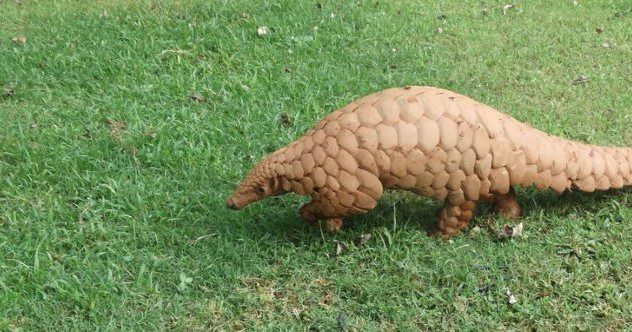
9. Pangolin: The Living Pinecone
Pangolins look like someone crossed an anteater with a walking artichoke. Their bodies are covered in large,
overlapping keratin scalesthe same material found in human fingernailsmaking them the only mammals fully
armored in this way.
Armor with a purpose
When threatened, a pangolin curls into a tight ball, tucking its vulnerable belly and head inside.
Its scales become a spiky fortress that can deter even large predators. Pangolins have long, sticky tongues
that can be longer than their own bodies, which they thread into ant and termite nests to feed.
Where pangolins live
Different pangolin species live across parts of Africa and Asia in forests, savannas, and grasslands.
Unfortunately, they are among the most heavily trafficked mammals in the world, hunted for their meat and
scales despite increasing legal protections.
Pangolin spotlight
Their combination of unique scales, specialized diet, and ancient lineage has earned pangolins a permanent
spot on lists of the most unusual animals on Earthand a top priority in modern conservation efforts.
10. Aye-Aye: The Nightmarishly Cool Night Primate
The aye-aye, a lemur native to Madagascar, looks like it was designed for a Halloween special: huge
yellow eyes, bat-like ears, oversized teeth, and an extremely long, thin middle finger. But those features
are the perfect toolkit for its nocturnal lifestyle.
A very strange way to find dinner
Aye-ayes practice “percussive foraging.” They tap on tree branches and listen with their giant ears for
the hollow sounds that signal insect tunnels. Once they locate a snack, they use chisel-like teeth to open
the wood and then snake in that long middle finger to hook out grubs. It’s the primate equivalent of using
a built-in stethoscope and chopstick to pick your locks.
Life in the dark
Aye-ayes spend most of their lives in the trees, rarely touching the ground. They are nocturnal, moving
through the canopy under cover of darkness and sleeping in leafy nests by day.
From bad omens to conservation icons
In some local traditions, aye-ayes were once associated with bad luck, which led to persecution. Today,
conservation groups work to protect them and highlight how importantand irreplaceablethey are in
Madagascar’s fragile ecosystems.
What These One-of-a-Kind Animals Teach Us
Put these ten creatures side by side and you get a wild tour of evolution’s greatest plot twists. There are
egg-laying mammals that glow under UV light, micro-animals that shrug off
the vacuum of space, sea slugs that weaponize stolen venom, and rodents that live like insects in underground
colonies. Each one rewrites our expectations of what a mammal, fish, invertebrate, or amphibian is “supposed”
to be.
For scientists, these animals are more than click-worthy oddities. They’re model organisms that help unlock
big questions: How do cells regenerate without scarring? What protects DNA from radiation? How do complex
social systems evolve? For the rest of us, they’re a reminder that Earth is far stranger and more creative
than any fantasy universe we could invent.
As climate change, habitat loss, and wildlife trafficking threaten many of these species, learning about them
isn’t just a fun trivia exercise. It’s a first step toward caring about their survival. Because once you’ve
fallen in love with a glowing, venomous, egg-laying mammal or a floating, blue-poison sea slug, it’s very
hard to imagine a world without them.
Experiences: Imagining Encounters With Animals in a Class of Their Own
Most of us will never dive to blobfish depths or paddle a canoe through a quiet Australian river at dusk,
waiting for the ripple of a platypus. But it’s surprisingly easy to build rich “experiences” with these
animals by combining real science with a little imaginationand those experiences can change how we see
nature in our everyday lives.
Picture standing on the edge of a cool mountain stream in eastern Australia just before sunrise. The water
is dark and glassy, framed by eucalyptus trees. You know platypuses are shy, so you keep still and listen.
When a small V-shaped wake finally appears, followed by the brief flash of a bill breaking the surface,
the moment feels huge precisely because you’ve learned how rare and specialized this mammal really is.
Knowing that it hunts by sensing electricity and lays eggs in a riverbank burrow turns a quiet ripple into
a mini nature documentary playing out in front of you.
Now shift to Mexico City’s outskirts, where the remains of ancient canals still thread through modern
neighborhoods. Imagine joining a conservation group that takes you out on a small boat in the Xochimilco
canals. You drift past floating gardens while the guide explains how wild axolotls have nearly vanished
from these waters. When a researcher lifts a net and you glimpse a pale, feathery-gilled axolotl for the
first time, the animal stops being just an internet meme. It becomes a living, threatened neighbor whose
survival depends on decisions people are making right now about water quality, urban growth, and local farms.
Or consider a night hike in Madagascar. You’re in a patch of forest that has been logged in the past but is
slowly recovering. The guide switches off the flashlight. For a few seconds, there is only the chorus of
insects and the rustle of leaves. Then you hear gentle tapping on a branch overhead. When the light flicks
back on, a pair of glowing eyes and oversized ears stare backan aye-aye, mid-investigation of its next
grub-filled snack. That tap-tap-tap suddenly connects a long middle finger, echoing trunks, and insect
tunnels into one elegant survival strategy. You’re watching evolution in action, not in a diagram but in a
living, breathing primate.
You don’t actually have to travel that far to feel similar moments of wonder. A simple classroom or backyard
experiment hunting for tardigrades in a patch of moss can be surprisingly powerful. Once you place a drop of
water under a microscope and see a tiny, plump water bear lumbering across your field of view, every wet
patch of moss becomes potential habitat for one of Earth’s toughest organisms. A rainy day ceases to be just
“bad weather” and turns into a chance to go looking for microscopic astronauts hiding in your neighborhood.
Even watching high-quality wildlife footage or reading about these animals can create a kind of mental
travel. Learning that blue dragon sea slugs silently drift at the ocean’s surface, upside down and armed
with recycled venom, might make you think twice the next time you look out over a calm sea. That flat blue
plane suddenly feels layered with unseen dramas: tiny dragons cruising just beneath the waves, armored
pangolins shuffling through distant forests, and naked mole-rats running through cramped tunnels far below
dry ground.
The more vivid and grounded these imagined experiences become, the more we tend to support real-world
conservation, from donating to habitat protection to voting for policies that limit pollution and wildlife
trafficking. These animals may be scattered across continents and oceans, but they meet in the same place:
our curiosity. In that sense, they’re not just “weird animals” on a list. They’re ambassadors for a planet
that’s still full of surprisesand invitations to keep exploring.